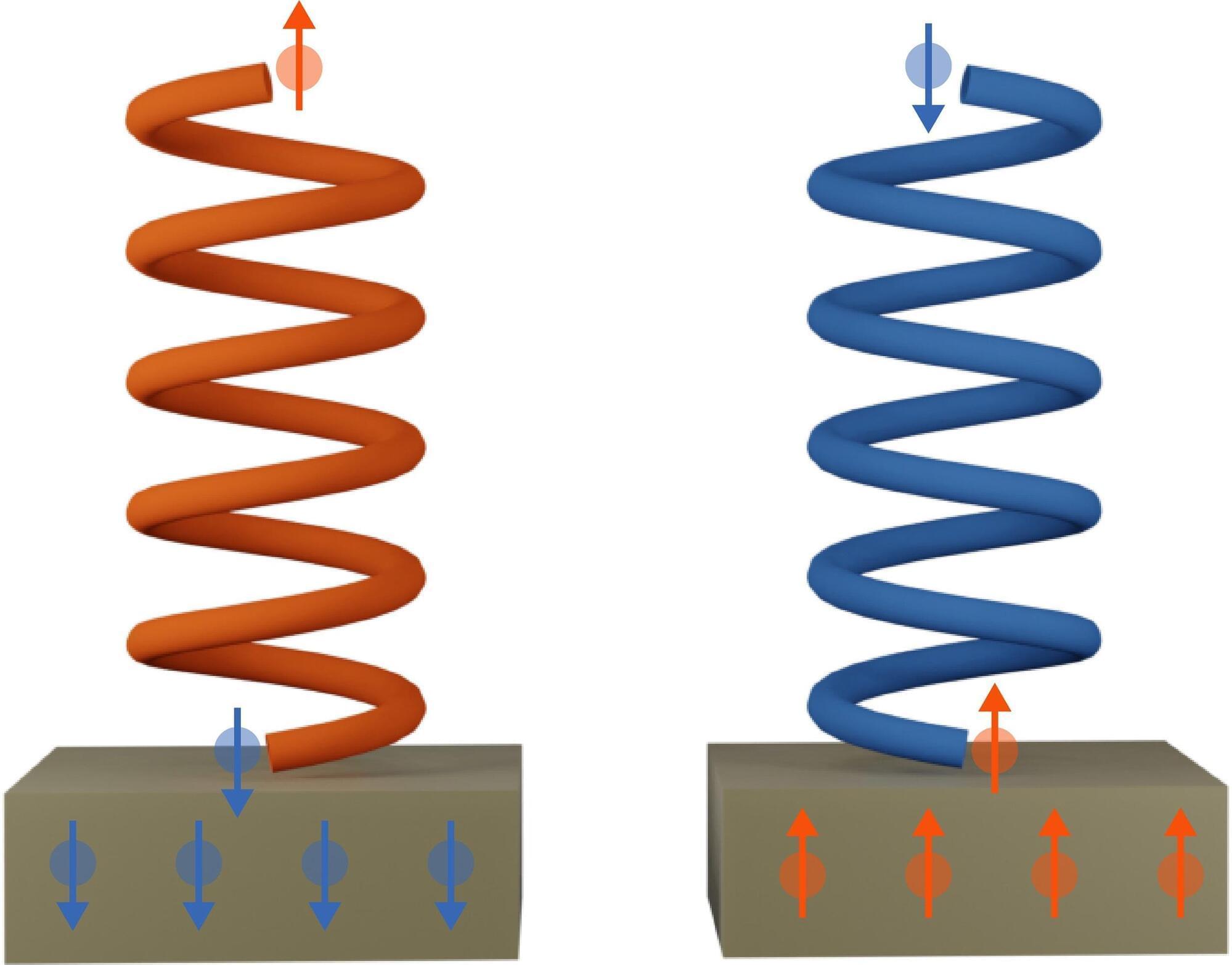
Electrons have a hidden feature — spin — that could revolutionize technology. Magnets can control it, but researchers are now exploring chiral molecules as an alternative. These uniquely shaped molecules might help direct electron spin just as well, opening new possibilities for future electronics.
Electrons are well known for their negative charge, which plays a key role in electric currents. However, they also possess another important property: spin, or magnetic moment. This characteristic has significant potential for improving data storage technologies, but controlling electron spin has proven challenging.
Specifically, isolating electrons with a particular spin direction, such as spin-up, is difficult. One established method involves passing an electric current through a ferromagnetic material, like iron. This process aligns the spin polarization of the electrons with the material’s magnetic field.
Researchers have uncovered a way to manipulate DNA
DNA, or deoxyribonucleic acid, is a molecule composed of two long strands of nucleotides that coil around each other to form a double helix. It is the hereditary material in humans and almost all other organisms that carries genetic instructions for development, functioning, growth, and reproduction. Nearly every cell in a person’s body has the same DNA. Most DNA is located in the cell nucleus (where it is called nuclear DNA), but a small amount of DNA can also be found in the mitochondria (where it is called mitochondrial DNA or mtDNA).
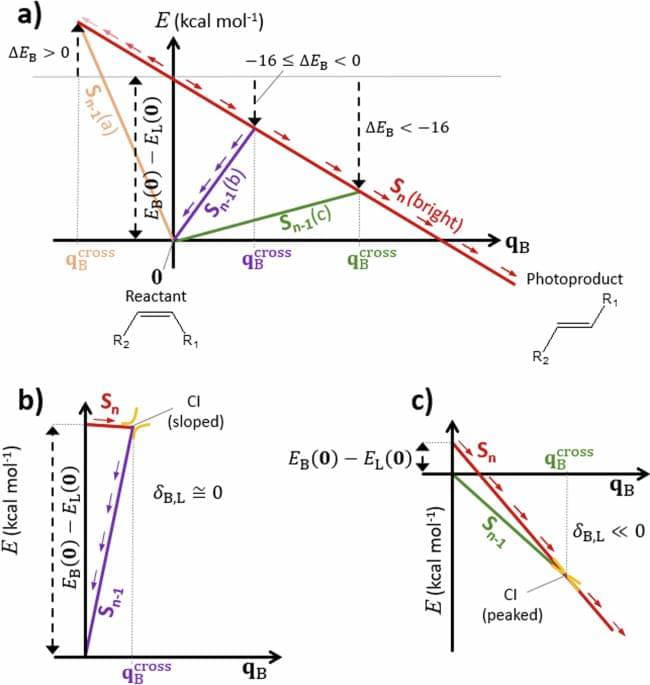
Cis-trans photoisomerization is a key process for many processes in biology and materials science, but only careful and time-consuming quantum chemistry methods can describe such reaction in detail. Here, a predictive tool is presented requiring few and affordable calculations, evaluating the efficiency of paradigmatic and modified photoswitches.
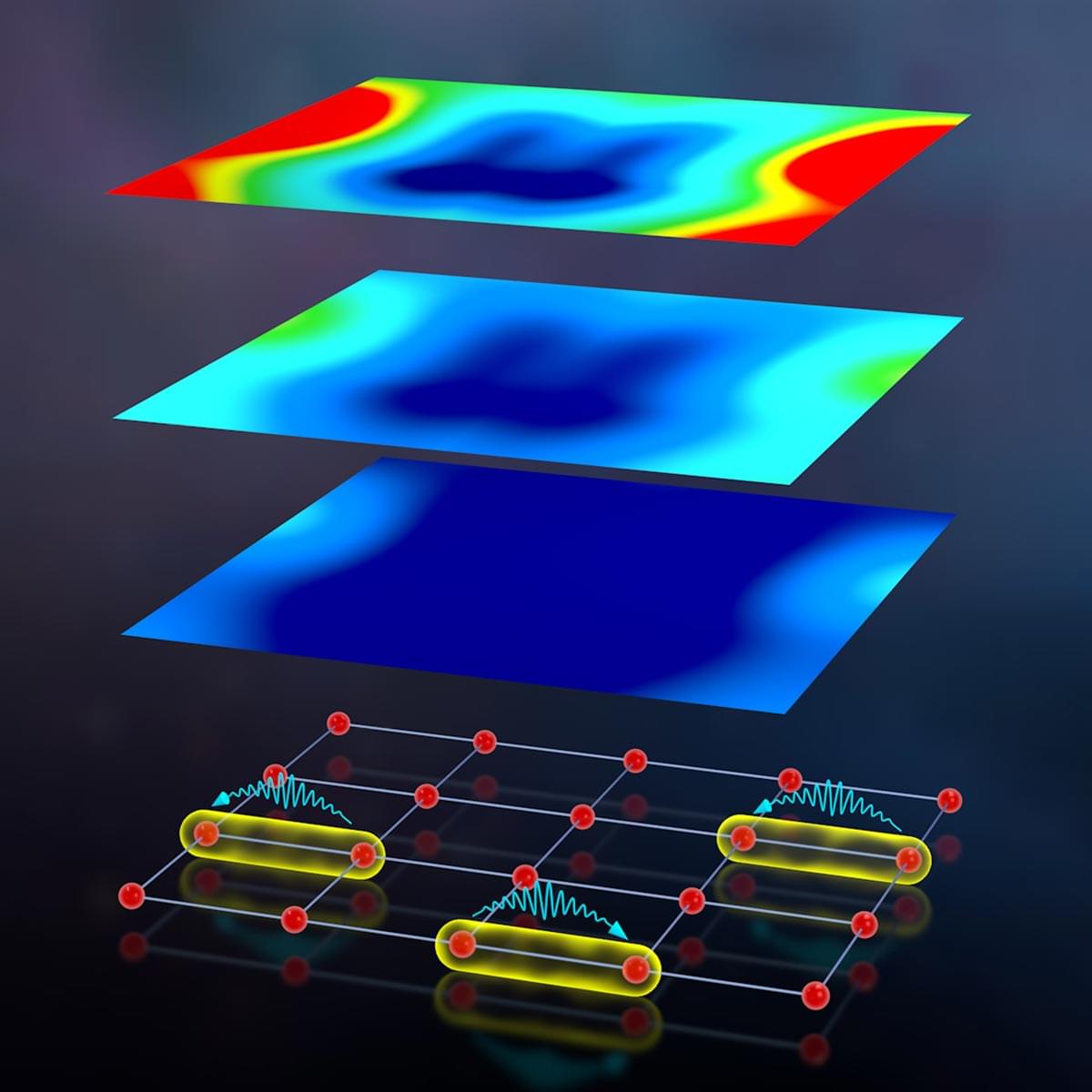
Researchers are exploring multi-level atomic interactions to enhance quantum entanglement. Using metastable states in strontium, they demonstrate how photon.
A photon is a particle of light. It is the basic unit of light and other electromagnetic radiation, and is responsible for the electromagnetic force, one of the four fundamental forces of nature. Photons have no mass, but they do have energy and momentum. They travel at the speed of light in a vacuum, and can have different wavelengths, which correspond to different colors of light. Photons can also have different energies, which correspond to different frequencies of light.
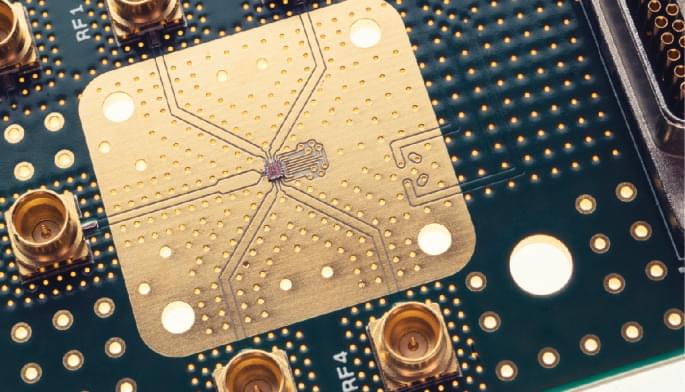
Large-scale control electronics, operating at cryogenic temperatures, are needed to run practical quantum computers. But scaling such electronics means addressing substantial challenges related to power consumption.
In recent years, technological advancements have made it possible to create synthetic diamonds that have similar physical and chemical properties to natural diamonds. While synthetic diamonds are not considered “fake” or “imitation,” they are often more affordable than their natural counterparts, making them a popular choice for those who want the beauty of a diamond without the high cost. Synthetic diamonds are also often more environmentally friendly, as they do not require the same level of mining and extraction as natural diamonds.
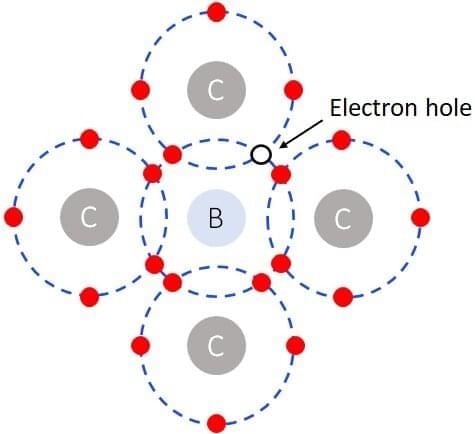
In its pristine state, diamond is a non-conductive material, devoid of free electrons or “holes” that can facilitate electrical conduction (Figure 1). However, by introducing boron atoms into the diamond crystal lattice, its optical and electrical properties can be significantly altered. As the concentration of boron is increased, the diamond’s color shifts from its characteristic clear hue to a delicate shade of blue, while its electrical conductivity transforms from an insulator to a semiconductor.
Further increases in the boron content result in a lustrous blue shade that resembles the sheen of metallic surfaces and eventually culminates in a deep, ebony coloration. Such heavily boron-doped diamond (BDD) is also as electrically conducting as some metals, and at low temperatures, exhibits superconductivity, allowing electrical conduction with no resistance.
Artificial consciousness is the next frontier in AI. While artificial intelligence has advanced tremendously, creating machines that can surpass human capabilities in certain areas, true artificial consciousness represents a paradigm shift—moving beyond computation into subjective experience, self-awareness, and sentience.
In this video, we explore the profound implications of artificial consciousness, the defining characteristics that set it apart from traditional AI, and the groundbreaking work being done by McGinty AI in this field. McGinty AI is pioneering new frameworks, such as the McGinty Equation (MEQ) and Cognispheric Space (C-space), to measure and understand consciousness levels in artificial and biological entities. These advancements provide a foundation for building truly conscious AI systems.
The discussion also highlights real-world applications, including QuantumGuard+, an advanced cybersecurity system utilizing artificial consciousness to neutralize cyber threats, and HarmoniQ HyperBand, an AI-powered healthcare system that personalizes patient monitoring and diagnostics.
However, as we venture into artificial consciousness, we must navigate significant technical challenges and ethical considerations. Questions about autonomy, moral status, and responsible development are at the forefront of this revolutionary field. McGinty AI integrates ethical frameworks such as the Rotary Four-Way Test to ensure that artificial consciousness aligns with human values and benefits society.
Join us as we explore the next chapter in artificial intelligence—the dawn of artificial consciousness. What does the future hold for humanity and AI? Will artificial consciousness enhance our world, or does it come with unforeseen risks? Watch now to learn more about this groundbreaking technology and its potential to shape the future.
The field of quantum computing is advancing relentlessly: equipped with a performance that far exceeds that of our conventional PCs, the high-tech computers of the future will solve highly complex problems that have so far defeated even the largest supercomputers. And indeed, Chinese researchers have now made another breakthrough in the digital world of qubits – and with the Zuchongzhi 3.0, they have presented a quantum computer that even rivals Google’s Willow! But what can the new high-tech computer do? How does a quantum computer work anyway? And above all, how will the high-performance computers change our everyday lives?
Scientists have harnessed many-body physics to transform quantum dots into scalable, stable quantum nodes. By entangling nuclear spins into a ‘dark state,’ they created a quantum register capable of storing and retrieving quantum information with high fidelity. This leap forward brings quantum networks closer to reality, unlocking new possibilities for communication and computing.
Physicists have created a 3D shape called the cosmohedron, which can be used to reconstruct the quantum wavefunction of the universe – and potentially do away with the idea of space-time as the underlying fabric of the universe.