Toggle light / dark theme

The first real hoverboard

We are a company that specializes in propeller-based hoverboards. Our mark-1 prototype managed to travel a total distance of 275.9 m (905 ft and 2 inches) to achieve a new Guinness World Records title for the longest distance travelled by a hoverboard.

We invited CBC into our workshop where we are building the hoverboard. Stay tuned for the final consumer prototype.

10 Million Self-Driving Cars Will Hit The Road By 2020 — Here’s How To Profit

Given the advanced state of driverless technologies and the amount of money being poured into the sector, there is little question—make that, no question at all—that within 10 years, driverless cars will be the norm.

The implications are immense and widespread.

There are currently about 1.4 billion cars on the road. Many of those cars, and eventually all, are going to be replaced by self-driving vehicles.

Will Democracy Survive Big Data and Artificial Intelligence?

One thing is clear: the way in which we organize the economy and society will change fundamentally. We are experiencing the largest transformation since the end of the Second World War; after the automation of production and the creation of self-driving cars the automation of society is next. With this, society is at a crossroads, which promises great opportunities, but also considerable risks. If we take the wrong decisions it could threaten our greatest historical achievements.


We are in the middle of a technological upheaval that will transform the way society is organized. We must make the right decisions now.

Uber’s self-driving unit quietly bought firm with tech at heart of Alphabet lawsuit

SAN FRANCISCO A company now owned by Uber last year quietly bought a small firm specializing in sensor technology used in autonomous vehicles, giving the ride services company a patent in the technology and possibly a defense against a trade secrets theft lawsuit filed against it by rival Alphabet Inc.

The chief executive of little-known Tyto Lidar LLC said in a May 2016 post on LinkedIn that the company had been sold, at the same time as he and three other executives joined Otto, according to their profiles on the online business network. Official U.S. patent data shows Otto acquired Tyto technology at the same time.

Otto, a self-driving truck startup founded by former Alphabet employees, was bought by Uber in August.

Read more

Singapore to implement a digital identity programme inspired by Estonia

The nation of Singapore is planning to implement a digital identity programme that is inspired by the one in Estonia.

The aim of the programme is to revamp its current national IDs, potentially allowing citizens simpler access to government services, financial transactions, and more.

According to the country’s prime minister Lee Hsien Loong, Singapore is not “going as fast as we ought to” in its drive to implement digital solutions and improving in areas such as electronic payment and transportation, news portal Today Online reported.

Roborace finally reveals its self-driving racecar

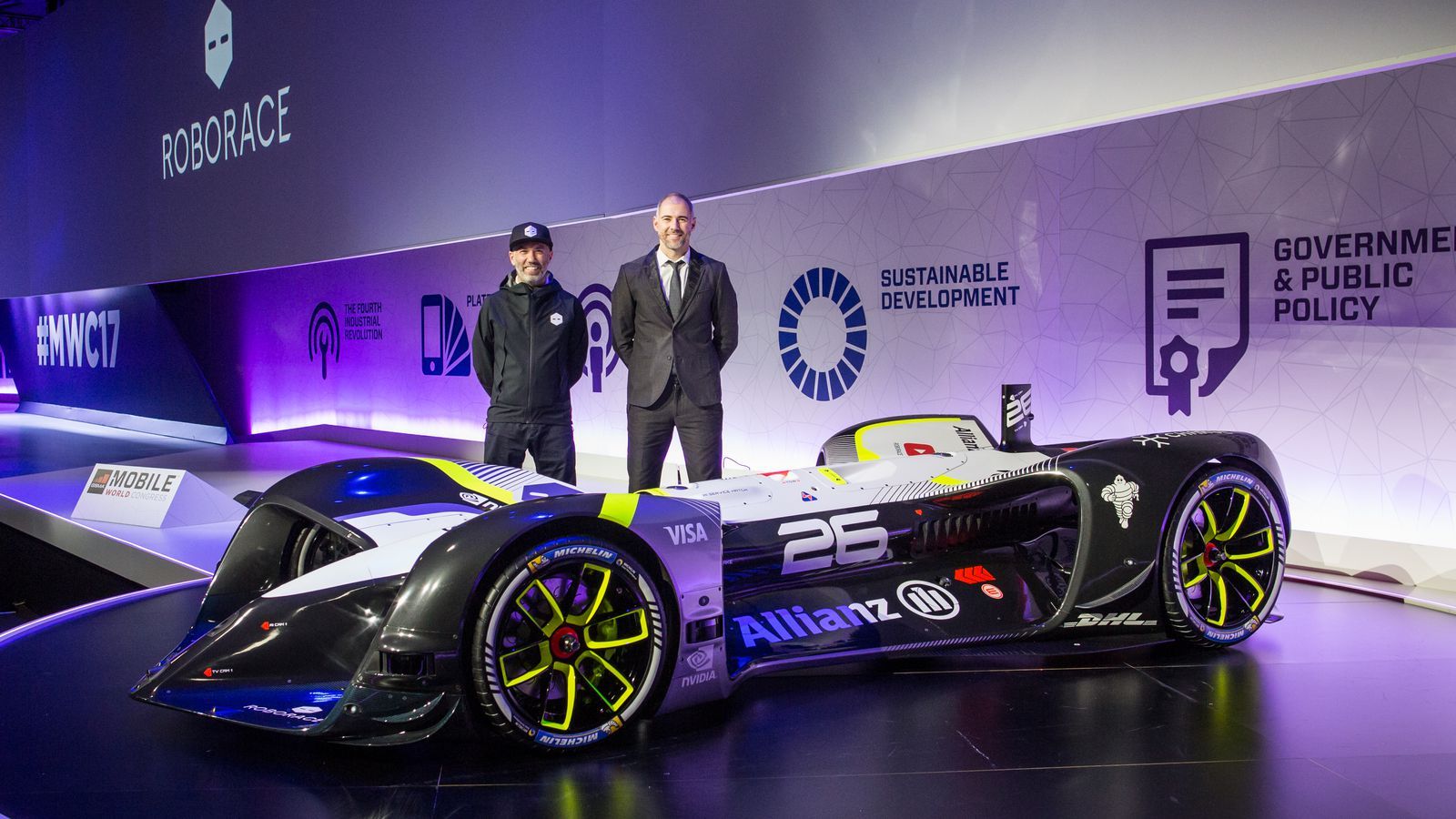
Robot racing series Roborace finally pulled the wraps off its first real self-driving racecar. The British company behind the series showed off the “Robocar” for the first time ever in public during a press conference at Mobile World Congress today.

The cars of Roborace — the early design of which was revealed one year ago — were designed by Daniel Simon, the man behind the light cycles in Tron: Legacy. “I’ve worked on a lot of cool stuff — Tron, Bugatti, Star Wars — but this takes the cake,” Simon said on stage.

New metamaterial is proved to be the world’s first to achieve the performance predicted by theoretical bounds

In 2015 UC Santa Barbara mechanical engineer and materials scientist Jonathan Berger developed an idea that could change the way people think about high-performance structural materials. Two years later, his concept is paying research dividends.

In a letter published in the journal Nature, Berger, with UCSB materials and mechanical engineering professor Robert McMeeking and materials scientist Haydn N. G. Wadley from the University of Virginia, prove that the three-dimensional pyramid-and-cross cell geometry Berger conceived is the first of its kind to achieve the performance predicted by theoretical bounds. Its lightness, strength and versatility, according to Berger, lends itself well to a variety of applications, from buildings to vehicles to packaging and transport.

Called Isomax, the beauty of this solid foam—in this case loosely defined as a combination of a stiff substance and air pockets—lay in the geometry within. Instead of the typical assemblage of bubbles or a honeycomb arrangement, the ordered cells were set apart by walls forming the shapes of pyramids with three sides and a base, and octahedra, reinforced inside with a “cross” of intersecting diagonal walls.

/* */