Elon Musk’s bet on the incoming Trump administration is starting to pay off handsomely, with autonomous vehicle permits heading Tesla’s way.
The rebirth of commercial supersonic flight has kind of, sort of come to pass as Dawn Aerospace announces that its 16-ft (4.8-m) autonomous Mk-II Aurora rocket-powered aircraft broke the sound barrier with a speed of Mach 1.1 on November 12, 2024.
Ever since the Anglo-French Concorde retired in 2003, civil supersonic flight has been something of a lost art. In recent years, a number of startups have been working on various projects to create a new generation of supersonic transports that are quieter, greener, more efficient, and cost effective to operate.
Now, one supersonic aircraft has actually taken flight, albeit in the form of an uncrewed experimental craft with a wingspan of 13 ft (4 m) and a dry weight of 880 lb (200 kg). In the skies over New Zealand’s Glentanner Aerodrome near the base of Aoraki/Mount Cook, the Mk-II Aurora hit Mach 1.1 while climbing to an altitude of 82,500 ft (25,150 m).
Spanning 18 kilometers, the new Fehmarn Belt fixed link between Germany and Denmark will be the world’s longest and deepest underwater tunnel, combining road and rail.
Once completed, the tunnel promises to reduce travel time, strengthen ties between Scandinavia and Central Europe, form a greener traffic lane, and boost train transport. The ten billion euro price tag, therefore, promises to be worth it and has the stamp of approval from the European Commission’s Ten-T Programme.
The underwater fixed link tunnel will consist of two two-lane highways divided by a service passage and two separate railways.
The group’s Aftershock II rocket reached an altitude of 470,000 feet (143,250 meters) last month.
The company ends the waitlist in Los Angeles, where nearly 300,000 people have expressed an interest in trying out the Alphabet-owned company’s self-driving cars.
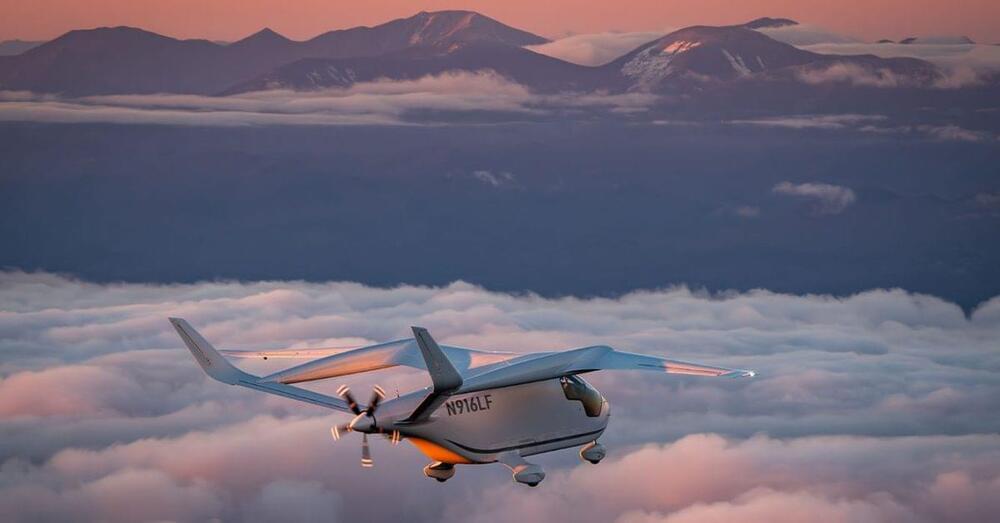
All-electric aircraft developer BETA Technologies has shared another important milestone in bringing its first two vessels to market. Most recently, BETA’s founder, CEO, and test pilot Kyle Clark took the production version of its ALIA eCTOL up for its first flight, as seen in the video below.
BETA Technologies is a fully integrated electric aircraft and systems developer based in Vermont. Three years ago, it debuted its first electric vertical takeoff and landing (eVTOL) aircraft, the ALIA–250. That BETA vessel has since been renamed the ALIA VTOL and completed a piloted test flight transitioning mid-air this past April.
In addition to the ALIA VTOL, BETA has also been developing an electric conventional takeoff and landing (eCTOL) plane called the ALIA CTOL. To date, it has flown tens of thousands of test miles en route to evaluation flights for FAA certification. That aircraft is targeting full approval for commercial operations by 2025.

Companies that own or operate critical infrastructure increasingly rely on artificial intelligence. Airports use A.I. in their security systems; water companies use it to predict pipe failures; and energy companies use it to project demand. On Thursday, the U.S. Department of Homeland Security will release new guidance for how such companies use the technology.
The document, a compilation of voluntary best practices, stems from an executive order that President Biden signed more than a year ago to create safeguards around A.I. Among other measures, it directed the Department of Homeland Security to create a board of experts from the private and public sectors to examine how best to protect critical infrastructure. The risks run the gamut from an airline meltdown to the exposure of confidential personal information.
Alejandro N. Mayorkas, the homeland security secretary, first convened the board in May. It includes Sam Altman, the chief executive of OpenAI; Jensen Huang, the chief executive of Nvidia; Sundar Pichai, the chief executive of Alphabet; and Vicki Hollub, the chief executive of Occidental Petroleum.
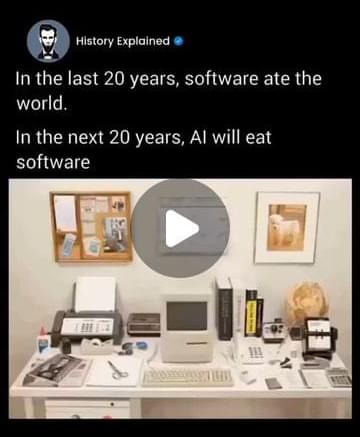
“The last two decades saw software transform nearly every industry, a trend famously captured by venture capitalist Marc Andreessen’s phrase ” software is eating the world.
Software became the backbone of industries like retail, transportation, finance, and entertainment, leading to a world where digital tools and applications are integral to daily life.
Looking forward, many experts believe that artificial intelligence (AI) will play a similarly transformative role over the next 20 years.