Toggle light / dark theme

Meet the women behind NASA’s historic Apollo 11 launch

Tuesday marks 50 years since three men in space suits set off on the greatest scientific adventure of all time. As the astronauts of Apollo 11 headed to the moon, the women of NASA were blazing new trails on Earth. “CBS Evening News” anchor Norah O’Donnell has their story.

Watch Full Episodes of the “CBS Evening News” HERE: http://cbsn.ws/23XekKA
Watch the latest installment of “On the Road,” only on the “CBS Evening News,” HERE: http://cbsn.ws/23XwqMH
Follow “CBS Evening News” on Instagram: http://bit.ly/1T8icTO
Like “CBS Evening News” on Facebook HERE: http://on.fb.me/1KxYobb
Follow the “CBS Evening News” on Twitter HERE: http://bit.ly/1O3dTTe
Follow the “CBS Evening News” on Google+ HERE: http://bit.ly/1Qs0aam

Get your news on the go! Download CBS News mobile apps HERE: http://cbsn.ws/1Xb1WC8

Get new episodes of shows you love across devices the next day, stream local news live, and watch full seasons of CBS fan favorites anytime, anywhere with CBS All Access. Try it free! http://bit.ly/1OQA29B


The “CBS Evening News” premiered as a half-hour broadcast on Sept. 2, 1963. Check local listings for CBS Evening News broadcast times.

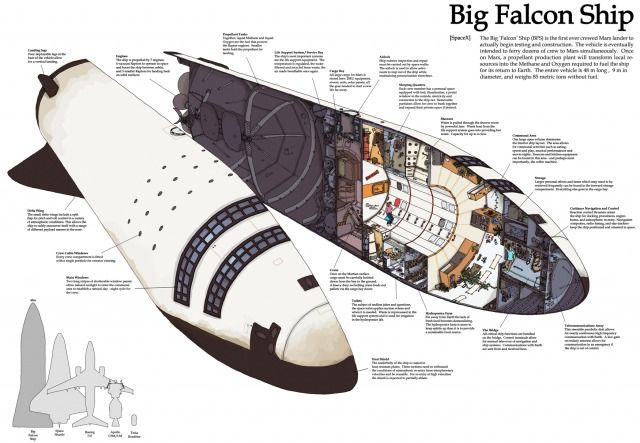
This imaginative drawing liked by Elon Musk reveals just how crazy SpaceX’s first missions to Mars will be

Elon Musk, the founder of the rocket company SpaceX, has “aspirational” plans to launch people to Mars in 2024 and ultimately colonize the red planet.

To make the roughly six-month one-way journey, Musk and his engineers have dreamed up a 347-foot-tall launch system called the Big Falcon Rocket, or BFR. The spacecraft is designed to have two fully reusable stages: a 19-story booster and a 16-story spaceship, which would fly on top of the booster and into into space.

SpaceX employees are now building a prototype of the Big Falcon Spaceship at the Port of Los Angeles. Gwynne Shotwell, the company’s president and COO, reportedly said Thursday that the spaceship may start small test-launches in late 2019.

SpaceX wiggles Starhopper’s Raptor engine, tests parts ahead of hover test debut

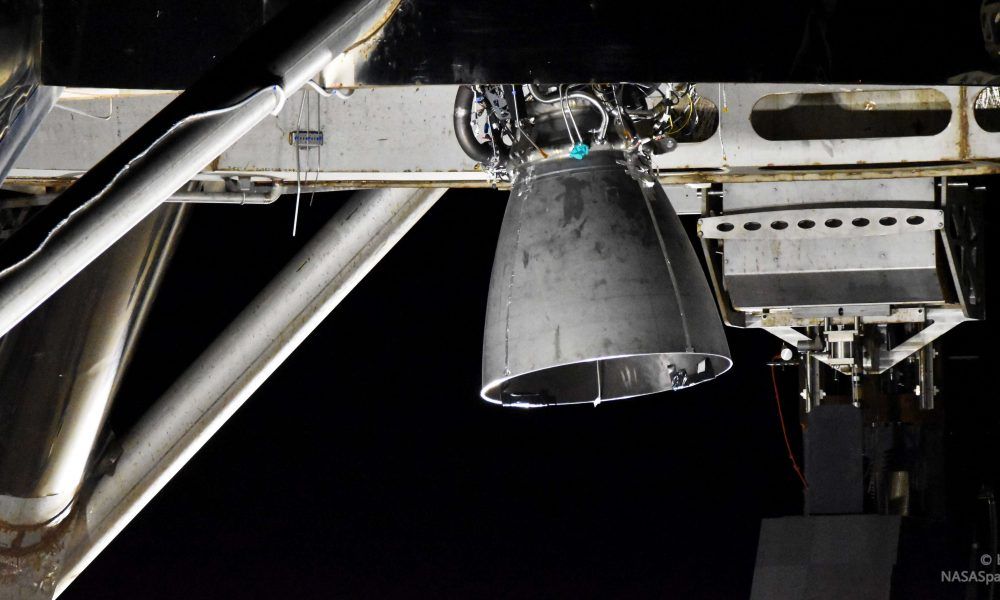
On the evening of July 12th, SpaceX technicians put Starhopper’s freshly-installed Raptor – serial number 06 (SN06) – through a simple but decidedly entertaining test, effectively wiggling the engine in circles.

Designed to verify that Raptor’s thrust vectoring capabilities are in order and ensure that Starhopper and the engine are properly communicating, the wiggle test is a small but critical part of pre-flight acceptance and a good indicator that the low-fidelity Starship prototype is nearing its first hover test(s). Roughly 48 hours after a successful series of wiggles, Starhopper and Raptor proceeded into the next stage of pre-flight acceptance, likely the final more step before a tethered static fire.

Routine for all Falcon rockets, SpaceX’s exceptionally rigorous practice of static firing all hardware at least once (and often several times) before launch has unsurprisingly held firm as the company proceeds towards integrated Starhopper and Starship flight tests. Despite the fact that Raptor SN06 completed a static fire as recently July 10th, SpaceX will very likely put Starhopper and its newly-installed Raptor through yet another pre-flight static fire, perhaps its fourth or fifth test this month.

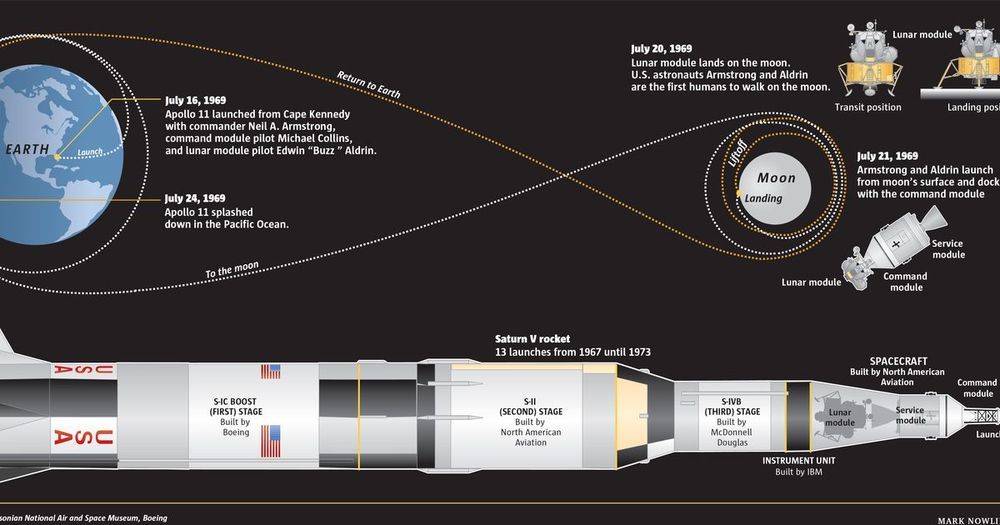
Milestones in space travel: An illustrated timeline

We’ve come a long, long way since the U.S. first launched fruit flies into space in 1947. Since then, we’ve sent astronauts to the moon, installed an International Space Station in orbit and landed spacecraft on Mars. In the past couple of decades, private corporations such as SpaceX and Blue Origin have joined the fray and will likely play instrumental roles in aerospace engineering and space exploration. Here’s a look at some major advancements we’ve made in spacecraft technology and space exploration milestones over the past seven decades.

Tesla Roadster’s SpaceX thruster will be hidden behind the license plate, says Elon Musk

Tesla’s new Roadster is going to come with an optional ‘SpaceX package’ that will include cold air thrusters to improve performance.

Now CEO Elon Musk says that the thruster will be hidden behind the license plate.

When first unveiling the vehicle, Musk claimed a list of insanely impressive specs for the new Roadster, including 0–60 mph in 1.9 sec, 620-mile of range, and more.

Wanted: Australian mining know-how for moon, Mars missions

Washington | Australian resources industry giants such as BHP and Rio Tinto could soon play a crucial role in NASA’s Mars mission, building and operating mines on the moon to extract rocket fuel for interplanetary travel.

In an interview with The Australian Financial Review on Tuesday (Wednesday AEST), NASA’s top boss, administrator Jim Bridenstine, urged Australian mining companies to grasp the opportunity and challenge of applying the industry’s expertise in remote resource extraction to the moon.

Known inside NASA as Artemis (the twin sister of Apollo in Greek mythology) the lunar missions will rely on turning hundreds of millions of tons of mined water ice recently discovered on the moon into liquid forms of hydrogen and oxygen to power spacecraft.

/* */