Toggle light / dark theme

Planetoid Mines — A New Asteroid Mining Company

Is a privately-owned startup based out of New Mexico, USA. Their team leans on expertise gained at NASA, the US Department of Energy, Sandia and Los Alamos National Labs, and the US Air Force. Planetoid Mines’ primary focus is developing the core components that enable asteroid mining. Many of their instruments and tools will be compatible with mining applications on the lunar surface and on Earth.

A lot of activity has been brewing with regards to new space exploration initiatives. Launch costs are plummeting due to market competition and the development of reusable rockets. Additionally, there has been a measurable uptick in growth and investment in commercial space ventures. Every major national space agency has ambitions for operations in lunar orbit and on the lunar surface within the next 5 to 20 years.
Astrophysical shock phenomena reproduced in the laboratory

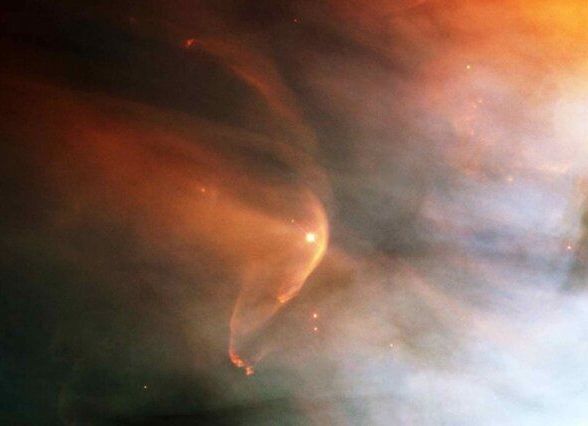
Vast interstellar events where clouds of charged matter hurtle into each other and spew out high-energy particles have now been reproduced in the lab with high fidelity. The work, by MIT researchers and an international team of colleagues, should help resolve longstanding disputes over exactly what takes place in these gigantic shocks.

Many of the largest-scale events, such as the expanding bubble of matter hurtling outward from a supernova, involve a phenomenon called collisionless . In these interactions, the clouds of gas or plasma are so rarefied that most of the particles involved actually miss each other, but they nevertheless interact electromagnetically or in other ways to produces visible shock waves and filaments. These high-energy events have so far been difficult to reproduce under laboratory conditions that mirror those in an astrophysical setting, leading to disagreements among physicists as to the mechanisms at work in these astrophysical phenomena.

Now, the researchers have succeeded in reproducing critical conditions of these collisionless shocks in the laboratory, allowing for detailed study of the processes taking place within these giant cosmic smashups. The new findings are described in the journal Physical Review Letters, in a paper by MIT Plasma Science and Fusion Center Senior Research Scientist Chikang Li, five others at MIT, and 14 others around the world.

APIS: Asteroid Provided In-situ Supplies) is a family of flight systems based on a similar architecture

Ranging in size from the experimental Mini Bee , a 250kg technology demonstration spacecraft, through the Honey Bee, capable of capturing a 10m asteroid and extracting its resources, to the Queen Bee, capable of capturing a 40m asteroid for resource extraction. All use an asteroid containment system similar to that proposed for the original Asteroid Redirect Mission, optical mining for resource extraction, and a water based Omnivore™ Thruster system for propulsion. A variant called the Worker Bee, can serve as an orbital transfer vehicle, transporting items to high Earth orbits and beyond, potentially even to Mars.

Indian spacecraft launched last month is now orbiting moon

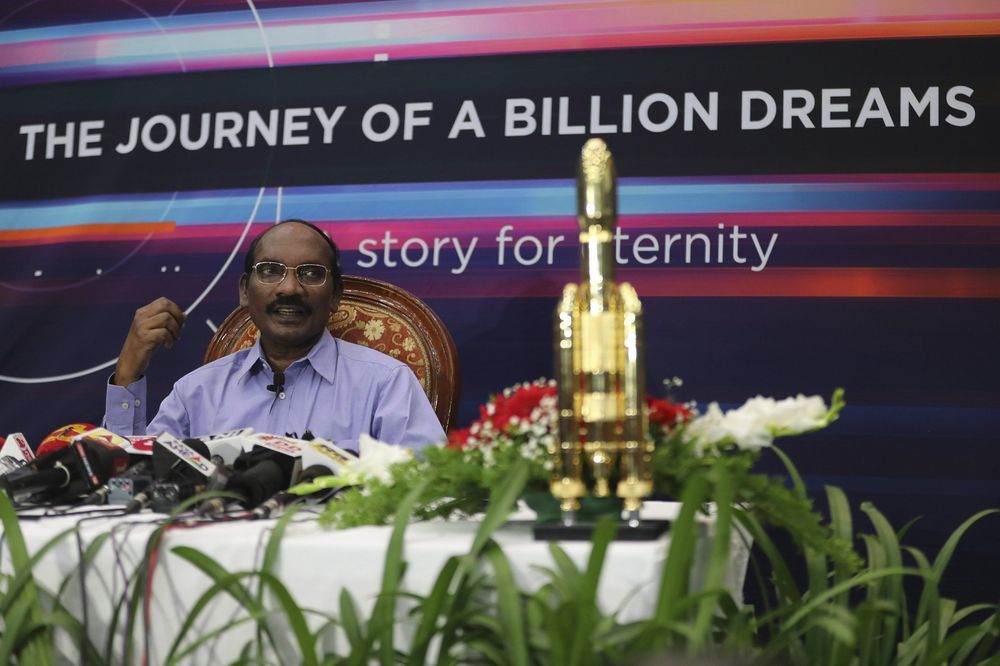
NEW DELHI (AP) — An unmanned spacecraft India launched last month began orbiting the moon Tuesday as it approaches the lunar south pole to study previously discovered water deposits.

The Indian Space Research Organization said it successfully maneuvered Chandrayaan-2, the Sanskrit word for “moon craft,” into lunar orbit, nearly a month after it left Earth. The mission is led by two female scientists.

Chandrayaan will continue circling the moon in a tighter orbit until reaching a distance of about 100 kilometers (62 miles) from the moon’s surface.

U.S. Army Troops to Get New Sci-Fi Helmet

Essentially you could use the body and a computer even modify and enhance the processes even modify the wetware making things stronger and faster. Essentially like master chief from the halo series.


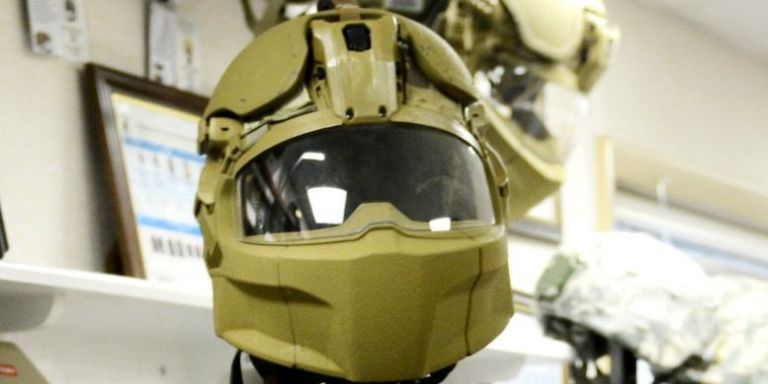
The U.S. Army is testing a new helmet designed to offer full ballistic protection to a soldier’s entire head. Looking like something out of Starship Troopers, the Integrated Head Protection System (IHPS) protects a soldier’s entire head, including for the first time the face and jaw, from injury. The helmet, developed by 3M subsidiary Ceradyne Systems, is scheduled to head to the troops next year.

SpaceX Eats Virgin Galactic’s Dust: Richard Branson Reveals New Spaceport

Spaceport America, the world’s first purpose-built commercial spaceport standing on the sands of the New Mexico desert, is readying itself to welcome the world’s first space tourists.

And Virgin Galactic will likely be the first to fly these people into outer space. The cost of a seat on a Virgin Galactic spaceflight is $250,000 and 600 people have already paid downpayments for their trips.

Virgin Galactic on Thursday declared Spaceport America “operationally functional” and transferred all its spaceflight operations to this facility. It also revealed the interior of its “Gateway to Space” building at the spaceport.

SpaceX’s Starhopper Prototype Is Ready for Its Biggest Hop Test

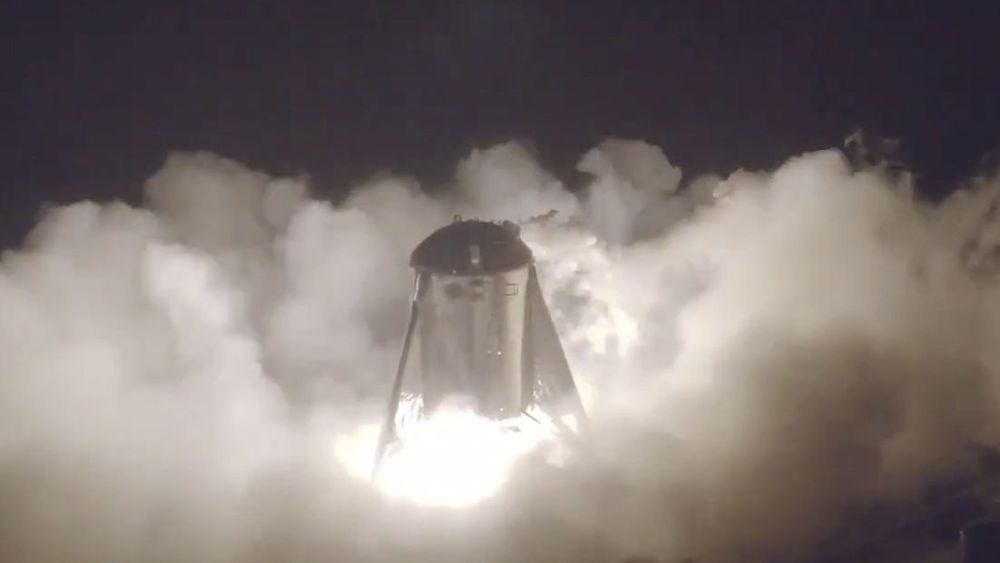
SpaceX’s silver Starhopper prototype could complete its biggest hop test this weekend, according to SpaceX CEO Elon Musk.

Starhopper, which is an early prototype for SpaceX’s Starship spacecraft, has completed a couple of tests so far. According to Musk, the Starhopper’s next challenge will be to fly roughly 650 feet off the ground. Musk recently tweeted that the prototype’s next major hop could take place on Aug. 16, Aug. 17, or Aug. 18, as long as the U.S. Federal Aviation Administration (FAA) gives SpaceX permission to conduct the test flight.

Just spoke with FAA, so hopefully yes.

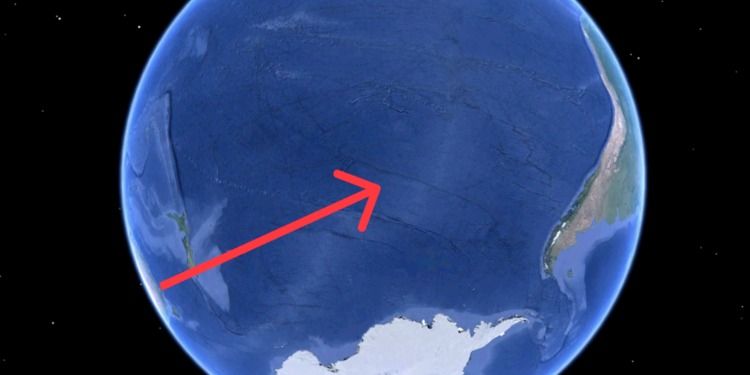
There’s a place at the bottom of the Pacific Ocean where hundreds of giant spacecraft go to die

What happens to a spacecraft once it dies?

When a spacecraft completes its mission or runs out of fuel, it’s sent to what NASA calls a Spacecraft Cemetery. Three thousand miles off the Eastern coast of New Zealand and more than 2 miles deep, it’s the one place farthest from any land mass on Earth.

The perfect spot to land giant chunks of spacecraft that are traveling more than 180 mph upon impact. NASA predicts the chance of a spacecraft hitting someone out here to be around 1 in 10,000.

/* */