A proposal for building wormhole-connected black holes offers a way to probe the paradoxes of quantum information.

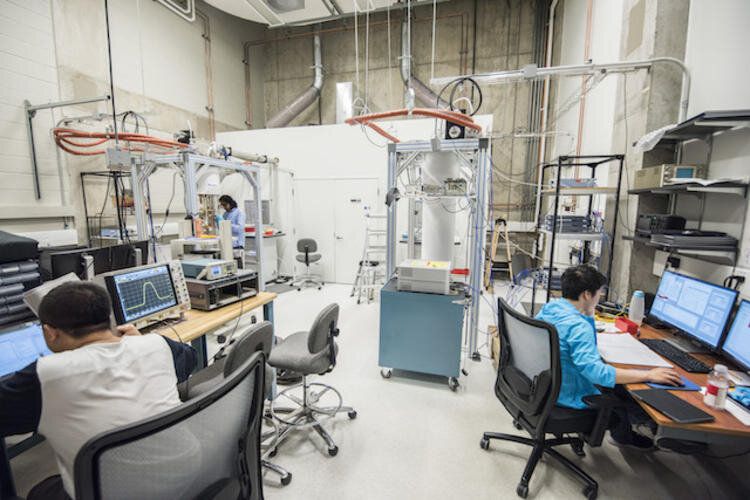
Researchers from the Institute for Quantum Computing (IQC) at the University of Waterloo report the first occurrence of directly splitting one photon into three.
The occurrence, the first of its kind, used the spontaneous parametric down-conversion method (SPDC) in quantum optics and created what quantum optics researchers call a non-Gaussian state of light. A non-Gaussian state of light is considered a critical ingredient to gain a quantum advantage.
“It was understood that there were limits to the type of entanglement generated with the two-photon version, but these results form the basis of an exciting new paradigm of three-photon quantum optics,” said Chris Wilson, a principle investigator at IQC faculty member and a professor of Electrical and Computer Engineering at Waterloo.
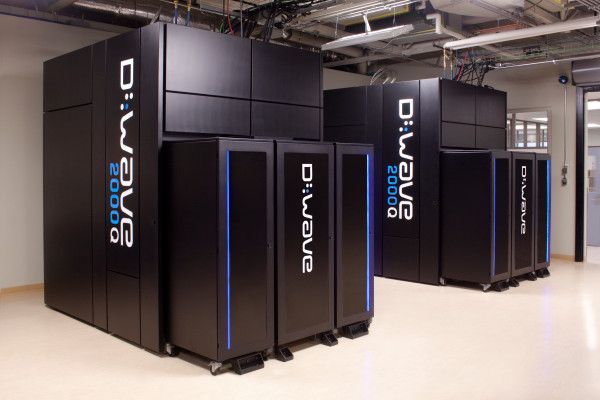
D-Wave today announced the launch of Leap 2, the latest version of its quantum cloud service that gives developers real-time access to its hardware quantum systems.
As the company notes, Leap 2 was built with the feedback of thousands of developers in mind who used the previous generation of the service since it launched 18 months ago.
At the core of Leap 2 is D-Wave’s new hybrid solver that can handle complex problems with up to 10,000 variables. As a hybrid system, D-Wave uses both classical and quantum hardware to solve these problems.

Do you àgree?
In Peter Diamandis and Steven Kotler’s new book, The Future Is Faster Than You Think, the futurist and science writer talk about converge and how a host of technologies, including VR, quantum computing, and A.I., are speeding up development of flying cars and changing new and old industries.

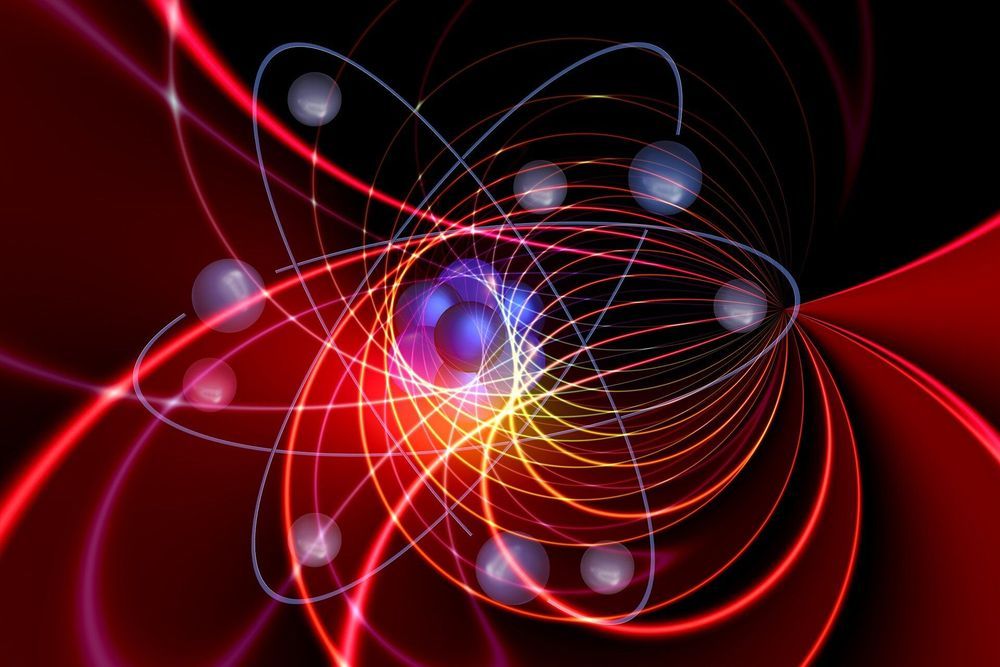
Neutral atoms and charged ions can be cooled down to extremely low temperatures (i.e., to microkelvins, 1 millionth of a degree above absolute zero) using laser techniques. At these low temperatures, the particles have often been found to behave in accordance with the laws of quantum mechanics.
Researchers have been conducting laser cooling experiments on atoms and ions for decades now. So far, however, no study had observed mixtures of both atoms and ions at extremely low temperatures.
Researchers at the University of Amsterdam were the first to achieve this by placing an ion inside a cloud of lithium atoms pre-cooled to a few millionths of a kelvin. Their observations, published in Nature Physics, unveiled numerous effects that could have interesting implications for the development of new quantum technologies.
Physicists at Purdue University and the University of New South Wales have built a transistor from a single atom of phosphorous precisely placed on a bed of silicon, taking another step towards the holy grail of tech research: the quantum computer.
Revealed on Sunday in the academic journal Nature Nanotechnology, the research is part of a decade-long effort at the University of New South Wales to deliver a quantum computer – a machine that would use the seemingly magical properties of very small particles to instantly perform calculations beyond the scope of today’s classical computers.
You’ve read your last complimentary article this month. To read the full article, SUBSCRIBE NOW. If you’re already a subscriber, please sign in and and verify your subscription.
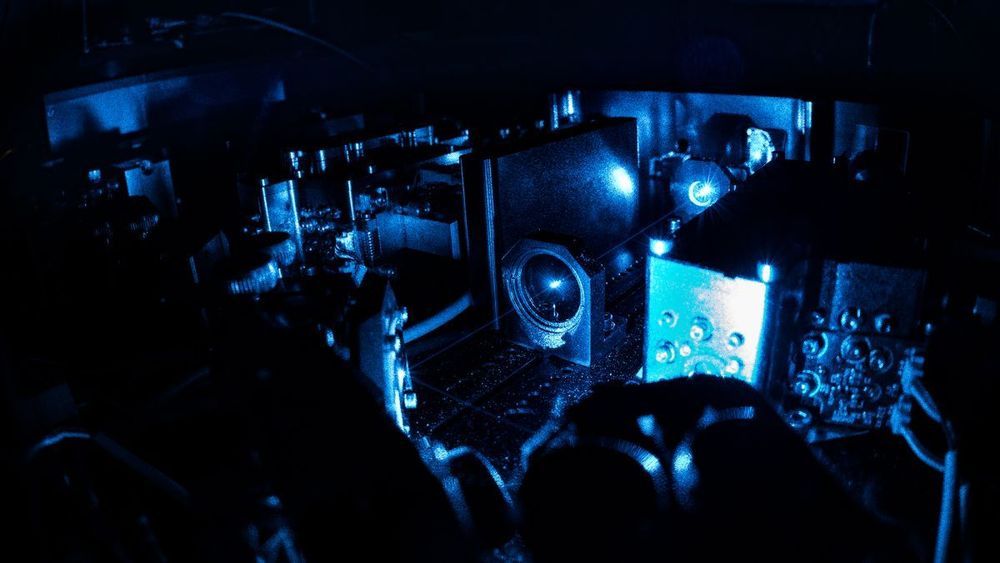

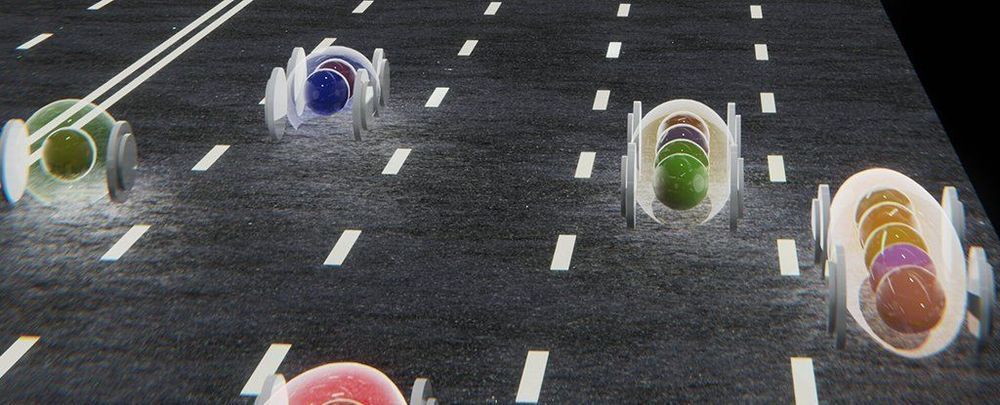
Scientists have observed a new state of electronic matter on the quantum scale, one that forms when electrons clump together in transit, and it could advance our understanding and application of quantum physics.
Movement is key to this new quantum state. When electric current is applied to semiconductors or metals, the electrons inside usually travel slowly and somewhat haphazardly in one direction.
Not so in a special type of medium known as a ballistic conductor, where the movement is faster and more uniform.