Toggle light / dark theme

Research illuminates the path to superior electro-optic performance in aluminum scandium nitride alloys

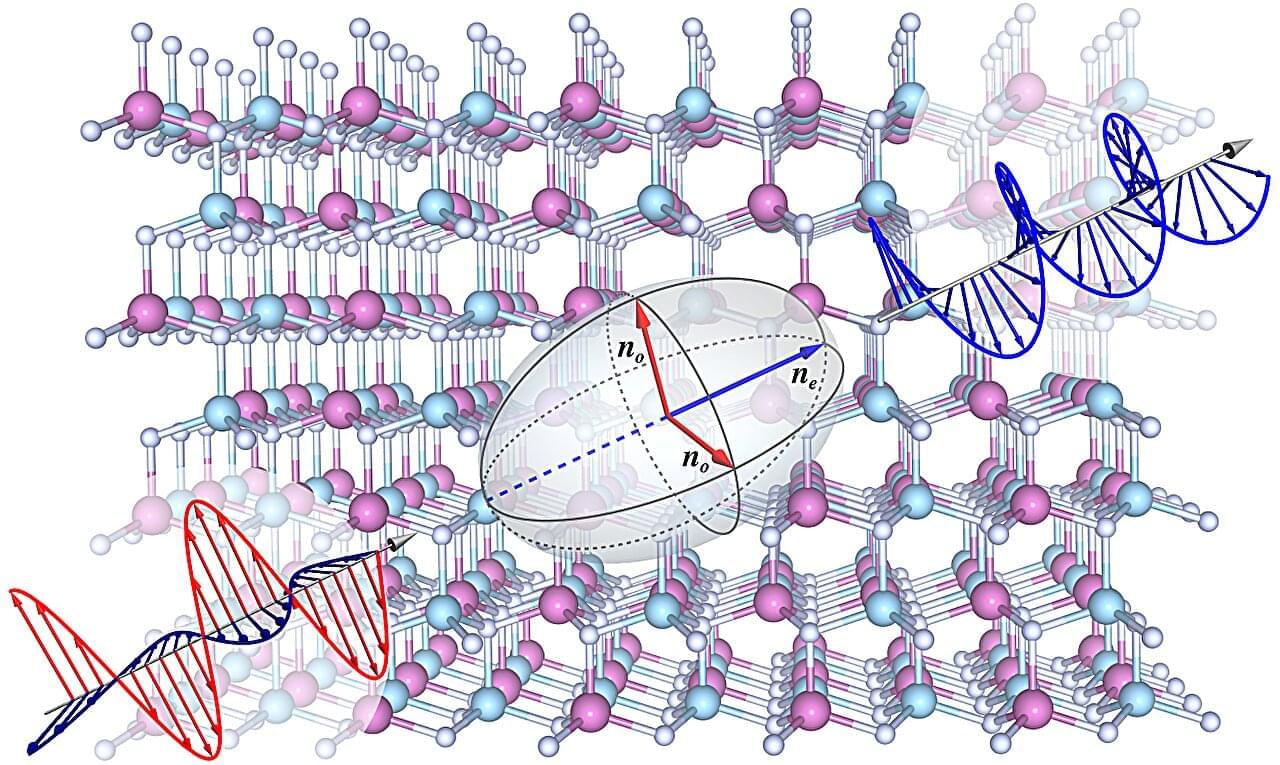
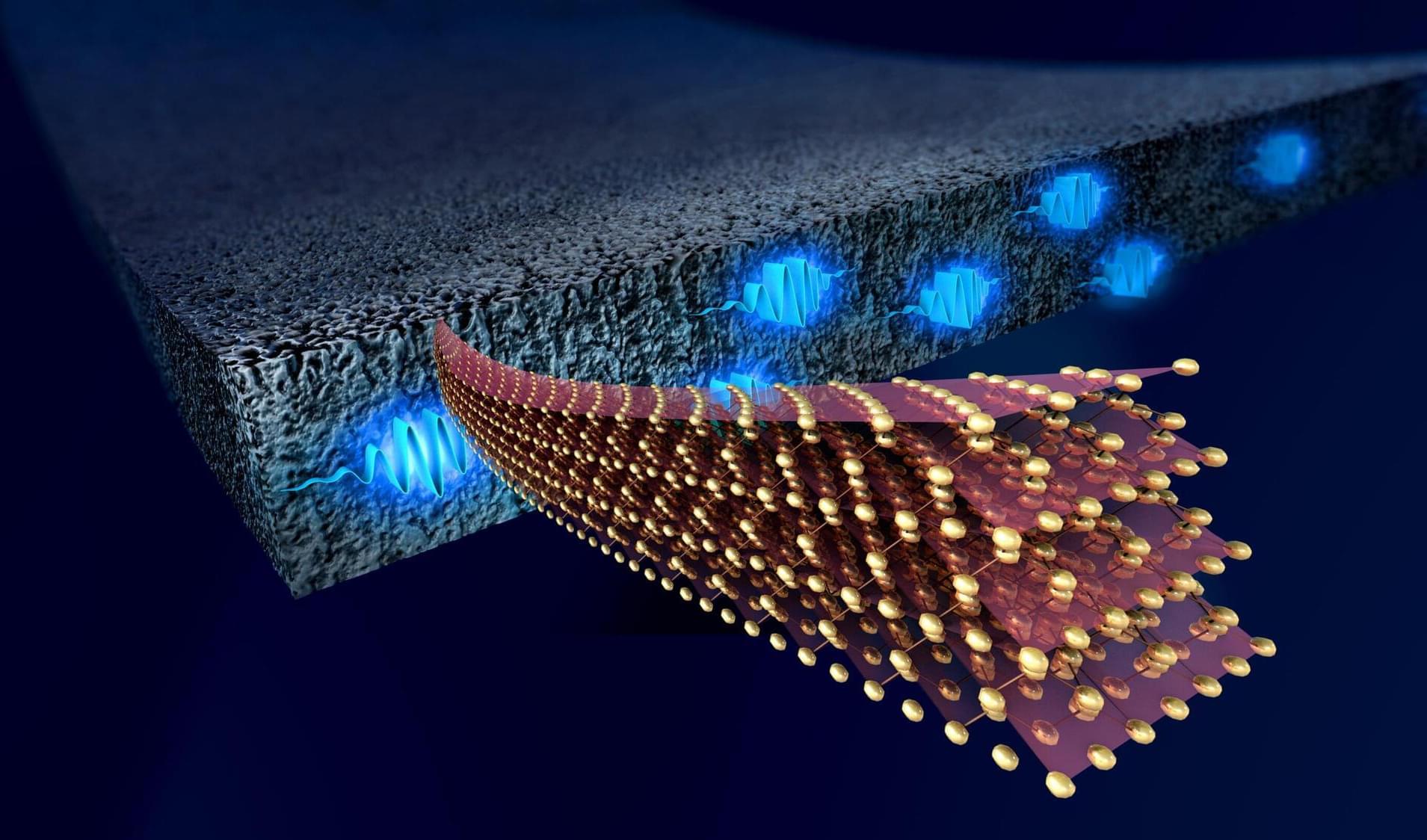
From integrated photonics to quantum information science, the ability to control light with electric fields—a phenomenon known as the electro-optic effect—supports vital applications such as light modulation and frequency transduction. These components rely on nonlinear optical materials, in which light waves can be manipulated by applying electric fields.

Conventional nonlinear optical materials such as lithium niobate have a large electro-optic response but are hard to integrate with silicon devices. In the search for silicon-compatible materials, aluminum scandium nitride (AlScN), which had already been flagged as an excellent piezoelectric—referring to a material’s ability to generate electricity when pressure is applied, or to deform when an electric field is applied—has come to the fore. However, better control of its properties and means to enhance its electro-optic coefficients are still required.

Researchers in Chris Van de Walle’s computational materials group at UC Santa Barbara have now uncovered ways to achieve these goals. Their study, published in Applied Physics Letters, explains how adjusting the material’s atomic structure and composition can boost its performance. Strong electro-optic response requires a large concentration of scandium—but the specific arrangement of the scandium atoms within the AlN crystal lattice matters.

Mesoporous silicon: Etching technique reveals unique electronic transport properties

Silicon is the best-known semiconductor material. However, controlled nanostructuring drastically alters the material’s properties. Using a specially developed etching apparatus, a team at HZB has now produced mesoporous silicon layers with countless tiny pores and investigated their electrical and thermal conductivity.

For the first time, the researchers elucidated the electronic transport mechanism in this mesoporous silicon. The material has great potential for applications and could also be used to thermally insulate qubits for quantum computers. The work is published in Small Structures.

Mesoporous silicon is with disordered nanometer-sized pores. The material has a huge internal surface area and is also biocompatible. This opens up a wide range of potential applications, from biosensors to battery anodes and capacitors. In addition, the material’s exceptionally low thermal conductivity suggests applications as thermal insulator.

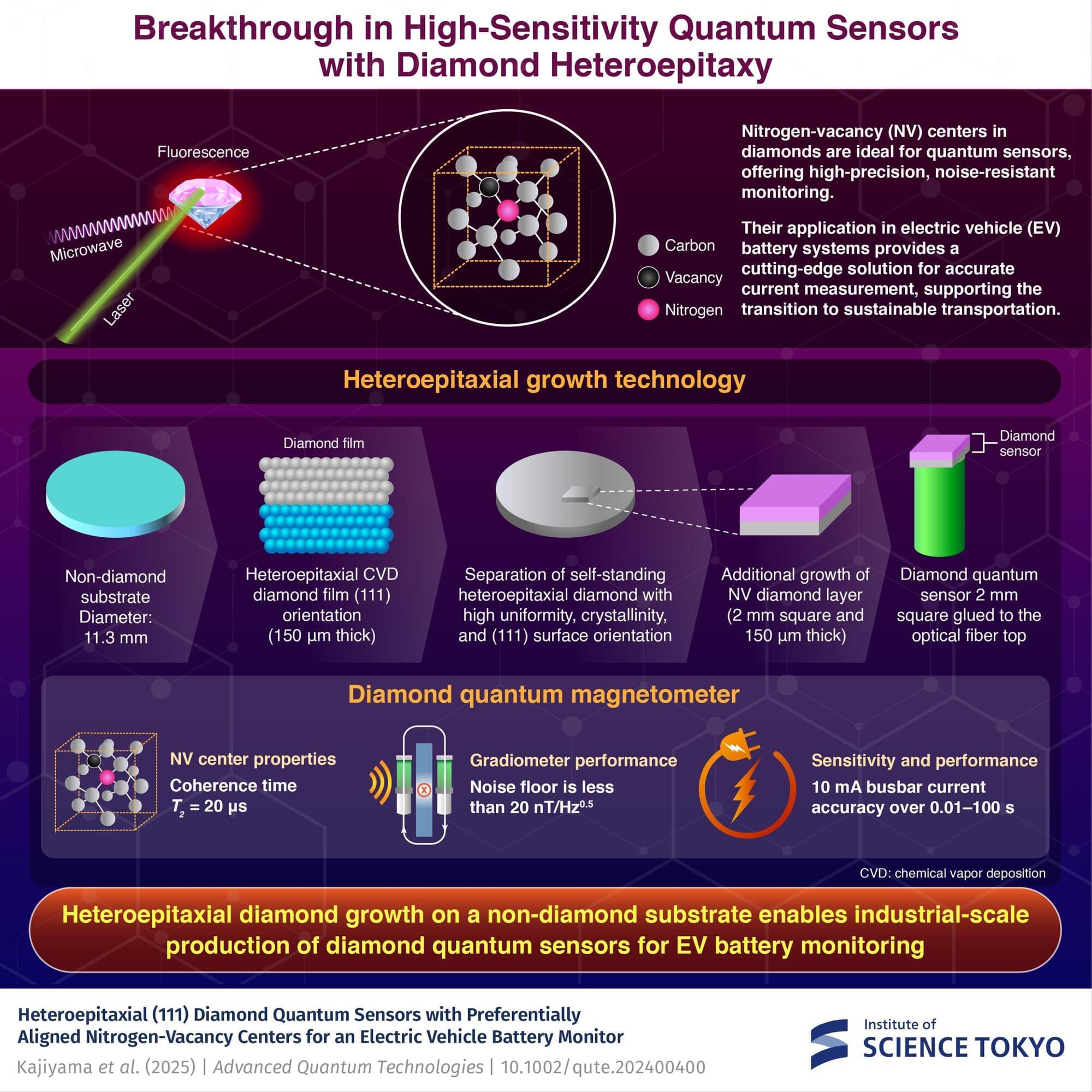
Engineers show industrial potential of diamond quantum sensors for EV battery monitoring

Researchers at the Technical University of Munich (TUM) have invented an entirely new field of microscopy called nuclear spin microscopy. The team can visualize magnetic signals of nuclear magnetic resonance with a microscope. Quantum sensors convert the signals into light, enabling extremely high-resolution optical imaging.

Magnetic resonance imaging (MRI) scanners are known for their ability to look deep into the human body and create images of organs and tissues. The new method, published in the journal Nature Communications, extends this technique to the realm of microscopic detail.

“The used make it possible to convert signals into optical signals. These signals are captured by a camera and displayed as images,” explains Dominik Bucher, Professor of Quantum Sensing and researcher at the Cluster of Excellence Munich Center for Quantum Science and Technology (MCQST).

Hybrid states of light and matter may significantly enhance OLED brightness

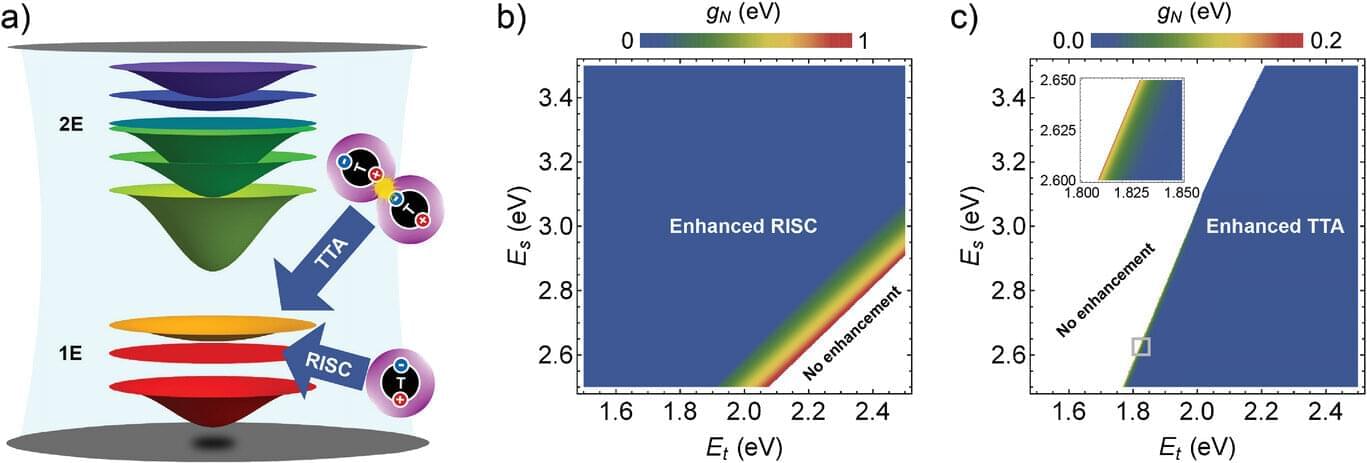
Researchers developed a theoretical model that predicts a substantial increase in the brightness of organic light-emitting diodes (OLEDs) by leveraging novel quantum states called polaritons. Integrating polaritons into OLEDs effectively requires the discovery of new materials, making practical implementation an exciting challenge.

OLED technology has become a common light source in a variety of high-end display devices, such as smartphones, laptops, TVs or smart watches.

While OLEDs are rapidly reshaping lighting applications with their flexibility and eco-friendliness, they can be quite slow at converting electric current into light, with only a 25% probability in emitting photons efficiently and rapidly. The latter is an important condition for boosting the brightness of OLEDs, which tend to be dimmer than other light technologies.

Scientists reveal key to affordable, room-temperature quantum light

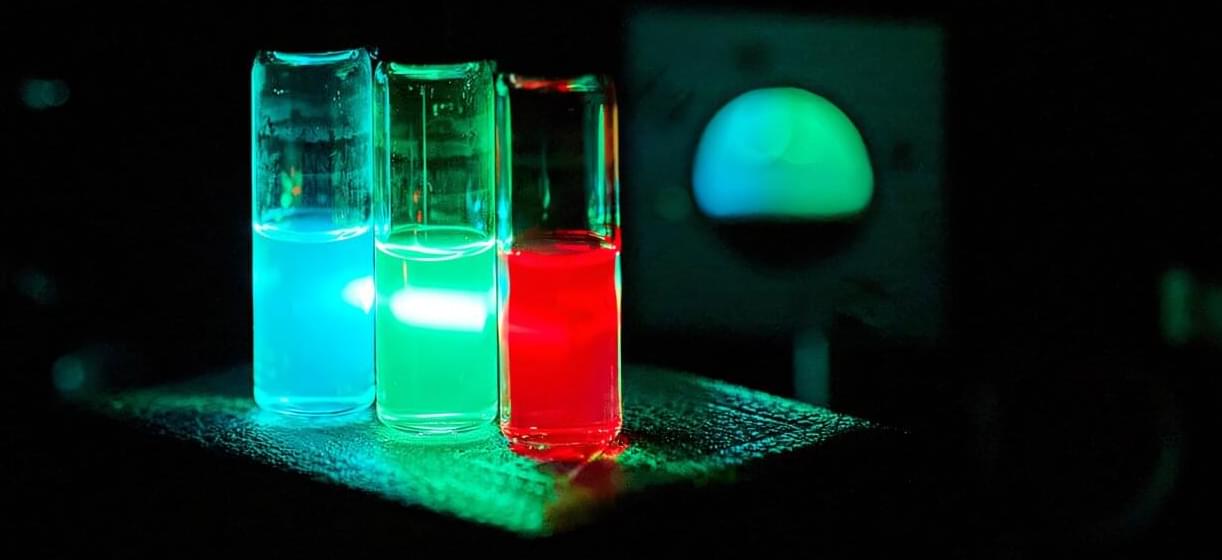
Quantum light sources are fickle. They can flicker like stars in the night sky and can fade out like a dying flashlight. However, newly published research from the University of Oklahoma proves that adding a covering to one of these light sources, called a colloidal quantum dot, can cause them to shine without faltering, opening the door to new, affordable quantum possibilities. The findings are available in Nature Communications.

Quantum dots, or QDs, are so small that if you scaled up a single quantum dot to the size of a baseball, a baseball would be the size of the moon. QDs are used in a variety of products, from computer monitors and LEDs to and biomedical engineering devices. They are also used in and communication.

A research study led by OU Assistant Professor Yitong Dong demonstrates that adding a crystalized molecular layer to QDs made of perovskite neutralizes surface defects and stabilizes the surface lattices. Doing so prevents them from darkening or blinking.

No More Singularities? Quantum Gravity Could Finally Solve the Black Hole Mystery

A black hole is a place in space where the gravitational field is so strong that not even light can escape it. Astronomers classify black holes into three categories by size: miniature, stellar, and supermassive black holes. Miniature black holes could have a mass smaller than our Sun and supermassive black holes could have a mass equivalent to billions of our Sun.

New Maps of the Bizarre, Chaotic Space-Time Inside Black Holes

In the late 1960s, physicists like Charles Misner proposed that the regions surrounding singularities—points of infinite density at the centers of black holes—might exhibit chaotic behavior, with space and time undergoing erratic contractions and expansions. This concept, termed the “Mixmaster universe,” suggested that an astronaut venturing into such a black hole would experience a tumultuous mixing of their body parts, akin to the action of a kitchen mixer.

S general theory of relativity, which describes the gravitational dynamics of black holes, employs complex mathematical formulations that intertwine multiple equations. Historically, researchers like Misner introduced simplifying assumptions to make these equations more tractable. However, even with these assumptions, the computational tools of the time were insufficient to fully explore the chaotic nature of these regions, leading to a decline in related research. + Recently, advancements in mathematical techniques and computational power have reignited interest in studying the chaotic environments near singularities. Physicists aim to validate the earlier approximations made by Misner and others, ensuring they accurately reflect the predictions of Einsteinian gravity. Moreover, by delving deeper into the extreme conditions near singularities, researchers hope to bridge the gap between general relativity and quantum mechanics, potentially leading to a unified theory of quantum gravity.

Understanding the intricate and chaotic space-time near black hole singularities not only challenges our current physical theories but also promises to shed light on the fundamental nature of space and time themselves.


Physicists hope that understanding the churning region near singularities might help them reconcile gravity and quantum mechanics.

/* */