Toggle light / dark theme

Through multiplexed theta waves, brain’s place cells navigate using both external and internal cues

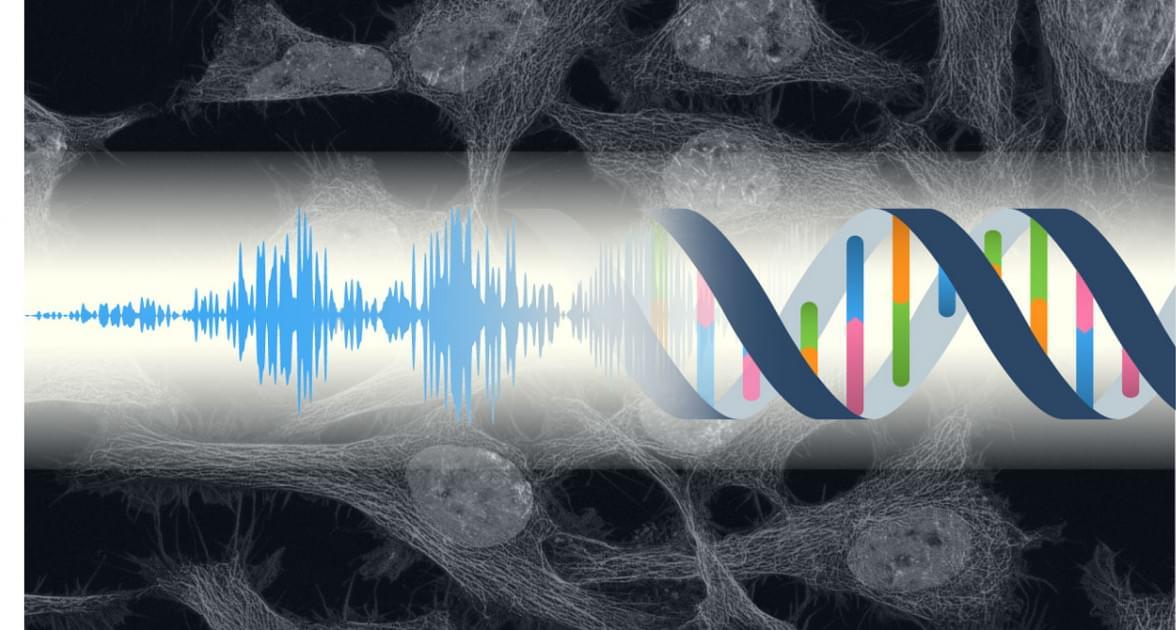
Place cells are specialized neurons in a brain region known as the hippocampus, which have been found to fire when animals are in specific locations. These cells don’t fire randomly, but their activity is known to be organized by theta oscillations, which in rats means that they fire in sync with rhythmic brain waves between 7–9 Hz.

While many past studies have explored the role and firing patterns of place cells, the extent to which their activity is influenced by different types of spatial cues has not yet been fully elucidated. Spatial cues are essentially pieces of information that help animals and humans to determine where they are and where they should head toward to reach a desired location.

Researchers at Johns Hopkins University gathered new experimental evidence suggesting that the multiplexed theta phase coding of place cells, or, in other words, their ability to tackle different tasks in the same “wave” of theta rhythm activity, is controlled by external (i.e., allothetic) and self-motion-related (i.e., idiothetic) spatial cues.

People’s neural responses while watching videos predict whether they will become friends in the future, study finds

Throughout the course of their lives, people typically encounter numerous other individuals with different interests, values and backgrounds. However, not all these individuals will become their good friends, life partners, or meaningful people in their lives.

Many past psychology and behavioral science studies investigated the relationships between different people and what contributes to their perceived affinity to others. While some of these studies linked friendship to physical proximity, interpersonal similarities and other factors, the associated with between people have not yet been fully elucidated.

Researchers at University of California Los Angeles (UCLA) and Dartmouth College recently carried out a study exploring the possibility that people who end up becoming friends exhibit similar neural activity patterns. Their findings, published in Nature Human Behavior, suggest that people are in fact drawn to others who exhibit similar emotional and mental responses to their surroundings.

Activity of large-scale cortical networks follows cyclical pattern, study finds

The human brain can concurrently support a wide range of advanced mental functions, including attention, memory and the processing of sensory stimuli. While past neuroscience studies have gathered valuable insight into the neural underpinnings of each of these processes, the mechanisms that ensure that they are performed efficiently and in a timely fashion have not yet been fully elucidated.

Researchers at the University of Oxford and other institutes recently set out to explore how the activity of large-scale cortical functional networks, interconnected in the brain’s outermost layer, changes over time. Their findings, published in Nature Neuroscience, suggest that the overall order in which these networks become active follows an inherently cyclical pattern.

“This research was inspired by observations that transitions between large-scale brain networks are asymmetric: we have seen that in many cases it is much more likely that network X follows network Y than the other way around,” Dr. Mats W.J. van Es, postdoctoral researcher at the University of Oxford and first author of the paper, told Medical Xpress.

Brain Cells Behind Depression Identified for the First Time

Research on rare post-mortem brain tissue shows changes in gene activity, offering new insight into the biological basis of depression. Researchers from McGill University and the Douglas Institute have discovered two distinct types of brain cells that show alterations in individuals with depressi

Mental Time Travel: Scientists Explore the Mysteries of Autobiographical Hypermnesia

Researchers examined a girl with exceptional memory recall. Her case could transform understanding of how we relive the past and imagine the future. Autobiographical memory is the ability to recall personal experiences that have shaped us since childhood. It includes both emotional and sensory re

Autism’s High Prevalence Could Be an Evolutionary Trade-Off

Autism-linked genes evolved rapidly in humans. They may have aided brain growth and language. A recent study published in Molecular Biology and Evolution by Oxford University Press suggests that the relatively high prevalence of Autism Spectrum Disorders in humans may be rooted in evolutionary hi

/* */