Since nanobots are no longer fiction, is it time to start answering body augmentation questions raised by sci-fi genres like Cyberpunk?
Category: nanotechnology – Page 301

Fast, Efficient bloodstream robots
The unique swimming strategies of natural microorganisms have inspired recent development of magnetic micro/nanorobots powered by artificial helical or flexible flagella. However, as artificial nanoswimmers with unique geometries are being developed, it is critical to explore new potential modes for kinetic optimization. For example, the freestyle stroke is the most efficient of the competitive swimming strokes for humans. Here we report a new type of magnetic nanorobot, a symmetric multilinked two-arm nanoswimmer, capable of efficient “freestyle” swimming at low Reynolds numbers. Excellent agreement between the experimental observations and theoretical predictions indicates that the powerful “freestyle” propulsion of the two-arm nanorobot is attributed to synchronized oscillatory deformations of the nanorobot under the combined action of magnetic field and viscous forces. It is demonstrated for the first time that the nonplanar propulsion gait due to the cooperative “freestyle” stroke of the two magnetic arms can be powered by a plane oscillatory magnetic field. These two-arm nanorobots are capable of a powerful propulsion up to 12 body lengths per second, along with on-demand speed regulation and remote navigation. Furthermore, the nonplanar propulsion gait powered by the consecutive swinging of the achiral magnetic arms is more efficient than that of common chiral nanohelical swimmers. This new swimming mechanism and its attractive performance opens new possibilities in designing remotely actuated nanorobots for biomedical operation at the nanoscale.
Each bot is 5 micrometres long and has three main parts, connected together like sausage links by two silver hinges. Its gold body is flanked by two magnetic arms made of nickel, and applying a magnetic field to the tiny robot makes the arms move.
The next generation bloodstream will be made from biodegradable materials before they can be used in the bloodstream. Less complicated areas in the human body like the urinary tract or the eyeballs should see clinical trials begin within the next five to 10 years. Injecting a single swimmer into an eyeball, where it could deliver medication directly to the retina and then be removed, would be much less complicated than letting a swarm of them swim throughout the entire circulatory system.

New 3D chip combines computing and data storage

As embedded intelligence is finding its way into ever more areas of our lives, fields ranging from autonomous driving to personalized medicine are generating huge amounts of data. But just as the flood of data is reaching massive proportions, the ability of computer chips to process it into useful information is stalling.
Now, researchers at Stanford University and MIT have built a new chip to overcome this hurdle. The results are published today in the journal Nature, by lead author Max Shulaker, an assistant professor of electrical engineering and computer science at MIT. Shulaker began the work as a PhD student alongside H.-S. Philip Wong and his advisor Subhasish Mitra, professors of electrical engineering and computer science at Stanford. The team also included professors Roger Howe and Krishna Saraswat, also from Stanford.
Computers today comprise different chips cobbled together. There is a chip for computing and a separate chip for data storage, and the connections between the two are limited. As applications analyze increasingly massive volumes of data, the limited rate at which data can be moved between different chips is creating a critical communication “bottleneck.” And with limited real estate on the chip, there is not enough room to place them side-by-side, even as they have been miniaturized (a phenomenon known as Moore’s Law).
Building Circuits Without Touching Them: Watch Carbon Nanotubes Self-Assemble
Through Teslaphoresis, nanotubes can be directed to assemble themselves into wires within this force field, making it possible to build circuits without physical contact.
Scientists from Rice University found a way to conduct electricity without making physical contact between the circuit and the energy source. Using a Tesla coil’s antenna to project a gradient high-voltage forcefield into air, they were able to polarize carbon nanotubes within this Teslaphoretic (TEP) field, which then spring out like webs to assemble themselves into wires.
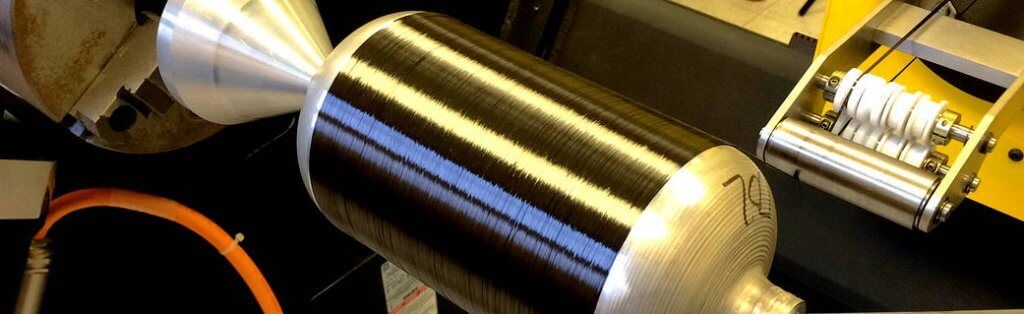
Carbon nanotube reinforce Composites can reduce space vehicle mass
NASA’s Space Technology Mission Directorate (STMD) is keenly interested in nanotechnology – an approach that can reduce the mass and improve the performance of aerospace systems. NASA computer modeling analysis has shown that composites using carbon nanotube reinforcements could lead to a 30 percent reduction in the total mass of a launch vehicle.
“No single technology would have that much of an impact to reduce the mass of a launch vehicle by that much,” explains Michael Meador, Program Element Manager for Lightweight Materials and Manufacturing at NASA’s Glenn Research Center in Cleveland, Ohio.
Tensile properties of a carbon nanotube fiber-based composite tank were tested in a May 16 test flight.
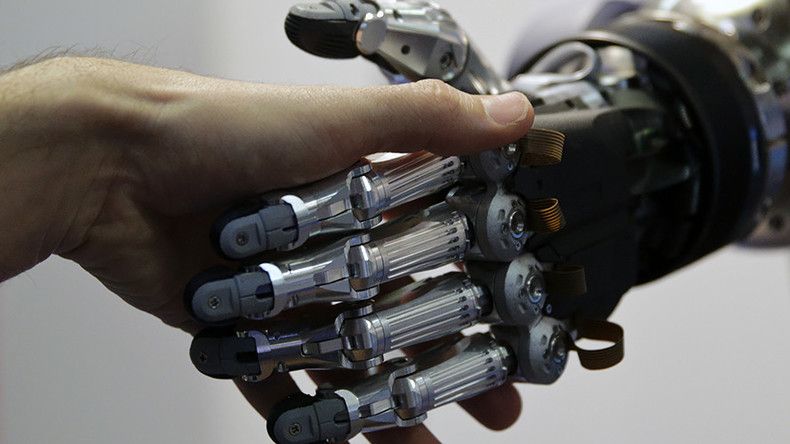
Would human enhancement create Supermen or super tyrants?
The prospect of attaining superior intelligence or physical attributes may be tempting or appear liberating, but cybernetic enhancement could, theoretically, also be used as a means of control. Whoever manufactures the technologies that augment humans would be in a very powerful position and wield an immense degree of control over their human customers (or subjects). Moreover, cybernetically enhanced humans could see their microchips hacked, have their sensations detected by unwanted parties and stored in a database, or be at risk of receiving unsolicited or unpleasant impulses. Might we evolve from homo sapiens to homo servus?
The dream that we may one day transcend our physical and intellectual barriers through advancements in cybernetics and nanotechnology could became a reality during this century. But would this be a blessing or a curse?
As science expands its frontiers and technology continues to evolve, ideas once deemed fanciful or considered part of science fiction find themselves within the realm of possibility. New discoveries may give rise to unique potential and perils, as the field of ethics struggles to keep pace with the latest technological advancements. The dream that one day we humans may eclipse our physical and mental fetters through augmentation by cybernetics or nanotechnology could become a reality. Although transhumanism and posthumanism are considered modern concepts, the idea of improving or transcending the human condition has been explored in philosophy and literature since at least the mid-19th century.
In his book Thus Spoke Zarathustra, 19th century German philosopher Friedrich Nietzsche introduced the concept of the Übermensch (overman or superman) as a goal towards which humans ought to strive, whereby they take control of their own destinies, work collectively towards the betterment of humanity and create a higher set of ideals to give their existence greater meaning. Nietzsche wrote “Man is something that shall be overcome.” (The notion of Übermensch was later corrupted by the Nazis, who integrated it into their perverse racial theories).
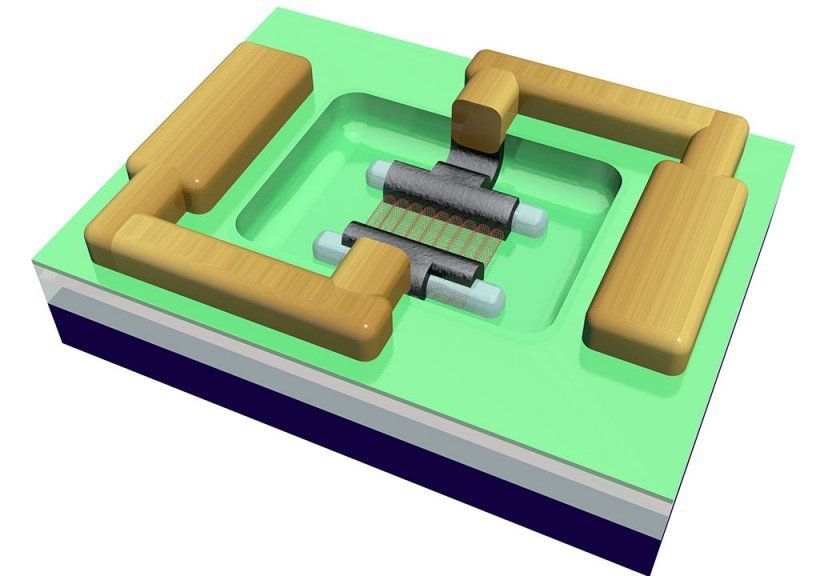
IBM has made Carbon nanotubes transistors smaller and faster than silicon
IBM scientists have made carbon nanotube transistors smaller and faster silicon transistors. Carbon nanotube transistors have long had the potential to be better than silicon, but this is the first time when that promise has been realized. Now IBM and others will have to scale up superior carbon nanotube devices.
IBM scientists have been experimenting with carbon nanotubes, rolled-up sheets of carbon atoms just 1 nanometer, or a billionth of a meter, in diameter. But difficulties working with the material have meant that, for optimal performance, nanotube transistors have to be even larger than current silicon transistors, which are about 100 nanometers across. To cut that number down, a team of scientists used a new technique to build the contacts that draw current into and out of the carbon nanotube transistor. They constructed the contacts out of molybdenum, which can bond directly to the ends of the nanotubes, making them smaller. They also added cobalt so the bonding could take place at a lower temperature, allowing them to shrink the gap between the contacts. Another advance allowed for practical transistors. Carrying enough electrical current from one contact to another requires several nanotube “wires.
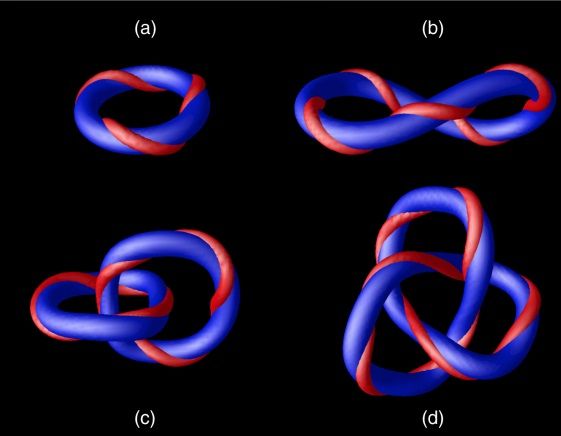
Magnetic nanoknots evoke Lord Kelvin’s vortex theory of atoms
(Phys.org)—In the late 1800s when scientists were still trying to figure out what exactly atoms are, one of the leading theories, proposed by Lord Kelvin, was that atoms are knots of swirling vortices in the aether. Although this idea turned out to be completely wrong, it ushered in modern knot theory, which today is used in various areas of science such as fluid dynamics, the structure of DNA, and the concept of chirality.
Now in a new paper published in Physical Review Letters, mathematical physicist Paul Sutcliffe at Durham University in the UK has theoretically shown that nanoparticles called magnetic skyrmions can be tied into various types of knots with different magnetic properties. He explains that, in a sense, these nanoknots represent a “nanoscale resurrection of Kelvin’s dream of knotted fields.”
Skyrmions are the name of a general class of particles that are made by twisting a field. When this field is a magnetic field, the skyrmions are called magnetic skyrmions. Magnetic skyrmions have attracted a lot of attention recently due to their potential applications in spintronics, where electron spins (which are related to the electron’s magnetic properties) are exploited in the design of transistors, storage media, and related devices.

Scientists Demonstrate “Liquid Light” at Room Temperature for the First Time
Researchers from Italy and Canada have made liquid light at room temperatures for the first time. The work paves the way for studying quantum hydrodynamics further and for future applications of this new type of matter in electronics devices.
Thanks to technological advances, scientists now have various ways of manipulating matter. Often times, these result in discovering new types of matter that posses unique properties — like the famous metallic hydrogen and the bizarre time crystal. The discovery of such materials leads to a wide range of potential applications in electronics. One of these is the so-called “liquid light,” a strange matter which researchers from the CNR NANOTECH Institute of Nanotechnology in Italy and the Polytechnique Montréal in Canada recently formed at room temperature for the first time.
The Elite Want to Transfer Consciousness Into a New Body and Live Forever
A conspiracy theory article that I think is spreading semi-fake news (but it’s interesting to see how some people react to #transhumanism):
While the title of this article may sound like it belongs on a strange and dark science fiction movie, it doesn’t. Unfortunately, it seems that as the technological world continues to advance, the more the old adage ‘the truth is stranger than fiction’ becomes true.
Throughout the past year or so, we have heard Google’s leading futurist tell us that it will one day be possible to live forever. His belief is that it will start with nanobots in the human body which would work to defeat deadly disease, in place of our immune system. Kurzweil maintains that the human immune system is inadequate and that,
“Your immune system, for example, does a poor job on cancer,” he told Playboy.” It thinks cancer is you. It doesn’t treat cancer as an enemy. It also doesn’t work well on retroviruses. It doesn’t work well on things that tend to affect us later in life because it didn’t select for longevity.”
He also believes that the nanobots will enhance humanity and bring us to a point we could never have reached on our own. “We’re going to be funnier. We’re going to be sexier. We’re going to be better at expressing loving sentiment.”