Toggle light / dark theme

Unveiling Biology with Deep Microscopy

The scientific revolution was ushered in at the beginning of the 17th century with the development of two of the most important inventions in history — the telescope and the microscope. With the telescope, Galileo turned his attention skyward, and advances in optics led Robert Hooke and Antonie van Leeuwenhoek toward the first use of the compound microscope as a scientific instrument, circa 1665. Today, we are witnessing an information technology-era revolution in microscopy, supercharged by deep learning algorithms that have propelled artificial intelligence to transform industry after industry.

One of the major breakthroughs in deep learning came in 2012, when the performance superiority of a deep convolutional neural network combined with GPUs for image classification was revealed by Hinton and colleagues [1] for the ImageNet Large Scale Visual Recognition Challenge (ILSVRC). In AI’s current innovation and implementation phase, deep learning algorithms are propelling nearly all computer vision-intensive applications, including autonomous vehicles (transportation, military), facial recognition (retail, IT, communications, finance), biomedical imaging (healthcare), autonomous weapons and targeting systems (military), and automation and robotics (military, manufacturing, heavy industry, retail).

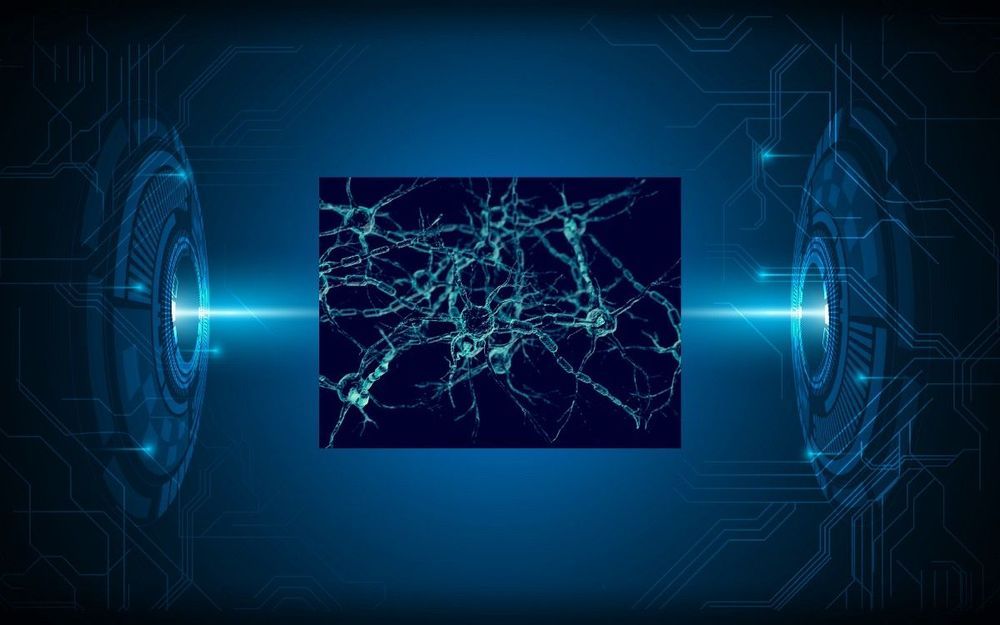
It should come as no surprise that the field of microscopy would ripe for transformation by artificial intelligence-aided image processing, analysis and interpretation. In biological research, microscopy generates prodigious amounts of image data; a single experiment with a transmission electron microscope can generate a data set containing over 100 terabytes worth of images [2]. The myriad of instruments and image processing techniques available today can resolve structures ranging in size across nearly 10 orders of magnitude, from single molecules to entire organisms, and capture spatial (3D) as well as temporal (4D) dynamics on time scales of femtoseconds to seconds.
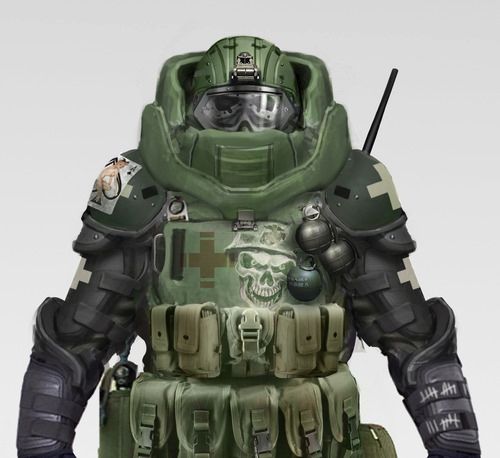
Juggernaut Suit

A is a piece of equipment seen in Call of Duty: Modern Warfare 2, Call of Duty: Black Ops and Call of Duty: Advanced Warfare, and usable in Call of Duty: Modern Warfare 3, Call of Duty Online, Call of Duty: Ghosts and Call of Duty: Heroes. Juggernauts are seen wearing the suits in the Special Ops levels “Snatch& Grab”, “Estate Takedown”, “High Explosive”, and “Armor Piercing”. A character with a juggernaut suit is also seen in “Museum”.

L3Harris wins $1.2 billion contract to maintain, upgrade space surveillance systems

WASHINGTON — L3Harris has been awarded a 10-year $1.2 billion contract by the U.S. Space Force’s Space and Missile Systems Center to maintain and modernize the military’s network of space surveillance sensors.

The award is for a new program named MOSSAIC, short for maintenance of space situational awareness integrated capabilities. The selection of L3Harris was announced Feb. 25 on the beta. SAM.gov federal contracting opportunities website.

MOSSAIC replaces a previous contract that Harris (before it merged with L3) had held since 2002 to maintain the Air Force’s network of telescopes — known as the Ground-based Electro-Optical Deep Space Surveillance System — that track objects in geostationary orbits. Now under control of the U.S. Space Force are three GEODSS sites — on the island of Diego Garcia in the Indian Ocean; at the White Sands Missile Range, New Mexico; and in Maui, Hawaii.

Researchers Work to Laser-Proof Ships

Circa 2008


Okay, so no one has quite perfected laser weapons yet, but that doesn’t mean you can’t at least think about possible defenses. Naval researchers are looking at materials that could deflect high-powered lasers, reports Discovery:

Laser_shield “If you have a ship being hit by a laser, and it was made of this metamaterial, you could reflect the laser beam,” said Simin Feng, one of the study co-authors and a researcher at China Lake.



Unlike normal materials, which derive their properties largely from the chemicals that comprise them, metamaterials are artificially made materials that get their properties from their physical structures.

The material Feng and her co-author Klaus Halterman, also of China Lake, have theorized would be made of three layers of conventional materials, with the metamaterials sandwiched between the three layers. Since the material would be thin it should be easily applied and “wouldn’t weigh things down,” said Halterman.

Renowned Mathematician And Physicist Freeman Dyson Has Died At Age 96

Freeman Dyson, renowned scientist and scholar, has died at 96, according to his daughter Mia.

The British-born scientist and professor emeritus spent much of his career as a physics professor at the Institute for Advanced Study in Princeton, according to his biography on the institute’s website. He was among 29 scientists who supported the Obama administration’s 2015 nuclear deal with Iran. In 1967, he also acted as a military adviser regarding the use of tactical nuclear weapons in the Vietnam War, and in 1984 he wrote a book on the dangers of nuclear warfare.

A futurist and space-enthusiast, Dyson had several scientific concepts named after him, including the “Dyson Tree,” a genetically engineered plant that would be able to survive in a comet and grow in space. One of his ideas, the Dyson Sphere, was featured in an episode of the sci-fi series Star Trek.

Should the US Have a Secretary For Influence Operations?

Two former top special operations officials say their job was too junior and the Pentagon isn’t taking information warfare seriously enough.

Despite shifting military budgets to better keep up with competitors, there’s one area where countries like China, Russia, and even Iran are proving nimble and frustrating for the Department of Defense: influence operations.

In this new age of information warfare, the military art of influence ops — otherwise sometimes called psychological ops, information ops, or most-recently, military information support ops — lacks the senior level leadership it deserves, say two former Pentagon officials who were in charge of special operations policies. According to them, the position they once held is too junior for the seriousness of the threat and mission, and influence ops is spread so wide, that nobody is sure who is really in charge.

/* */