Toggle light / dark theme

Game-changer in cancer treatment: Antibody therapy to replace invasive surgeries

This collaboration marks a significant step in both companies’ efforts to address the pressing needs in cancer treatment through innovative solutions.

OBT has developed a proprietary discovery platform, OGAP-Verify, which has enhanced sensitivity and specificity for identifying promising drug targets.

This platform is central to collaboration, as it allows for selecting targets with improved attributes crucial for effective drug development.


Debunking The AI Myth That Pinnacle AGI Will Be One Big Brain

In today’s column, I debunk the common myth that if we attain artificial general intelligence (AGI) the resultant AI will be a solo colossus or said-to-be “one big brain”

Let’s talk about it.

This analysis of an innovative AI breakthrough is part of my ongoing Forbes column coverage on the latest in AI, including identifying and explaining various impactful AI complexities (see the link here).

Physicists Create New Type of Time Quasicrystal — Inside a Diamond

A new type of time crystal could represent a breakthrough in quantum physics.

In a diamond zapped with lasers, physicists have created what they believe to be the first true example of a time quasicrystal – one in which patterns in time are structured, but do not repeat. It’s a fine distinction, but one that could help evolve quantum research and technology.

“They could store quantum memory over long periods of time, essentially like a quantum analog of RAM,” says physicist Chong Zu of Washington University in the US. “We’re a long way from that sort of technology. But creating a time quasicrystal is a crucial first step.”

4 Technologies That Could Power The Future of Energy

Where can you find lasers, electric guitars, and racks full of novel batteries, all in the same giant room? This week, the answer was the 2025 ARPA-E Energy Innovation Summit just outside Washington, DC.

Energy innovation can take many forms, and the variety in energy research was on display at the summit. ARPA-E, part of the US Department of Energy, provides funding for high-risk, high-reward research projects. The summit gathers projects the agency has funded, along with investors, policymakers, and journalists.

Hundreds of projects were exhibited in a massive hall during the conference, featuring demonstrations and research results. Here are four of the most interesting innovations MIT Technology Review spotted on site.


From laser steel to fuel made from rocks, we look inside the 2025 ARPA-E energy technology conference.

Muonic atoms unlock new possibilities in nuclear physics

University of Queensland researchers have made a breakthrough in muonic atom research, clearing the way for new nuclear physics experiments.

A team at the UQ School of Mathematics and Physics has combined theory and experiments to show that nuclear polarization does not limit studies of muonic atoms. The research was published in Physical Review Letters.

Co-author Dr. Odile Smits said the finding provides a clear path for using muonic atoms to better understand the magnetic structure of the .

China’s ‘fastest-ever’ 2D chip beats Intel with 40% more speed

A team of researchers at Peking University claims to have made a breakthrough in chip technology, potentially reshaping the semiconductor race.

Their newly developed 2D transistor is said to be 40% faster than the latest 3-nanometre silicon chips from Intel and TSMC while consuming 10% less energy. This innovation, they say, could allow China to bypass the challenges of silicon-based chipmaking entirely.

“It is the fastest, most efficient transistor ever,” according to an official statement published last week on the PKU website.

Led by physical chemistry professor Peng Hailin, the research team believes their approach represents a fundamental shift in semiconductor technology.


Peking University researchers have developed a 2D transistor that operates 40% faster and uses 10% less energy than leading silicon chips.

Roborock’s highly anticipated robot vacuum with an arm is now available for pre-order

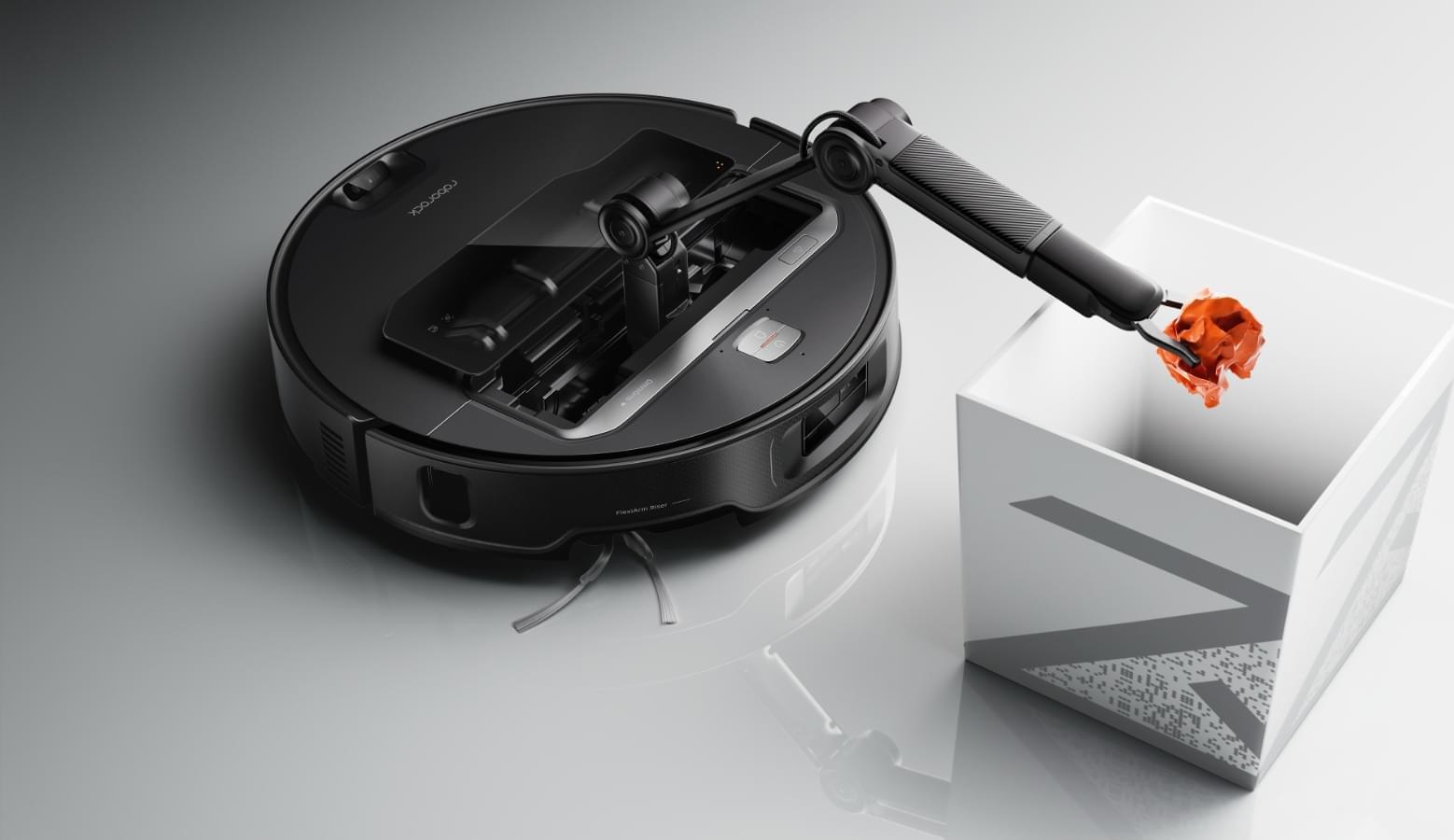
Unveiled at CES 2025, Roborock’s innovative robot vacuum with an arm, Saros Z70, is now available as a pre-order bundle in the US store. According to the company, consumers can get the Saros Z70 for $1,899 with another Robocok product. This device’s availability is expected in early May.

Roborock previewed the Saros Z70 to BGR a little before its official announcement at CES, and the company’s view for the future of the robot vacuum segment future is impressive. Roborock says the Saros Z70 features a foldable robotic arm with five axes that can deploy itself to clean previously obstructed areas and put away small items such as socks, small towels, tissue papers, and sandals under 300g.

While I can understand the appeal of the robot vacuum going a step further–I think the ability to climb different areas is more interesting with the latest Roborock Qrevo Curv and Saros 10R –it feels a bit too much not removing your dirty socks from the floor; you know?

/* */