Category: genetics – Page 493
Local extinction of Southern California mountain lions possible within 50 years
Two isolated mountain lion populations in southern California’s Santa Ana and Santa Monica Mountains are at risk of local extinction, perhaps as soon as within 50 years, according to a study published in the journal Ecological Applications.
The study showed the extinction risk is due to low genetic diversity and mortality that affects the stability of the population. Mountain lion mortality is often caused by humans, but can also result from changes in the environment, such as wildfire and fluctuations in prey density.
The two mountain lion populations in the human-dominated landscape of southern California are isolated by freeways and development. For the study, lead author John Benson of the University of Nebraska and co-authors at UCLA, the University of California, Davis, the National Park Service, the University of Washington, Northern Arizona University, and the University of Wyoming used population viability modeling to predict the possibilities of extinction from genetic and demographic risk factors.
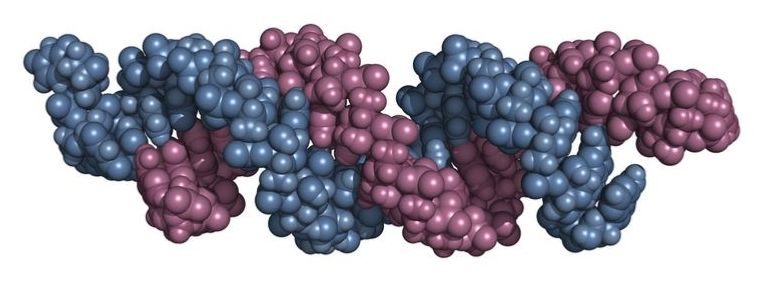
Partial Cellular Reprogramming to Reverse Cellular Aging
We have talked about the potential of partial cellular reprogramming in previous articles, and today, we want to draw attention to a new paper that promises to further refine reversal of epigenetic aging in cells.
As we age, our cells experience alterations to their epigenetic markers, and this changes gene expression, which is proposed to be a primary reason we age. Recently, there has been considerable interest in resetting these epigenetic markers to reverse cellular aging, and this paper builds on that.
Three of the study’s authors, Prof. Vittorio Sebastiano, Jay Sarkar, and Marco Quarta, have founded Turn.bio, a biotech company that is working to bring partial cellular reprogramming to humans. The company is also currently enjoying the leadership of Gary Hudson from Oisin Biotechnologies, who is standing in as CEO to help the company get off the ground and funded.

Researchers Discover DNA Switch for Full Body Regeneration
This new method could open a major avenue towards the full regeneration of body parts.
A new study has revealed a method of switching the early growth response of DNA on and off, opening the future possibility of regenerating human body parts with the use of genetic editing.

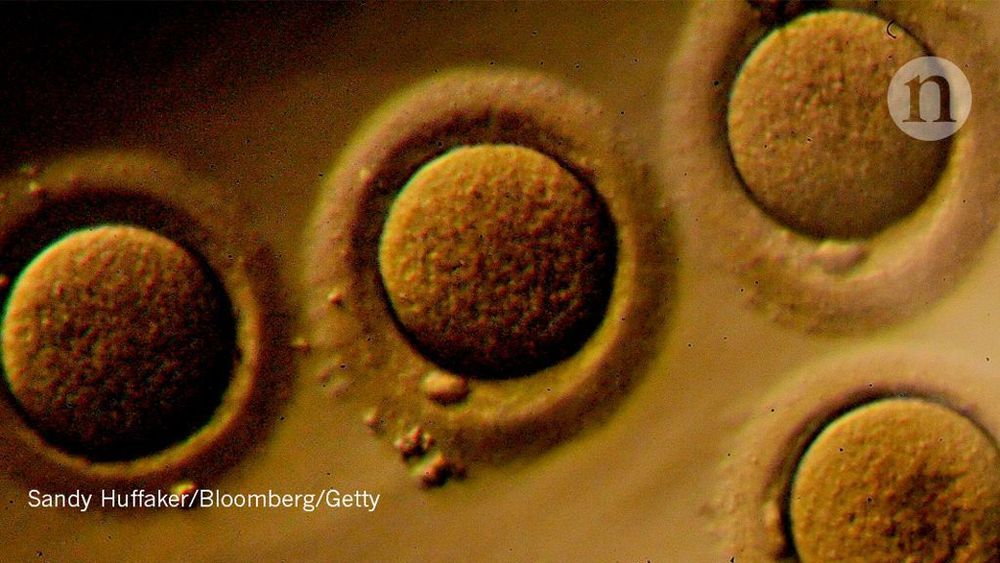

This Harvard scientist wants your DNA to wipe out inherited diseases — should you hand it over?
Imagine a future where an online dating app doesn’t just match you to potential partners who meet your preferences for age, height and fondness for pinot noir, but to those with whom you’re genetically compatible. Not so much people you’re likely to have physical chemistry with – apps that make dubious claims to do that on the basis of a cheek swab already exist – but those with whom you won’t pass on a devastating genetic disease to your children.
It’s not sexy stuff; certainly not first-date conversation. Most people only discover that they’re among the four per cent who carry the same recessive genetic mutation for a rare condition, such as cystic fibrosis or Tay-Sachs, as their partner when their baby is born with it – or dies from it.
True, couples could find out their genes don’t mix after they’ve decided to have a baby and before they start trying – but how heartbreaking would that be, once they’re already in love? Far simpler never to meet in the first place, and simply to pick from the other 96 per cent with whom they can mate with abandon.