Toggle light / dark theme

Spider With Three Super Powers | The Hunt | BBC Earth

Known for eating other spiders, Portia is a genus of the jumping spider that is able to leap up to 50 times her own body length. Captured by stunning close up footage, we get to witness this amazing spider use its super powers to dine on prey three times her size.

Taken From The Hunt

Want to share your views with the team behind BBC Earth and win prizes? Join our fan panel here: https://tinyurl.com/YouTube-BBCEarth-FanPanel

BBC Earth Facebook http://www.facebook.com/bbcearth
BBC Earth Twitter http://www.twitter.com/bbcearth
BBC Earth Instagram https://www.instagram.com/bbcearth/?hl=en

Visit http://www.bbc.com/earth/world for all the latest animal news and wildlife videos.

This is a commercial channel from BBC Studios. Service & Feedback https://www.bbcstudios.com/contact/contact-us/

Raven Shakes His Tail Feathers Every Time He Sees Dad | The Dodo

This raven acts just like a puppy every time he’s with his dad. He wants to play, share snacks, and even shakes his tail feathers!

For more of Loki the raven, you can check him out on Instagram: https://thedo.do/lokiraven, on YouTube: https://thedo.do/lokiravenyt, and on Facebook: https://www.facebook.com/lokitraven/.

Introducing Dodo swag! thedodo.com/shop

Love Animals? Subscribe: http://thedo.do/2tv6Ocd
¿Hablas español?: https://thedo.do/2BsuN4o

Follow The Dodo:
Tweet with us on Twitter: https://thedo.do/2Jast1M
Howl with us on Musical.ly: https://thedo.do/2qFkbGT
Take a peek at our Snapchat: http://thedo.do/2gkVhsz
Love our Instagram: http://thedo.do/2agAEce
Like us on Facebook: http://thedo.do/1dJ9lmn
Read more on our site: http://thedo.do/KWDoNt

For the love of animals. Pass it on.

Scientists develop rewritable ‘silk drive’ that can be implanted in humans

The silk drive is still in the proof-of-concept stage and “unlikely in the foreseeable future to match the speed and storage capacity of state-of-the-art solid-state devices at a competitive cost,” according to Chinese and US researchers, who promised “substantial improvements in the speed and storage capacity of silk drives.”


Scientists at CAS and two separate US universities have jointly developed a storage medium made from silk proteins that can be implanted in the human body.

Air Force Eyes Adding Nuclear-Armed Hypersonic Boost-Glide Vehicles To Its Future ICBMs

« The U.S. Air Force is at least researching what it might take to develop a nuclear-armed hypersonic boost-glide vehicle with a range equivalent to a traditional intercontinental ballistic missile, or ICBM. This vehicle could potentially go on top of the service’s future Ground-Based Strategic Deterrent ICBMs, which are now in development. Publicly, the hypersonic weapons programs now in progress across the U.S. military are all conventionally-armed.

Aviation Week was first to report on this potential nuclear hypersonic weapon effort on Aug. 18, 2020, based on information the Air Force Nuclear Weapons Center had included in a request for information posted online six days earlier. That document, which was marked “For Official Use Only” and has since been taken offline, outlined seven potential upgrade tracks for an ICBM with a “modular open architecture.” «


At present, all other hypersonic weapons of this type that the US military is developing are conventionally armed.

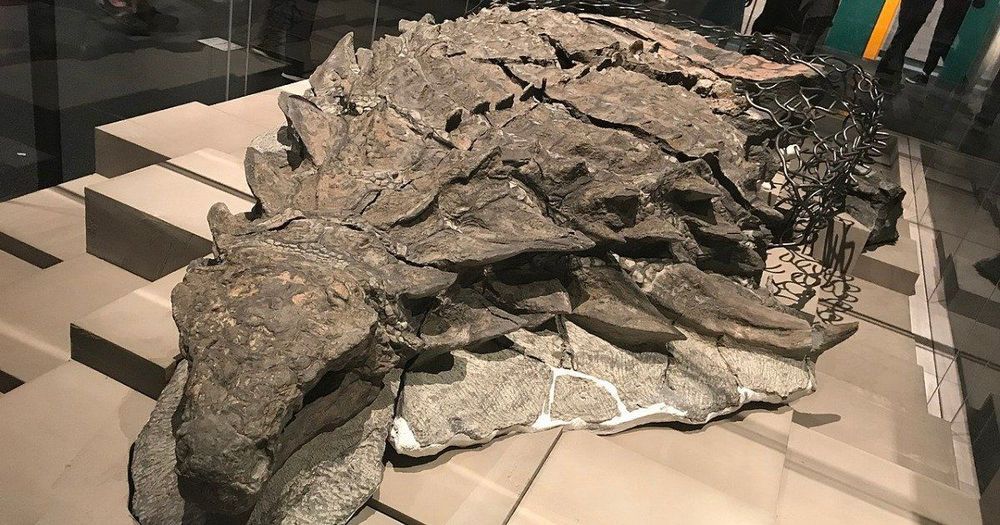
‘Mona Lisa’ of Dinosaur Fossils Found Unbelievably Well-Preserved

The specimen is so well preserved, entombed as it was in pure mud, that it is the best, most complete dinosaur fossil ever found — anywhere. We can even see what its last meal was!


Canada’s western provinces are famous for many things: dinosaur fossils, the Rocky Mountains, helicopter skiing in Banff, and one of the world’s best and most famous dinosaur museums, the Royal Tyrell Museum of Paleontology in Drumheller, Alberta. One of the museum’s finest fossils belongs to a plant eating dinosaur called a “nodosaur,” a creature archaeologists say was almost 20 feet long and weighed in at close to 3,000 pounds when it lived 110 million years ago during the Early Cretaceous period.

A particularly unusual feature of this dinosaur was the way in which it expired; after eating a full dinner, it simply passed away while lying in a river bed, ultimately making its way out to sea. Perhaps a rain storm washed it away, or perhaps some other climactic event; no matter how it ended up there, the consequence was that the fossil survived in almost perfect form. It was discovered in 2011 by an oil sands worker in northern Alberta.

The dinosaur has given experts many fresh insights not only into this particular species, but the time period in which it lived. Experts at the museum say the specimen is so well preserved, entombed as it was in pure mud, that it is the best, most complete dinosaur fossil ever found — anywhere.

/* */