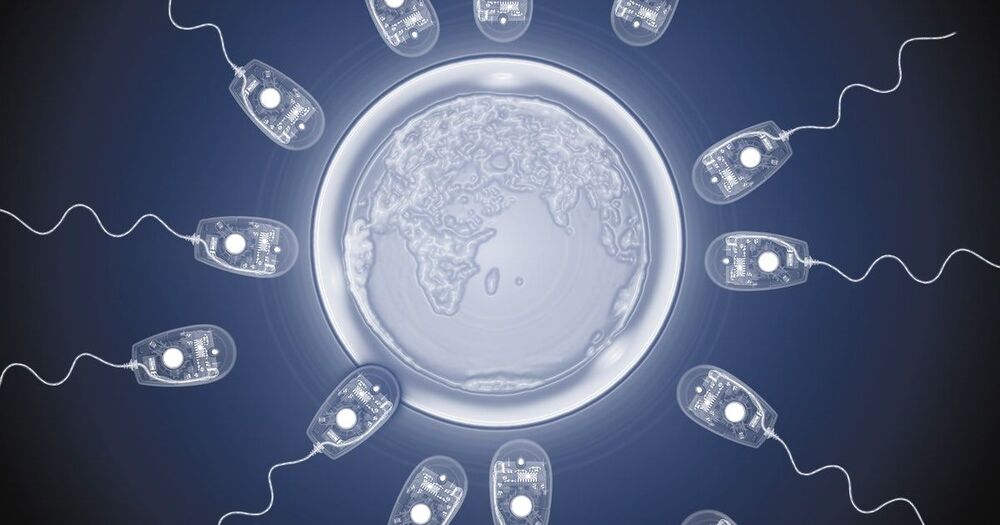
In a first-of-its-kind experiment, a team of Japanese researchers freeze-dried samples of mice sperm and sent them aboard the ISS to see how well this crucial element of human life (and, well, a lot of life on Earth) will fair against the harsh radiation of space.
Even after six long years aboard the ISS, the team found that the mice’s space sperm sired equally healthy pups as its terrestrial control. An additional X-ray experiment predicts that this positive outcome could persist with up to 200 years of space radiation exposure.
The first-of-its-kind discovery, described as “a dream of many fiction writers,” is a huge leap forward in understanding how specimens — perhaps even humans — can be preserved for generations.
A new study has revealed that humans — along with all other mammals and reptiles — have the capability of producing venom. The study, published on Monday (March 29) in the journal Proceedings of the National Academy of Sciences, said humans apparently have a “tool kit” to produce venom.
It said kallikreins, a kind of protein that digest other proteins, are secreted in saliva and are a key part of many venoms. They are a natural starting point for theoretically venomous humans.
50+ Year Study Of The Life Cycle, Conservation And Welfare Of Africa’s Elephants — Dr. Vicki Fishlock, Ph.D., Resident Scientist, Amboseli Trust for Elephants.
Dr. Vicki Fishlock Ph.D. is a Resident Scientist, at The Amboseli Trust for Elephants (https://www.elephanttrust.org/), an organization that aims to ensure the long-term conservation and welfare of Africa’s elephants in the context of human needs and pressures, through scientific research, training, community outreach, public awareness and advocacy, and which is involved in the longest-running study of wild elephants in the world.
Dr. Fishlock joined The Amboseli Trust for Elephants (ATE) in January 2011 to study social disruption and recovery in elephant families after the terrible 2009 drought. Her work focuses on leadership and negotiation in the face of risk, as well as the very long-term social dynamics.
Prior to working at ATE in Kenya, Dr. Fishlock studied Western gorillas and forest elephants in the Republic of Congo, where she earned her Ph.D. under the supervision of Prof. Phyllis Lee, examining the use of forest clearings as social arenas for elephants.
Dr. Fishlock previously graduated with first class honors in Zoology from the University of Edinburgh. After graduation, she worked as a research assistant at Chester Zoo on behavioral and hormonal indicators of welfare in captive orangutans.