CBI’s Operation Chakra V dismantles a transnational tech support scam targeting UK, Australia. Over £390,000 lost in UK, two arrests made.



Humans have built so many dams around the world that the Earth’s poles have wandered away from the planet’s rotational axis, new research suggests.
Over the last 200 years, humans have constructed nearly 7,000 massive dams, impounding enough water to nudge the Earth’s poles by about three feet (one meter) and cause a 0.83-inch (21-millimeter) drop in global sea levels, according to a new study in Geophysical Research Letters.
This drift is possible because Earth’s solid crust forms a hard shell around a molten layer of gooey magma. This means that whenever a significant amount of mass is redistributed across the planet’s surface, the outermost rock layer wobbles, shifting relative to Earth’s molten interior. When this happens, different areas on the Earth’s surface end up directly over the planet’s rotational axis. As a result, the planet’s poles pass through different surface locations than before, a phenomenon known as true polar wander.
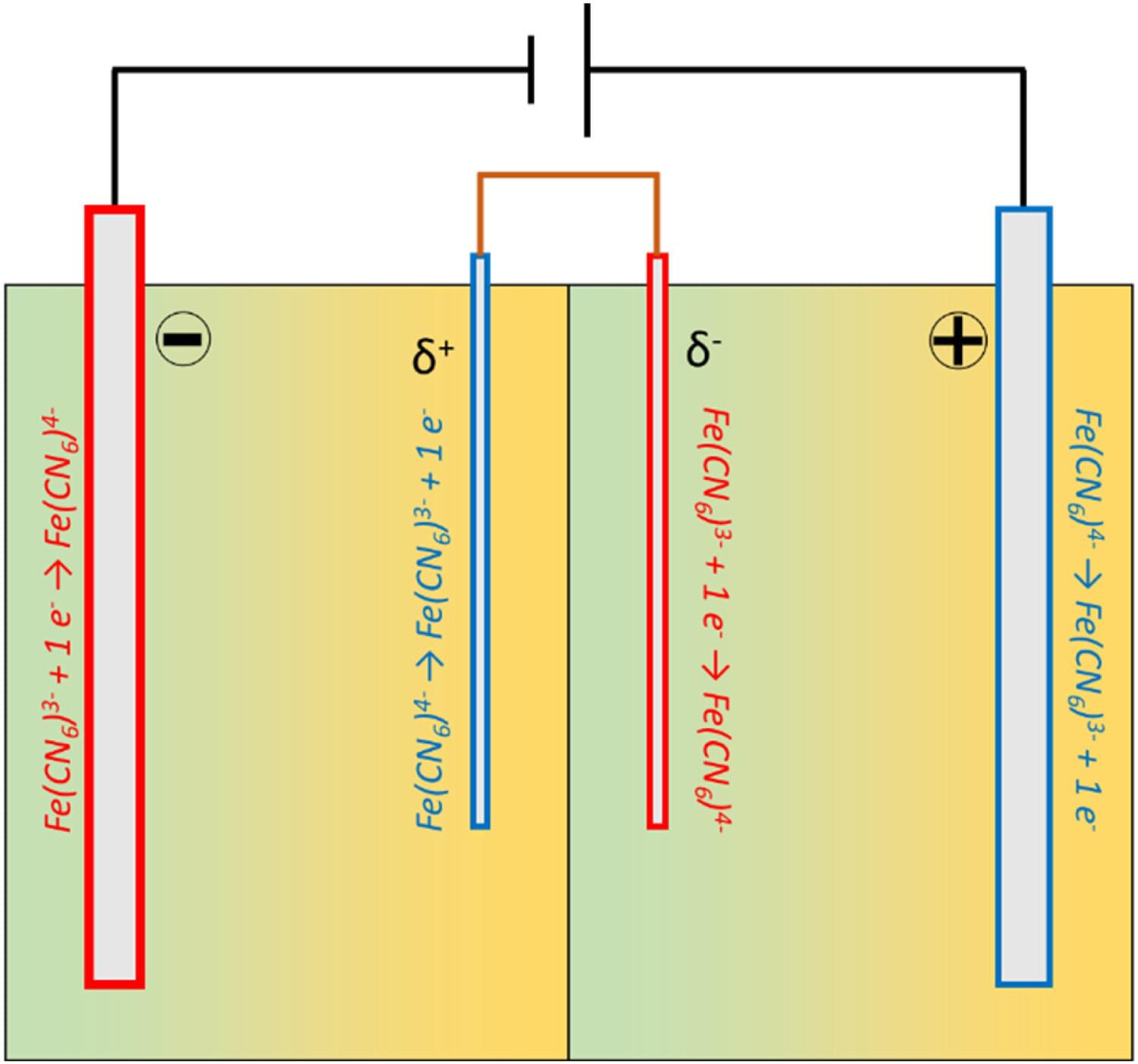
A research team led by the Institute of Materials Science of Barcelona (ICMAB-CSIC) has demonstrated a new induction-based mechanism that enables partial self-recharging in batteries, using a symmetric iron-based configuration as a proof of concept. The study, published in Electrochimica Acta, lays the groundwork for future battery systems that integrate wireless recharging capabilities through induced redox reactions.


While humans can regularly replace certain cells, like those in our blood and gut, we cannot naturally regrow most other parts of the body. For example, when the tiny sensory hair cells in our inner ears are damaged, the result is often permanent hearing loss, deafness, or balance problems. In contrast, animals like fish, frogs, and chicks regenerate sensory hair cells effortlessly.
In his first large-scale public presentation after receiving the Turing Award, Dr. Richard S. Sutton presents, “The Era of Experience & The Age of Design,” r…

An ultra-compact, ultra-wide-bandwidth in-phase/quadrature modulator on a silicon chip is demonstrated, enabling coherent transmission for symbol rates up to 180 Gbaud and a net bit rate surpassing 1 Tb s−1 over an 80 km span, with modulation energy consumption as low as 10.4 fJ bit−1, and promising enhanced performance and scalability for future networking infrastructures.

It is a famous result of Kolmogorov that there exists a (Lebesgue) integrable function on the torus such that the partial sums of Fourier series of $f$ diverge almost everywhere (a.e.). More specifically, he exhibited an $f\in L^{1}(\mathbb{T})$ such that.
\begin{align*} \sup_{N\geq 1}\left|S_{N}f(x)ight|=\sup_{N\geq 1}\left|(f\ast D_{N})(x)ight|=\infty, \qquad\forall \text{ a.e. } x\in\mathbb{T}, \end{align*} where $S_{N}$ is the $N^{th}$ partial sum and $D_{N}$ is the $N^{th}$ Dirichlet kernel given below. \begin{align*} S_{N}f(x):=\sum_{\left|night|\leq N}\widehat{f}(n)e^{2\pi inx}, \quad D_{N}(x):=\dfrac{\sin 2\pi(N+\frac{1}{2})x}{\sin \pi x} \end{align*} and we identify $\mathbb{T}$ with the unit interval $[0,1]$.
I have read, for example pg. 118 in [Pinsky], that Kolmogorov’s counterexample can be replicated in the context of the Fourier transform on the real line $\mathbb{R}$, showing that $L^{1}$ pointwise Fourier inversion can fail quite horribly. If my understanding is correct, then the following claim is true: