The posterior’s proportional to the product of the prior and the likelihood


Quantum stochastic rectification is a process observed in some physical systems, which entails the conversion of random quantum fluctuations (i.e., quantum noise) and a small oscillating signal, such as a weak alternating current or AC voltage, into a steady output (e.g., a direct current, or DC). This quantum effect has been previously reported in magnetic tunnel junctions that are driven by both quantum mechanics and randomness (i.e., stochastic processes).
Researchers at the University of California–Irvine recently showed that the quantum stochastic rectification observed in individual molecules can be leveraged to study their intrinsic relaxation dynamics. Their approach, outlined in a paper published in Physical Review Letters, could inform the future study of molecular dynamics and advance the measurement of rapid processes that take place in single molecules at the atomic scale.
“A few years ago, I served on a Ph.D. Advancement committee and the graduate student discussed his thesis research involving stochastic processes in nm-scale magnetic tunnel junctions,” Wilson Ho, senior author of the paper, told Phys.org. “The signal in his experiment was affected by the thermal noise and showed a transition when the driving frequency was varied.

They look like futuristic eyewear. But the goggles developed by Samuel Achilefu, PhD, and his team at the School of Medicine have a much greater purpose: They help surgeons see and remove cancer. Achilefu discusses his journey from childhood to the development of the goggles, to what he hopes is yet to come.


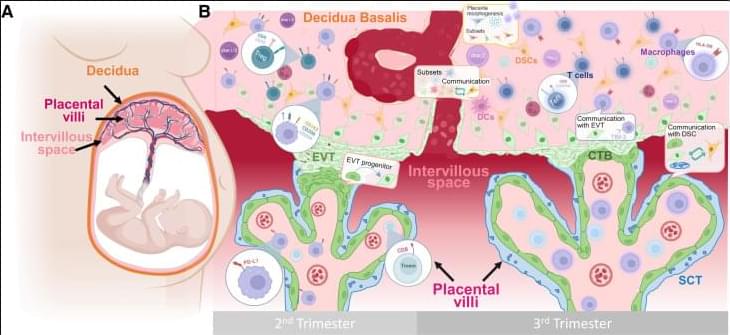
The maternal-fetal interface represents a critical site of immunological interactions that can greatly influence pregnancy outcomes. The unique cellular composition and cell-cell interactions taking place within these tissues has spurred substantial research efforts focused on the maternal-fetal interface. With the recent advent of single-cell technologies, multiple investigators have applied such methods to gain an unprecedented level of insight into maternal-fetal communication. Here, we provide an overview of the dynamic cellular composition and cell-cell communications at the maternal-fetal interface as reported by single-cell investigations.