Toggle light / dark theme

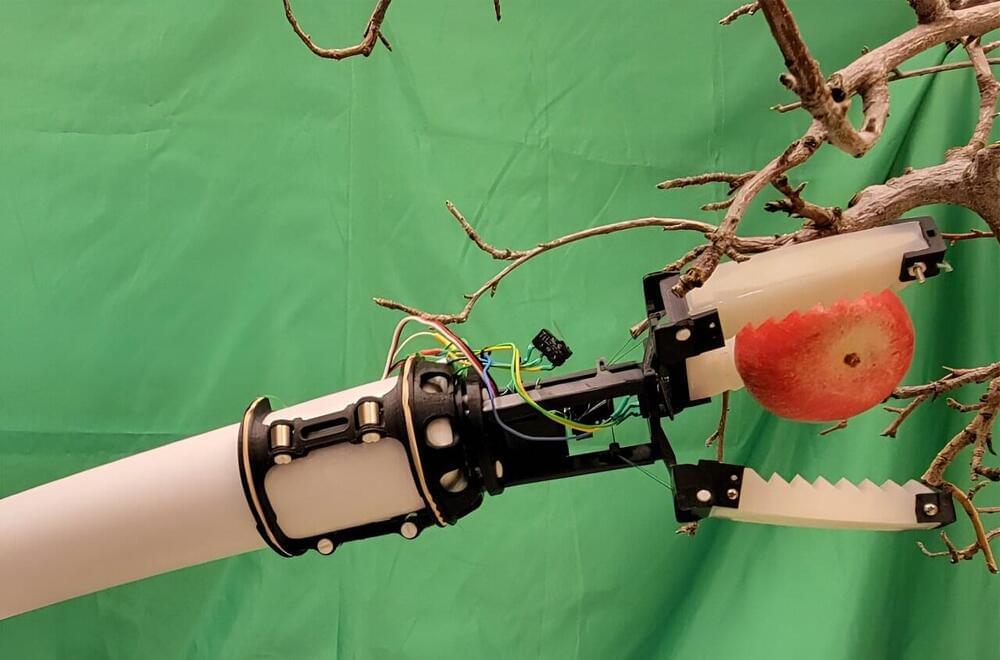
New robotic gripper for automated apple picking developed

Washington state leads the nation in apple production, and in 2022, the industry contributed more than two billion dollars to the U.S. gross domestic product. Throughout Washington, farms employ anywhere from a dozen to hundreds of workers each year for orchard operations, including for pollination, pruning, flower thinning and fruit harvesting. With an and a decrease in migrant farm workers, however, farmers have struggled to meet their needs for workers during harvest season.

In recent years, researchers have started developing robotic apple harvesting systems, but the ones that have been developed are expensive and complex to use in orchards.

Ninatanta, who grew up in Yakima, Washington, picked fruit alongside his parents during his childhood. When he began his work with Luo on a robotic apple gripper, he had his parents videotape their work, so he could model his gripper on their handiwork.
Research team uses CRISPR/Cas9 to alter photosynthesis for the first time

A team from the Innovative Genomics Institute at the University of California, Berkeley (UCB) has produced an increase in gene expression in a food crop by changing its upstream regulatory DNA. While other studies have used CRISPR/Cas9 gene-editing to knock out or decrease the expression of genes, new research published in Science Advances is the first unbiased gene-editing approach to increase gene expression and downstream photosynthetic activity.

Bill Gates-backed startup creates Lego-like brick that can store air pollution for centuries: ‘A milestone for affordably removing carbon dioxide from the air’

The pipe dream of carbon capture is one step closer to reality thanks to a Bill Gates-backed startup that is burying bricks made from plants.

The Washington Post detailed a “deceptively simple” procedure by Graphyte to sequester blocks of wood chips and rice hulls, calling it “a game-changer” for the industry, which has been held back by the cost ineffectiveness of other methods.

“The approach, the company claims, could store a ton of CO2 for around $100 a ton, a number long considered a milestone for affordably removing carbon dioxide from the air,” the outlet reported.

Better farming through nanotechnology

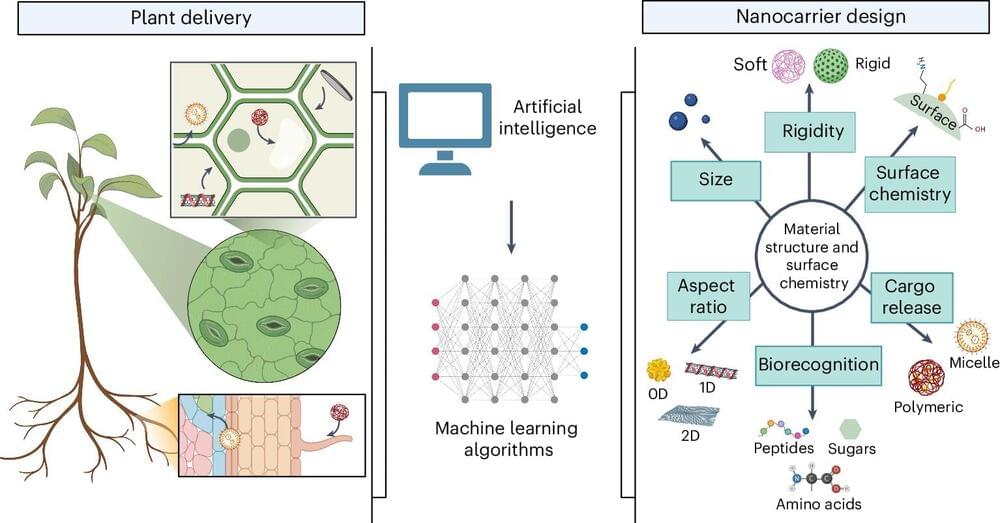
(Nanowerk News) Advanced technologies enable the controlled release of medicine to specific cells in the body. Scientists argue these same technologies must be applied to agriculture if growers are to meet increasing global food demands.

In a new Nature Nanotechnology journal review paper (“Towards realizing nano-enabled precision delivery in plants”), scientists from UC Riverside and Carnegie Mellon University highlight some of the best-known strategies for improving agriculture with nanotechnology.

You can watch astronauts at the International Space Station receive 3 tons of supplies: Here’s how

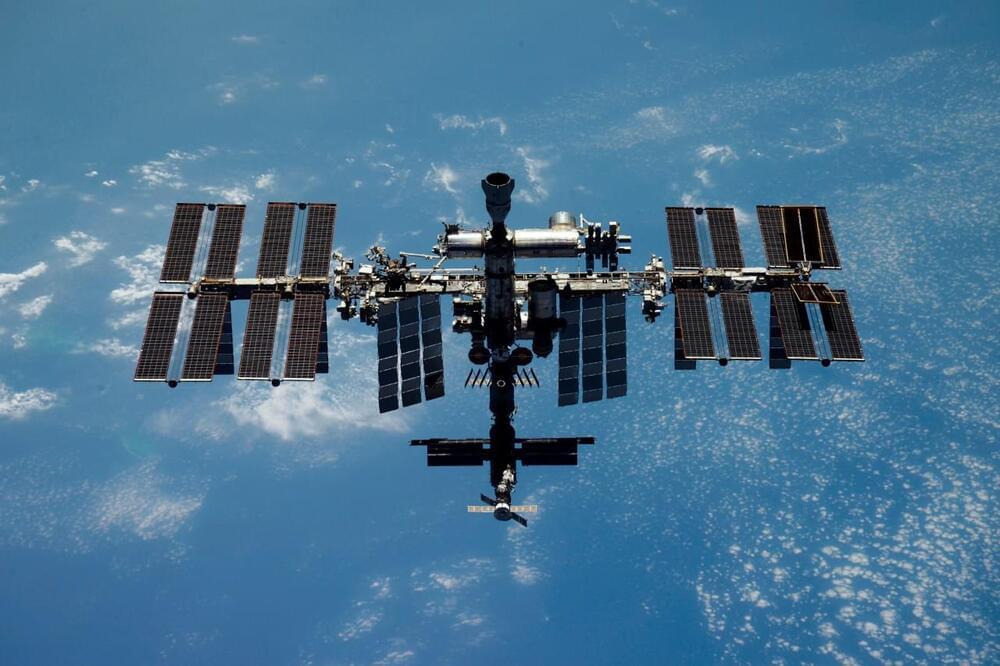
Space lovers have an opportunity to watch two unique occurrences at the International Space Station this week, but you will have to stay up pretty late — or wake up very early — to see them live.

According to NASA, the cargo spacecraft carrying three tons of food, fuel and supplies to the ISS is for the Expedition 71 crew.

The unpiloted spacecraft – called Progress 88 – is scheduled to launch on a Soyuz rocket from the Baikonur Cosmodrome in Kazakhstan on Thursday at 2:43 p.m. local time.

No, All That Sugar Won’t Make Your Kid Hyperactive. Even if They Have ADHD

It’s a Saturday afternoon at a kids’ birthday party. Hordes of children are swarming between the spread of birthday treats and party games. Half-eaten cupcakes, biscuits and lollies litter the floor, and the kids seem to have gained superhuman speed and bounce-off-the-wall energy.

But is sugar to blame?

The belief that eating sugary foods and drinks leads to hyperactivity has steadfastly persisted for decades. And parents have curtailed their children’s intake accordingly.

/* */