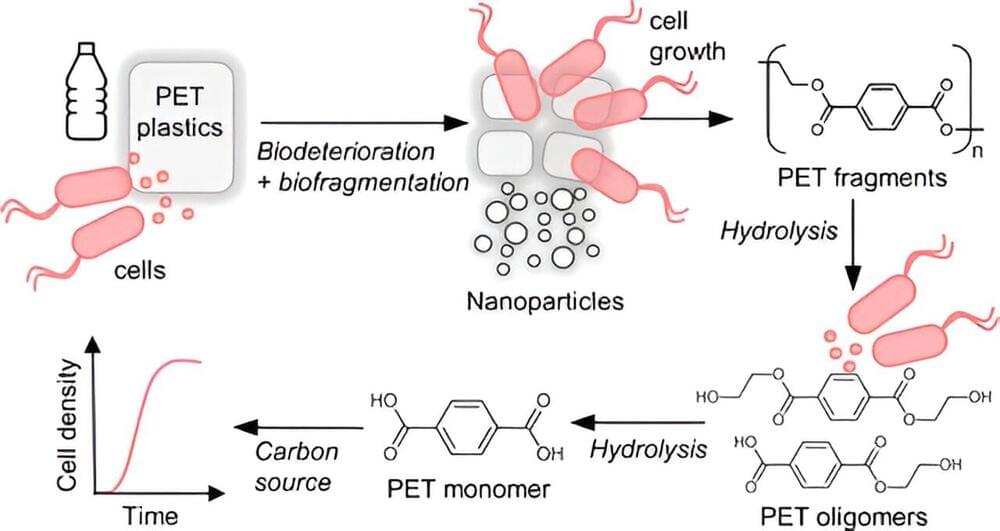
Plastic pollution is everywhere, and a good amount of it is composed of polyethylene terephthalate (PET). This polymer is used to make bottles, containers and even clothing. Now, researchers report in Environmental Science & Technology that they have discovered an enzyme that breaks apart PET in a rather unusual place: microbes living in sewage sludge. The enzyme could be used by wastewater treatment plants to break apart microplastic particles and upcycle plastic waste.
Microplastics are becoming increasingly prevalent in places ranging from remote oceans to inside bodies, so it shouldn’t be a surprise that they appear in wastewater as well.
However, the particles are so tiny that they can slip through water treatment purification processes and end up in the effluent that is reintroduced to the environment. But effluent also contains microorganisms that like to eat those plastic particles, including Comamonas testosteroni—so named because it degrades sterols like testosterone.
If you’re ever faced with trying to pick up a grain of rice with a pair of chopsticks, spare a thought for the scientists behind this latest innovation, which has been called “a medical breakthrough on the verge of happening.” They’ve painstakingly built a soft robot with the capacity to carry different types of drugs through the body. It’s the size of a grain of rice, and can be driven to various internal targets via magnetic fields.
Researchers in the School of Mechanical and Aerospace Engineering (MAE) at Nanyang Technological University, Singapore (NTU Singapore), have built on earlier work to create a grain-sized soft robot that can enter the body and be controlled by magnetic fields to travel to a specific target. Once there, it can quickly or slowly release the medication it has stored in its tiny frame.
The reason? While sunny regions naturally provide enough light to grow crops, areas with colder winters often need grow lights and greenhouses part of the year. This increases energy consumption, logistical headaches, and ultimately, food costs.
In their paper, Jiao and colleagues argue for a new method that could dramatically revamp farming practices to reduce land use and greenhouse gas emissions.
Dubbed “electro-agriculture,” the approach uses solar panels to trigger a chemical reaction that turns ambient CO2 into an energy source called acetate. Certain mushrooms, yeast, and algae already consume acetate as food. With a slight genetic tweak, we could also engineer other common foods such as grains, tomatoes, or lettuce to consume acetate.
1GITEX Global 2024 and IROS 2024 became true gateways to the future of technology, bringing together the most advanced innovations in artificial intelligence, robotics, and transportation under one roof. At the forefront of GITEX was the unique Nissan Hyperforce concept, an electric vehicle with an incredible 1,360 horsepower, capable of accelerating from 0 to 100 km/h in just 2 seconds. This electric supercar not only stunned with its speed but also with its futuristic design, reminiscent of the iconic Batmobile. With its advanced driving modes, R and GT, drivers can switch between a sporty and comfortable driving experience.
0:00 Exhibitions in the United Arab Emirates. 0:34 GITEX GLOBAL 2024 0:47 Nissan Hyper Force supercar. 1:43 Italdesign’s Quintessenza concept car. 2:39 Ameca robot. 3:15 Robot bartender. 3:38 Airscooter by Zapata. 4:13 Autonomous Patrol of the Future by Dubai Police. 5:09 Tesla Cybertruck. 6:01 All-terrain delivery vehicles from Mobinn. 6:20 Cadillac Electric Flyer. 7:03 Drones by Multi Level Group. 7:32 Xpeng Aeroht Flying Car. 8:18 New humanoid robot Kepler. 8:42 ZainTECH Drones. 9:04 Robo-charging electric cars. 9:43 Odigo robot with AI 10:26 IROS 2024 11:02 Obstacle course for four-legged robots. 11:41 Robofootball on IROS 2024 12:32 High Torque Robotics. 13:03 Unitree robots. 13:39 Nimble Direct Drive Robots. 14:16 Elephant Robotics. 14:47 Humanoid robots on display. 15:14 DexNex teleoperated system. 15:47 Hubot robot.
In addition, GITEX 2024 showcased the latest flying car concepts. Among them was a model capable of unfolding its blades and taking off in just two minutes, making it the perfect vehicle for fast, seamless travel both on the road and in the sky. The exhibition also featured other cutting-edge innovations, such as autonomous patrol cars equipped with drones and robotic bartenders that serve drinks without lines or fuss.
IROS 2024, held in Abu Dhabi, was equally impressive, giving a glimpse into the future of robotics. Highlights included thrilling competitions between robot dogs and humanoid robots, as well as demonstrations of new robots capable of running, jumping, and even performing complex acrobatic tricks. Autonomous robots designed for patrolling and delivery, capable of navigating routes and recognizing objects in the toughest conditions, also drew significant attention.
Both exhibitions revealed how robotics and AI are increasingly influencing our everyday lives, offering solutions for safety, transportation, and even entertainment. Unique projects, such as autonomous drones for agriculture and firefighting, and robotic systems for smart cities, are already reshaping urban spaces. With the technologies presented at GITEX and IROS, the future is closer than ever. Subscribe to our channel to stay updated on the latest innovations and events in the world of high-tech.
Protecting Human And Animal Health — Dr. Tristan Colonius, DVM — Chief Veterinary Officer & Deputy Director for Science Policy, Center for Veterinary Medicine (CVM), U.S. Food and Drug Administration (FDA)
Dr. Tristan Colonius, DVM is the Chief Veterinary Officer and Deputy Director for Science Policy at FDA’s Center for Veterinary Medicine (CVM — https://www.fda.gov/animal-veterinary).
Dr. Colonius previously worked in various positions at FDA, including as Deputy Chief of Staff to Commissioner Dr. Robert Califf and as an International Policy Analyst.
During his career at FDA, Dr. Colonius has been working on numerous initiatives including the Animal and Veterinary Innovation Agenda, One Health, Intentional Genomic Alterations in animals, and zootechnical animal feed substances (ZAFS) among many other programs at CVM.
Prior to joining FDA, Dr. Colonius held positions in the US Senate and US Department of Agriculture.
AI and politics 😳 Artificial though it may be, the concept of “intelligence” doesn’t seem to jibe with a computer-generated image of uniformed cats toting assault rifles.
Yet that visual slur, which supports a debunked story about immigrants in Ohio eating pets, has become a signature image from…
UMD experts explain the emotional pulls and cognitive pitfalls—and how to avoid them.
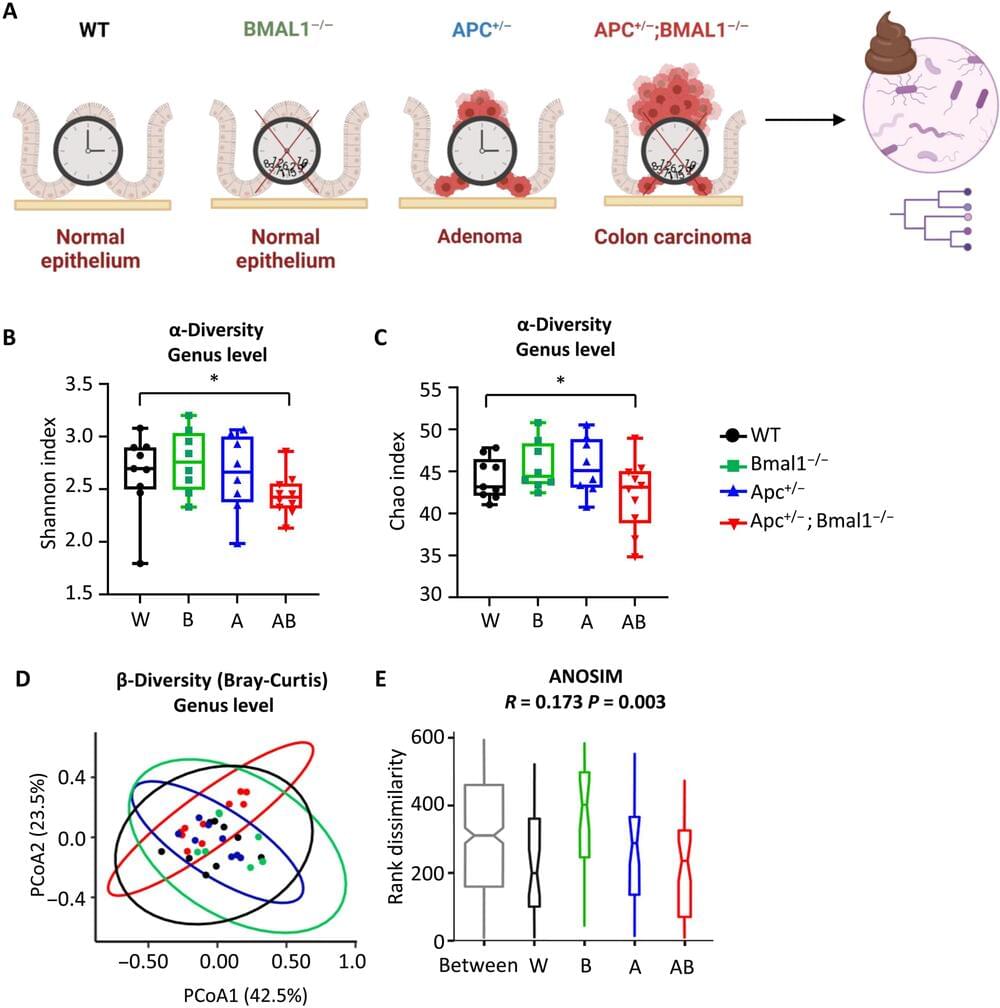
Research from the University of California, Irvine has revealed how disruption of the circadian clock, the body’s internal, 24-hour biological pacemaker, may accelerate the progression of colorectal cancer by affecting the gut microbiome and intestinal barrier function. This discovery offers new avenues for prevention and treatment strategies.
The study, published online today in the journal Science Advances, offers a more comprehensive understanding of how important changes occur in the function and composition of the gut microbiome when the circadian clock is disturbed in the presence of colorectal cancer.
“There is an alarming rise in early-onset colorectal cancer in adults under the age of 50,” said corresponding author Selma Masri, associate professor of biological chemistry. “Circadian misalignment through extended light exposure, late-night meals and other environmental factors could [be] driving these cases. Our study suggests that clock disruption, particularly through lifestyle choices, may play a significant role in gut health and, subsequently, cancer risk.”
Research on Heliconius butterflies illustrates how variations in brain circuits are aligned with their unique foraging behaviors, enhancing their spatial and visual memory.
A tropical butterfly species with uniquely expanded brain structures shows a fascinating mosaic pattern of neural expansion linked to a key cognitive innovation.
The study, published today (October 18) in Current Biology, explores the neural basis of behavioral innovation in Heliconius butterflies, the only genus known to feed on both nectar and pollen. As part of this behavior, these butterflies exhibit an impressive ability to learn and remember the locations of their food sources—abilities tied to the expansion of a brain region called the mushroom bodies, which play a crucial role in learning and memory.
How do plants and fungi communicate with each other? This is what a recent study published in Molecular Cell hopes to address as an international team of researchers investigated the “language” conducted between plants and fungi that enables fungi growth. This study holds the potential to help scientists and farmers better understand how to fight disease-causing fungi by growing crops with greater resilience and adversity.
“As we begin to understand how plants and fungi communicate, we will better understand the complexities of the soil ecosystem, leading to healthier crops and improving our approach to biodiversity,” said Dr. Shelley Lumba, who is an assistant professor in the Department of Cell and Systems Biology at the University of Toronto and a co-author on the study.
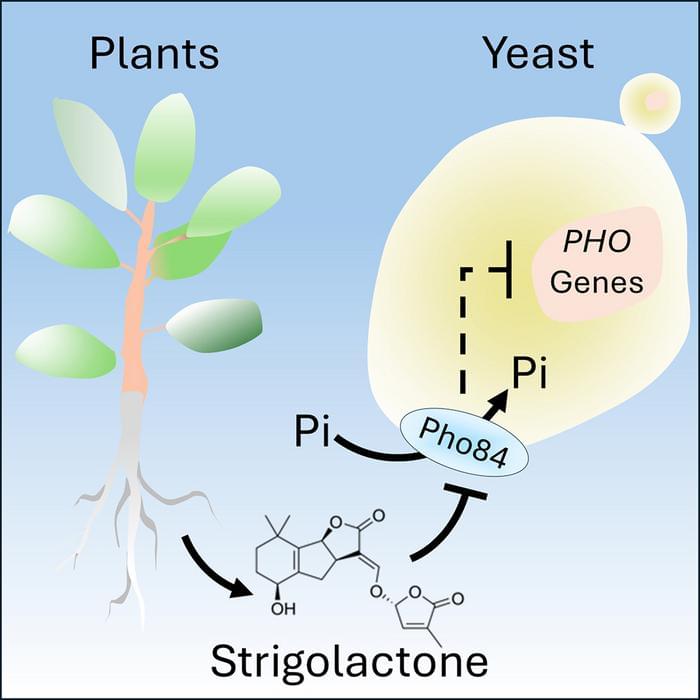
For the study, the researchers examined strigolactone (SL), which is a class of plant hormones and signaling molecules responsible for plant development, with the team focusing on how SL influences fungi growth and development by testing SL with yeast. In the end, the researchers found that SL triggered certain genes called “PHO” that are responsible for phosphate metabolism, along with finding that plants release SL when they are low on phosphate, forcing the yeast to alter the amount of phosphate consumes by triggering the protein, Pho84.