Toggle light / dark theme

The Virus Zoo: A Quick Primer on Molecular Virology

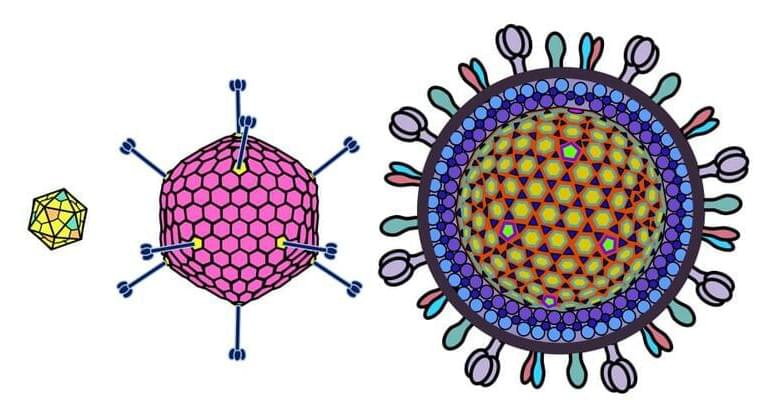
The Virus Zoo is my latest educational blog post! I’ve written up ~1 page ‘cheat sheets’ on the molecular biology of specific viruses. I cover genome, structure, and life cycle. So far, my zoo includes adeno-associated virus (AAV), adenovirus, and herpes simplex virus 1 (HSV-1). However, I plan to add more viruses as time goes on! Some others I would like to incorporate later are coronavirus, HIV, anellovirus, lentivirus, ebolavirus, and MS2 bacteriophage. Feel free to suggest other interesting viruses in the comments! All images were created by me. #virology #molecularbiology #biotechnology #genetherapy #virus #biochemistry #genetics


Genome and Structure:

AAV genomes are about 4.7 kb in length and are composed of ssDNA. Inverted terminal repeats (ITRs) form hairpin structures at ends of the genome. These ITR structures are important for AAV genomic packaging and replication. Rep genes (encoded via overlapping reading frames) include Rep78, Rep68, Rep52, Rep40.1 These proteins facilitate replication of the viral genome. As a Dependoparvovirus, additional helper functions from adenovirus (or certain other viruses) are needed for AAVs to replicate.

AAV capsids are about 25 nm in diameter. Cap genes include VP1, VP2, VP3 and are transcribed from overlapping reading frames.2 The VP3 protein is the smallest capsid protein. The VP2 protein is the same as VP3 except that it includes an N-terminal extension with a nuclear localization sequence. The VP1 protein is the same as VP2 except that it includes a further N-terminal extension encoding a phospholipase A2 (PLA2) that facilitates endosomal escape during infection. In the AAV capsid, VP1, VP2, and VP3 are present at a ratio of roughly 1:1:10. It should be noted that this ratio is actually the average of a distribution, not a fixed number.
The Art of Collaboration: NVIDIA, Omniverse, and GTC | Documentary Trailer

With our brand new documentary premiering at #SIGGRAPH 2022, you’ll get to take a look behind the scenes of the 2022 Spring GTC and discover how NVIDIA’s creative, engineering, and research teams pushed the limits of NVIDIA GPUs, AI, USD, and @NVIDIA Omniverse to deliver our most watched GTC ever.

Global Documentary Premiere: Wednesday, August 10, at 10:00 a.m. PT

Add the event to your calendar: https://nvda.ws/3z9kltq

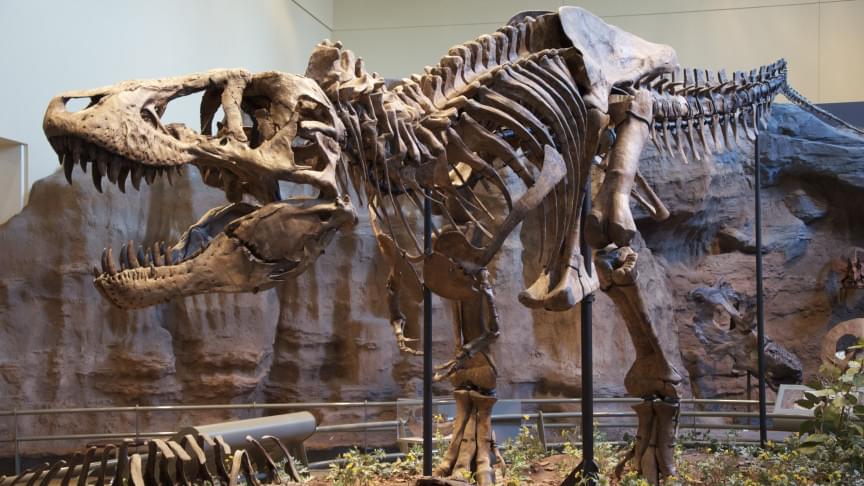
A new study confutes the bold theory that T. rex was three separate species

Back in March this year, a study published in Evolutionary Biology claimed that fossils categorized as Tyrannosaurus rex represent three separate species. However, a new study published on July 25 in Evolutionary Biology refutes this claim and suggests that the previous research lacked evidence and Tyrannosaurus rex is made of only one species.

The previously controversial research implied that T. rex should be reclassified as three different species, including the standard T. rex, the bulkier “T. imperator,” and the slimmer “T. regina.” Researchers analyzed 38 T. rex fossils that contained leg bones and teeth samples, a press release revealed.

However, paleontologists at the American Museum of Natural History and Carthage College were determined to review the data of the previous research, adding data points from 112 species of living dinosaurs—birds—and from four non-avian theropod dinosaurs.

New Interactive Tool and Report Connects Oregon Renewable Energy Potential with Important Development Considerations

— Energy Info


Media Contact: Jennifer Kalez

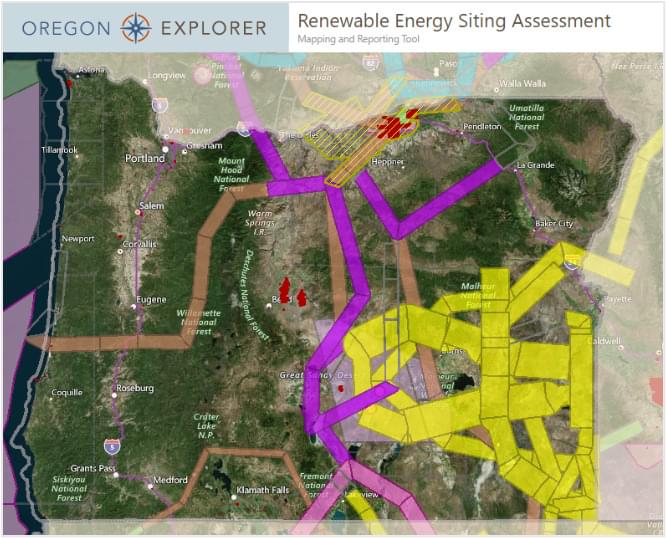
SALEM – A public partnership with the Oregon Department of Energy, Oregon Department of Land Conservation & Development, Oregon State University’s Institute for Natural Resources, and the U.S. Department of Defense has published new educational materials that will help local governments, Tribes, communities, policymakers, agencies, energy developers, and other stakeholders access important information and considerations for potential renewable energy in Oregon.

The Oregon Renewable Energy Siting Assessment (ORESA) project was funded through a $1.1 million U.S. Department of Defense (DoD) grant, with the goal of providing baseline data to support important conversations around potential energy and transmission development in the state.

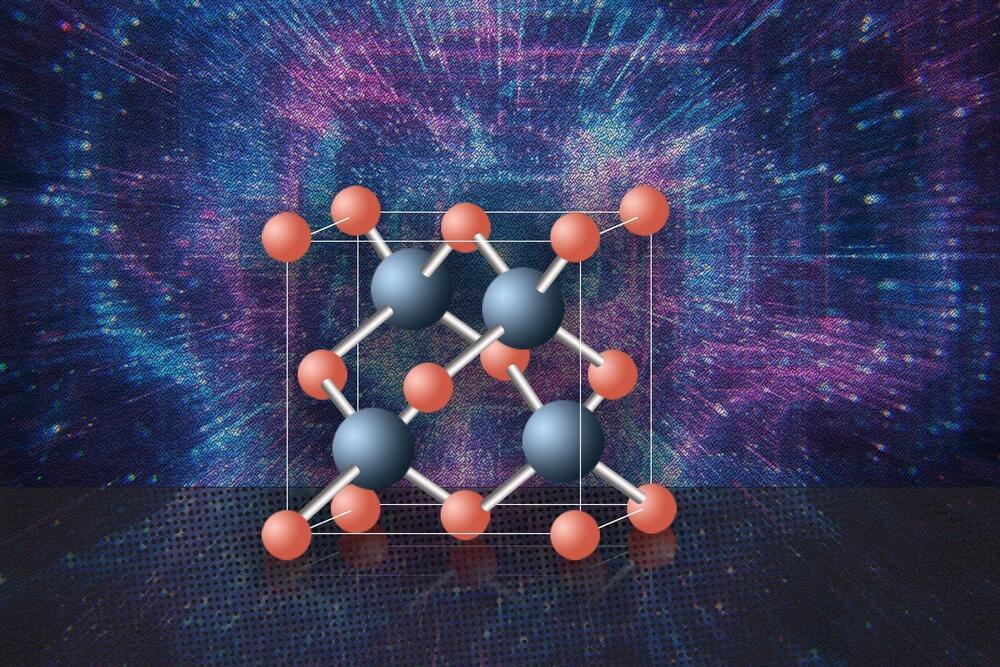
MIT Discovers Semiconductor That Can Perform Far Better Than Silicon

Researchers from MIT

MIT is an acronym for the Massachusetts Institute of Technology. It is a prestigious private research university in Cambridge, Massachusetts that was founded in 1861. It is organized into five Schools: architecture and planning; engineering; humanities, arts, and social sciences; management; and science. MIT’s impact includes many scientific breakthroughs and technological advances. Their stated goal is to make a better world through education, research, and innovation.

I did not know that!

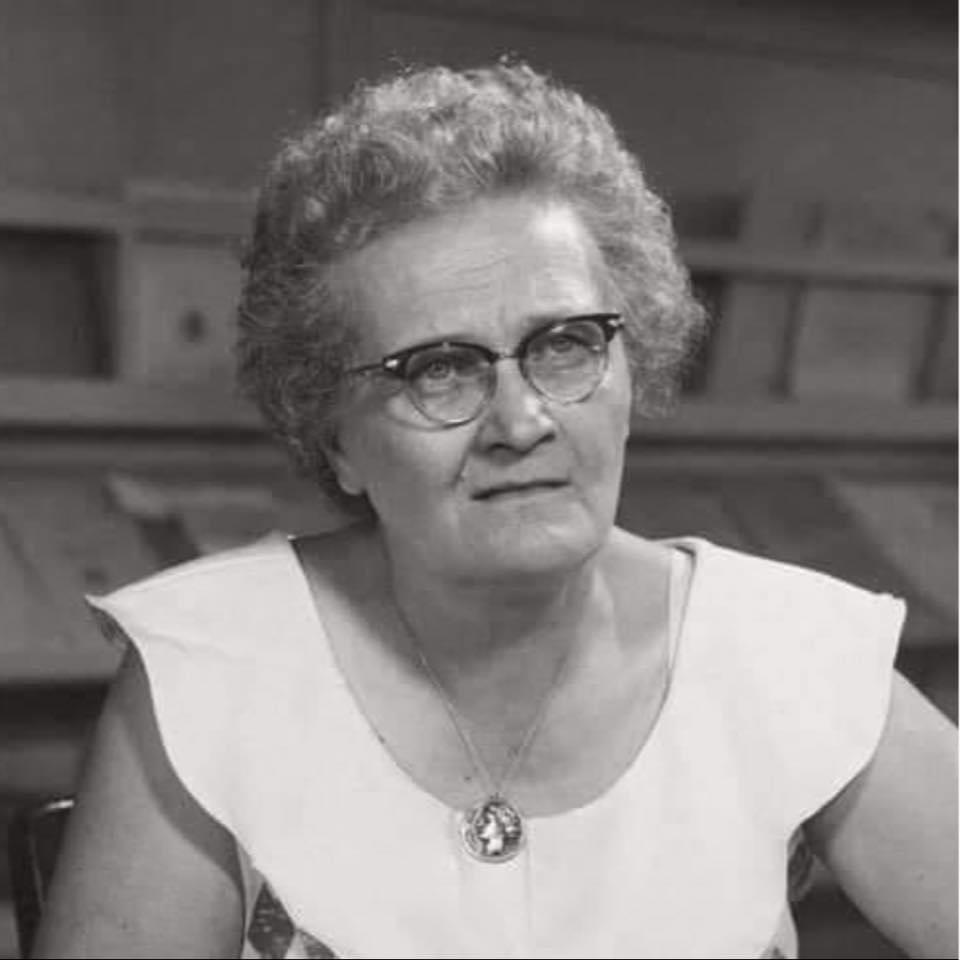
“Since her death in 1979, the woman who discovered what the universe is made of has not so much as received a memorial plaque. Her newspaper obituaries do not mention her greatest discovery. […] Every high school student knows that Isaac Newton discovered gravity, that Charles Darwin discovered evolution, and that Albert Einstein discovered the relativity of time. But when it comes to the composition of our universe, the textbooks simply say that the most abundant atom in the universe is hydrogen. And no one ever wonders how we know.“

Jeremy Knowles, discussing the complete lack of recognition Cecilia Payne gets, even today, for her revolutionary discovery. (via alliterate)

OH WAIT LET ME TELL YOU ABOUT CECILIA PAYNE.

Cecilia Payne’s mother refused to spend money on her college education, so she won a scholarship to Cambridge.

Cecilia Payne completed her studies, but Cambridge wouldn’t give her a degree because at that time there’s not much exposure for woman, so she said to heck with that and moved to the United States to work at Harvard.

Cecilia Payne was the first person ever to earn a Ph.D. in astronomy from Radcliffe College, with what Otto Strauve called “the most brilliant Ph.D. thesis ever written in astronomy.”

Not only did Cecilia Payne discover what the universe is made of, she also discovered what the sun is made of (Henry Norris Russell, a fellow astronomer, is usually given credit for discovering that the sun’s composition is different from the Earth’s, but he came to his conclusions four years later than Payne–after telling her not to publish).

Cecilia Payne is the reason we know basically anything about variable stars (stars whose brightness as seen from earth fluctuates). Literally every other study on variable stars is based on her work.

/* */