The installations of photovoltaic (PV) solar modules are growing extremely fast. As a result of the increase, the volume of discarded solar modules that end up on the recycling market annually will grow at the same rate in the near future. Currently, the aluminum, glass, and copper of the discarded modules are reprocessed; however, the silicon solar cells are not.
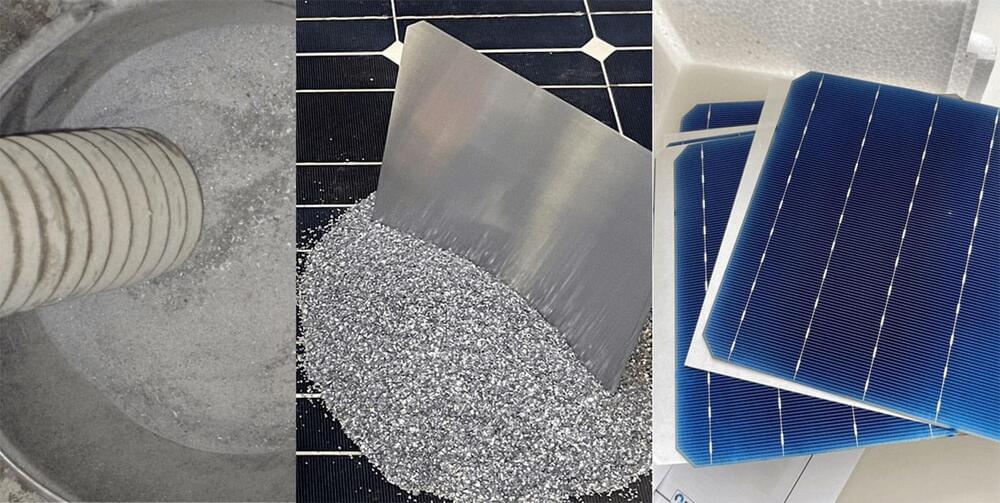
Now, researchers from the Fraunhofer Center for Silicon Photovoltaics CSP and the Fraunhofer Institute for Solar Energy Systems ISE, together with the largest German recycling company for PV modules, Reiling GmbH & Co. KG, have built new PERC solar cells with 100% crystalline silicon recycled from end-of-life photovoltaic panels.
The team has developed a process for recovering the silicon material with funding from the German Federal Ministry for Economic Affairs and Climate BMWK. The technique is claimed to recycle silicon from different types of crystalline silicon PV modules, regardless of manufacturer and origin.
If we are to set up a permanent base on the Moon, we will need some solid connection.
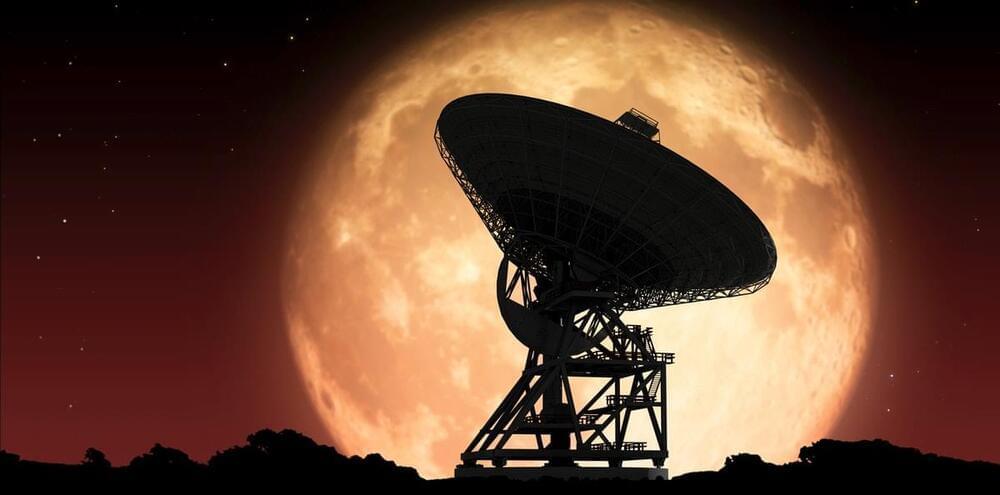
A space startup company is trying to make that happen. Aquarian Space recently announced receiving $650,000 in seed funding to develop a possible broadband internet connection that would link the Earth to the Moon, and maybe even Mars.
The company aims to deploy its first communications system to the Moon by 2024 in anticipation of increased demand from planned space missions to the Moon and beyond, both public and private ventures.
“In 2021 there were 13 landers, orbiters, and rovers on and around the moon,” Kelly Larson, CEO of Aquarian Space, said in a statement released Thursday. “By 2030, we will have around 200, creating a multibillion-dollar lunar economy. But this can’t happen without solid, reliable Earth-to-moon communications.”
More than 50 million creators are driving their own economy of talent, attracting in excess of $800 million in venture capital. Such figures are but a shadow of what they can become later, as new venues are rapidly becoming available.
The development of blockchain technologies has resulted in a sweeping revolution across financial markets, empowering individuals instead of institutions and channeling ownership of data and funds to their holders. The qualities of the blockchain — immutability, full transparency and the trustless nature of operations — have permeated many industries, swooning the balance of business orientation from centralized corporate reliance to decentralization. This shift in the basic concepts that govern relations between participants to transactions, facilitated by smart contracts, has not gone unnoticed in the creator economy.
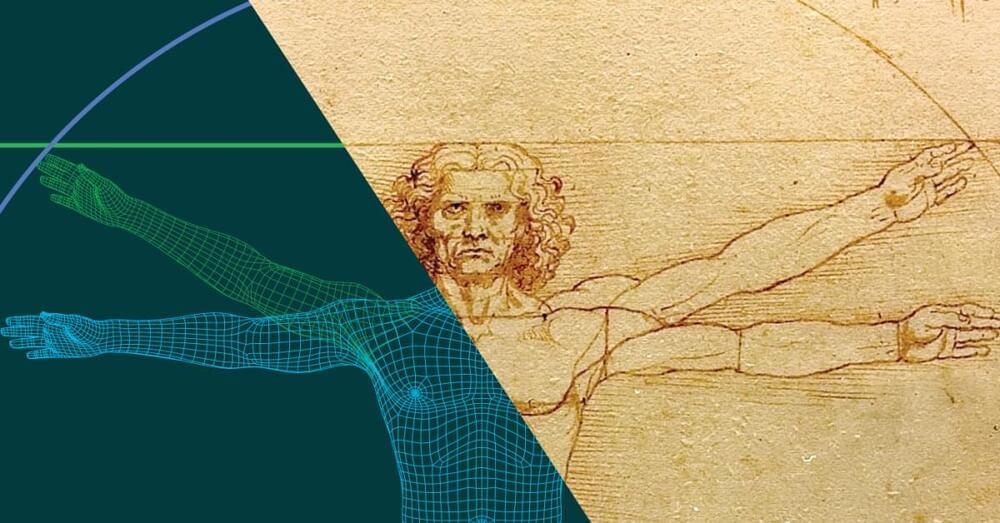
Developments in artificial intelligence and human enhancement technologies have the potential to remake American society in the coming decades. A new Pew Research Center survey finds that Americans see promise in the ways these technologies could improve daily life and human abilities. Yet public views are also defined by the context of how these technologies would be used, what constraints would be in place and who would stand to benefit – or lose – if these advances become widespread.
Fundamentally, caution runs through public views of artificial intelligence (AI) and human enhancement applications, often centered around concerns about autonomy, unintended consequences and the amount of change these developments might mean for humans and society. People think economic disparities might worsen as some advances emerge and that technologies, like facial recognition software, could lead to more surveillance of Black or Hispanic Americans.
This survey looks at a broad arc of scientific and technological developments – some in use now, some still emerging. It concentrates on public views about six developments that are widely discussed among futurists, ethicists and policy advocates. Three are part of the burgeoning array of AI applications: the use of facial recognition technology by police, the use of algorithms by social media companies to find false information on their sites and the development of driverless passenger vehicles.
Engineers at the University of Cincinnati have developed a promising electrochemical system to convert emissions from chemical and power plants into useful products while addressing climate change.
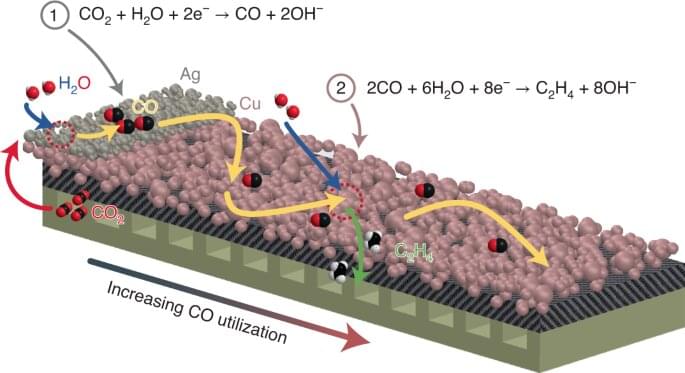
UC College of Engineering and Applied Science assistant professor Jingjie Wu and his students used a two-step cascade reaction to convert carbon dioxide to carbon monoxide and then into ethylene, a chemical used in everything from food packaging to tires.
“The world is in a transition to a low-carbon economy. Carbon dioxide is primarily emitted from energy and chemical industries. We convert carbon dioxide into ethylene to reduce the carbon footprint.” Wu said. “The research idea is inspired by the basic principle of the plug flow reactor. We borrowed the reactor design principle in our segmented electrodes design for the two-stage conversion.”
The ‘Escobar’ malware has so far targeted customers from 190 financial institutions across 18 different countries. Specific details related to the country and institutions have not been revealed.
As the U.S. corporate world continues its withdrawal from Russia due to the invasion of Ukraine, a growing stigma against anything Russian is reverberating in Silicon Valley as tech start-ups and venture capital firms reassess their exposure and limit risks.
DoorDash and GrubHub recently cancelled deals with now-shut U.S. food delivery start-ups launched by Russian founders. The Massachusetts Institute of Technology pulled out of a multi-year partnership with Moscow’s Skolkovo Institute of Science and Technology, while Index Ventures halted further deals in the country.
For Silicon Valley, the issues with Russian business run to the heart of immigrant founder-led culture and a global world of institutional investors that in recent years sought more access to top VC ideas.
Katie leads various initiatives, including launching their new Digital Trials Center, focusing on expanding the institute’s portfolio of decentralized clinical trial initiatives including: DETECT, a COVID-19 research initiative, PowerMom, a maternal health research program and PROGRESS, an upcoming T2 Diabetes/Precision Nutrition program, as well as overseeing the institute’s role in the NIH “All of Us” Research Program as a Participant Center.
The Scripps Research Translational Institute (SRTI), was founded in 2007 with the aim of individualizing healthcare by leveraging the remarkable progress being made in human genomics and combining it with the power of wireless digital technologies.
The Scripps Research Digital Trials Center, a part of SRTI, leads groundbreaking studies that address the world’s most pressing health concerns, by pioneering “site-less” clinical trials, leveraging rapidly evolving digital health technologies to re-engineer the clinical trial experience around the participant, rather than the research site.
The Game Changing Development (GCD) Program advances space technologies that may lead to entirely new approaches for the Agency’s future space missions and provide solutions to significant national needs. GCD collaborates with research and development teams to progress the most promising ideas through analytical modeling, ground-based testing and spaceflight demonstration of payloads and experiments and their efforts are focused on the mid Technology Readiness Level (TRL) range 0, generally taking technologies from initial lab concepts to a complete engineering development prototype. The Program employs a balanced approach of guided technology development efforts and competitively selected efforts from across academia, industry, NASA, and other government agencies.
GCD strives to develop the best ideas and capabilities irrespective of their source. The Program’s investment in innovative space technologies directly supports NASA’s mission to “Drive advances in science, technology, and exploration to enhance knowledge, education, innovation, economic vitality, and stewardship of Earth”. GCD’s focus on transformative space and science technologies will enable science missions and NASA’s Artemis Program. Additionally, GCD’s technology developments serve as a stimulus to the U.S. economy while providing inspiration and opportunity to our nation’s youth.
Previously, Dr. Willard was the Deputy Division Chief of the Laboratories, Development and Testing Division at the NASA’s Kennedy Space Center. He served in many leadership roles at Kennedy, including Chief Engineer for Research & Technology Development and Branch Chief of the Engineering Analysis Branch within the Engineering Directorate. He also served for many years as a research physicist in Kennedy’s Applied Physics Lab.
The Russian government is now facing a digital storage crisis as Western cloud services have pulled their services from the country.
Western cloud storage providers have pulled out of Russia following heavy Western sanctions designed to cripple the Russian economy. According to reports, the Russian government is looking at several different ways to solve the problem of finding hosts for Russia’s data, and some of those solutions include leasing all available data storage across Russia or seizing all data storage from Russian businesses that have left the country.