A team of Chinese scientists introduced a quantum communication technique that they say could help secure Web 3.0 against the formidable threat of quantum computing.
Their approach, called Long-Distance Free-Space Quantum Secure Direct Communication (LF QSDC), promises to improve data security by enabling encrypted direct messaging without the need for key exchange, a method traditionally vulnerable to quantum attacks.
They add the approach not only enhances security but also aligns with the decentralized ethos of Web 3.0, offering a robust defense in the rapidly evolving digital landscape.
At any given time, there are roughly 100,000 missing people in the U.S. These hackers are using their skills in computer forensics to follow digital footprints.
The proliferation of wearable devices—from smart watches to AR glasses—necessitates ever-smaller on-board energy solutions that can deliver bursts of power while remaining unobtrusive.
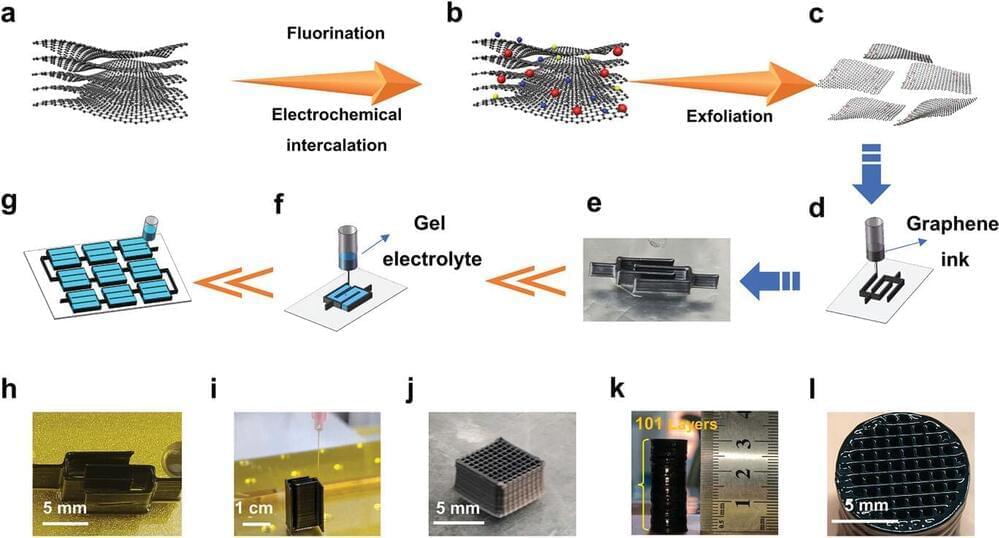
Scientists leverage additive-free 3D printing process to construct exceptionally customizable and high-performing graphene-based micro-supercapacitors tailored for on-chip energy storage.
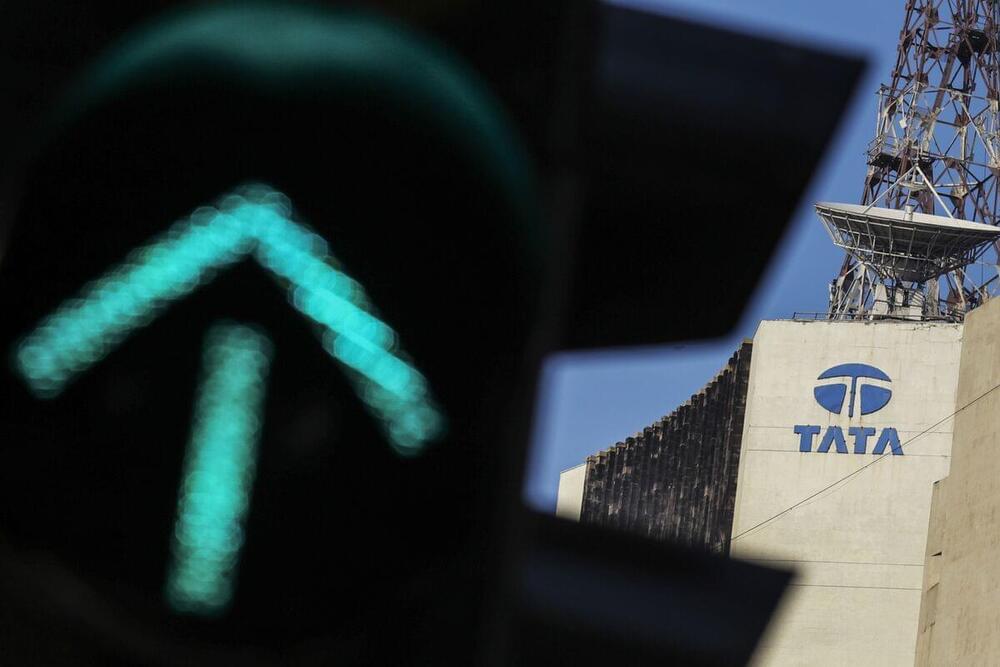
India’s government has approved $15.2 billion worth of investments in semiconductor fabrication plants, including a Tata Group proposal to build the country’s first major chipmaking facility.
Watch some of the biggest names in physics debate the mysteries of the quantum and its future, including Roger Penrose, Sabine Hossenfelder, Avshalom Elitzur, Michio Kaku, Suchitra Sebastian, Priya Natarajan, Joscha Bach, Erik Verlinde, Hilary Lawson and Bjørn Ekeberg.
From string theory to quantum gravity and quantum computers, the quantum discourse is all the buzz in physics and beyond. But what is possible and what mere fantasy? Can we bring together relativity and quantum mechanics? Will we ever find a unified theory to explain our universe?
00:00 Introduction. 00:45 Why is modern physics in crisis | Roger Penrose, Sabine Hossenfelder, Priya Natarajan, Erik Verlinde. 15:44 Are we at the cusp of a revolution? | Avshalom Elitzur, Michio Kaku, Joscha Bach, Bjørn Ekerberg. 28:06 What is quantum emergence? | Suchitra Sebastian.
“They are the GPU cartel and they control all supply” Scott Herkelman, former AMD Radeon chief, has something to say about NVIDIA practices. Scott Herkelman & Jensen Huang, Source: AMD/NVIDIA According to the article on Wall Street Journal (via Tom’s Hardware), NVIDIA might be delaying data center GPU orders if customers start eyeing other options. […].
Molecules that are induced by light to rotate bulky groups around central bonds could be developed into photo-activated bioactive systems, molecular switches, and more.
Researchers at Hokkaido University, led by Assistant Professor Akira Katsuyama and Professor Satoshi Ichikawa at the Faculty of Pharmaceutical Sciences, have extended the toolkit of synthetic chemistry by making a new category of molecules that can be induced to undergo an internal rotation on interaction with light. Similar processes are believed to be important in some natural biological systems.
Synthetic versions might be exploited to perform photochemical switching functions in molecular computing and sensing technologies or in bioactive molecules, including drugs. Their report is pending in Nature Chemistry.
The miniaturization of electronic components, including transistors, has hit a plateau, presenting obstacles in the production of semiconductors. Nonetheless, a group of researchers, led by experts in materials science from the City University of Hong Kong (CityUHK), has unveiled a novel approach for creating highly versatile and high-performing electronics using transistors made of mixed-dimensional nanowires and nanoflakes. This breakthrough facilitates easier chip circuitry design and promotes the development of future electronic devices that are both flexible and energy-efficient.
In recent decades, as the continuous scaling of transistors and integrated circuits has started to reach physical and economic limits, fabricating semiconductor devices in a controllable and cost-effective manner has become challenging. Further scaling of transistor size increases current leakage and thus power dissipation. Complex wiring networks also have an adverse impact on power consumption.
Multivalued logic (MVL) has emerged as a promising technology for overcoming increasing power consumption. It transcends the limitations of conventional binary logic systems by greatly reducing the number of transistor components and their interconnections, enabling higher information density and lower power dissipation. Significant efforts have been devoted to constructing various multivalued logic devices, including anti-ambipolar transistors (AAT).