Toggle light / dark theme

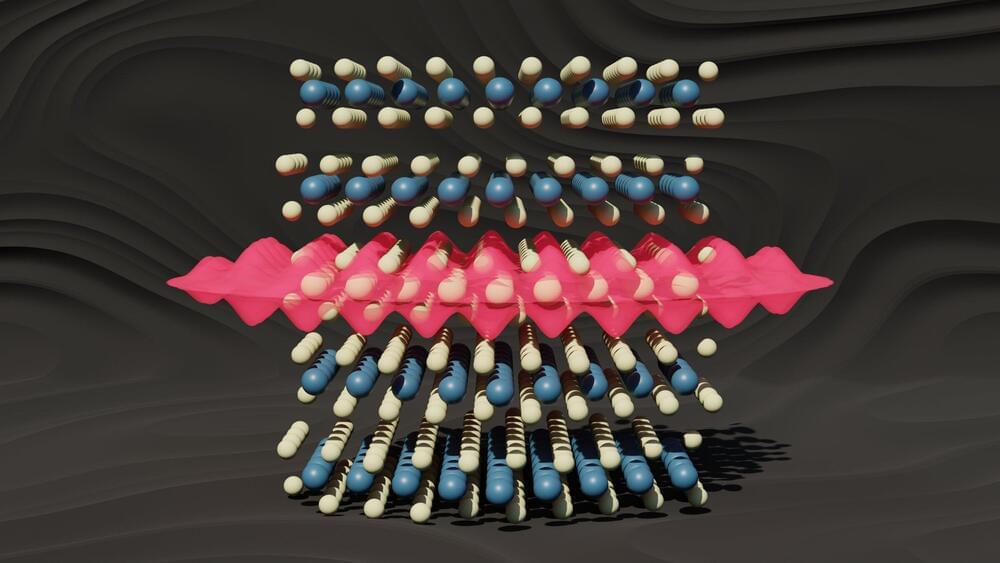
New class of 2D material displays stable charge density wave at room temperature

Quantum materials have generated considerable interest for computing applications in the past several decades, but non-trivial quantum properties—like superconductivity or magnetic spin—remain in fragile states.

“When designing quantum materials, the game is always a fight against disorder,” said Robert Hovden, an associate professor of materials science and engineering at the University of Michigan.

Heat is the most common form of disorder that disrupts quantum properties. Quantum materials often only exhibit exotic phenomena at very low temperatures when the atom nearly stops vibrating, allowing the surrounding electrons to interact with one another and rearrange themselves in unexpected ways. This is why quantum computers are currently being developed in baths of liquid helium at −269 °C, or around −450 F. That’s just a few degrees above zero Kelvin (−273.15 °C).
Scientists extract gold from electronic waste using a cheese byproduct

Say cheese, get gold.

Many electronic devices, such as smartphones, computers, and televisions, contain small amounts of gold in components like connectors, circuit boards, and integrated circuits, but they are usually considered electronic waste.


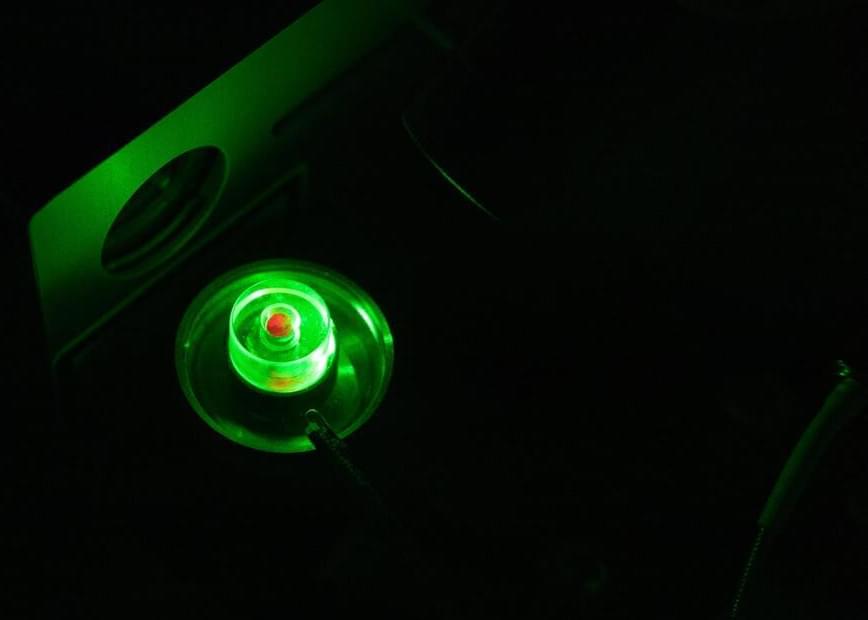
Uncover the innovative use of whey protein to extract gold from electronic waste. A sustainable and efficient solution for reducing e-waste.

New light-based communication network works on land, sea, and in air

Researchers from China used different spectra of light to maximize data transmission in various modes and setting up interoperability between them.


A new light-based communication network developed through a research collaboration between Nanjing University of Posts and Telecommunications and Suzhou Lighting Chip Monolithic Optoelectronics Technology company in China makes seamless connectivity on land, in the sea, and in the air a reality.

While urban landscapes may enjoy the advantages of wireless 5G internet, many pockets worldwide still need broadband. Even as Elon Musk wants to make space-based ultra-fast internet connections the norm, the services cannot be delivered for undersea activities where research and exploration demand them.

New maser in a ‘shoebox’ promises portable precision

Researchers in Imperial College London’s Department of Materials have developed a new portable maser that can fit the size of a shoebox.

Imperial College London pioneered the discovery of room-temperature solid-state masers in 2012, highlighting their ability to amplify extremely faint electrical signals and demonstrate high-frequency stability. This was a significant discovery because can pass through the Earth’s atmosphere more easily than other wavelengths of light. Additionally, microwaves have the capability to penetrate through the human body, a feat not achievable by lasers.

Masers have extensive applications in telecommunications systems—everything from mobile phone networks to satellite navigation systems. They also have a key role in advancing and improving medical imaging techniques, like MRI machines. They are typically large, bulky, stationary equipment found only in research laboratories.

Stanford Medicine uses augmented reality for real-time data visualization during surgery

A team of Stanford Medicine doctors and biomedical engineers are among the first to integrate a new augmented reality tool into surgical practice. The technology, Apple Vision Pro, is a headset that provides a form of human-computer interaction — it allows its wearer to navigate their surroundings using real-time visual data in combination with virtual elements.

“The novel use of augmented reality in the operating room exemplifies Stanford Medicine’s mission of serving patients in a digitally driven, human-centered care environment,” said Lloyd Minor, dean of the School of Medicine and vice president of medical affairs at Stanford University. “Our health system has long stood at the vanguard for the use of digital technologies in medicine, and I’m proud that through initiatives like RAISE Health, we also define the safe, responsible and equitable use of these innovations.”

A cardiologist used the technology, with the patient’s informed consent, to successfully perform an ablation procedure this week at Stanford Hospital to treat atrial fibrillation.

Limitations of Linear Cross-Entropy as a Measure for Quantum Advantage

Popular Summary.

Unequivocally demonstrating that a quantum computer can significantly outperform any existing classical computers will be a milestone in quantum science and technology. Recently, groups at Google and at the University of Science and Technology of China (USTC) announced that they have achieved such quantum computational advantages. The central quantity of interest behind their claims is the linear cross-entropy benchmark (XEB), which has been claimed and used to approximate the fidelity of their quantum experiments and to certify the correctness of their computation results. However, such claims rely on several assumptions, some of which are implicitly assumed. Hence, it is critical to understand when and how XEB can be used for quantum advantage experiments. By combining various tools from computer science, statistical physics, and quantum information, we critically examine the properties of XEB and show that XEB bears several intrinsic vulnerabilities, limiting its utility as a benchmark for quantum advantage.

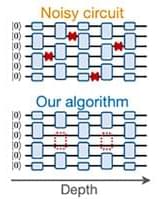
Concretely, we introduce a novel framework to identify and exploit several vulnerabilities of XEB, which leads to an efficient classical algorithm getting comparable XEB values to Google’s and USTC’s quantum devices (2% 12% of theirs) with just one GPU within 2 s. Furthermore, its performance features better scaling with the system size than that of a noisy quantum device. We observe that this is made possible because the XEB can highly overestimate the fidelity, which implies the existence of “shortcuts” to achieve high XEB values without simulating the system. This is in contrast to the intuition of the hardness of achieving high XEB values by all possible classical algorithms.

/* */