Toggle light / dark theme

Quantum Algorithms Could Prompt Faster Solutions For Complex Simulations

Quantum computers may soon dramatically enhance our ability to solve problems modeled by nonreversible Markov chains, according to a study published on the pre-print server arXiv.

The researchers from Qubit Pharmaceuticals and Sorbonne University, demonstrated that quantum algorithms could achieve exponential speedups in sampling from such chains, with the potential to surpass the capabilities of classical methods. These advances — if fully realized — have a range of implications for fields like drug discovery, machine learning and financial modeling.

Markov chains are mathematical frameworks used to model systems that transition between various states, such as stock prices or molecules in motion. Each transition is governed by a set of probabilities, which defines how likely the system is to move from one state to another. Reversible Markov chains — where the probability of moving from, let’s call them, state A to state B equals the probability of moving from B to A — have traditionally been the focus of computational techniques. However, many real-world systems are nonreversible, meaning their transitions are biased in one direction, as seen in certain biological and chemical processes.

Fully recyclable carbon nanotube fibers have far-reaching implications for manufacturing across sectors

In a significant step toward creating a sustainable and circular economy, Rice University researchers have published a study in the journal Carbon demonstrating that carbon nanotube (CNT) fibers can be fully recycled without any loss in their structure or properties. This discovery positions CNT fibers as a sustainable alternative to traditional materials like metals, polymers and the much larger carbon fibers, which are notoriously difficult to recycle.

“Recycling has long been a challenge in the materials industry—metals recycling is often inefficient and energy-intensive, polymers tend to lose their properties after reprocessing and carbon fibers cannot be recycled at all, only downcycled by chopping them up into short pieces,” said corresponding author Matteo Pasquali, director of Rice’s Carbon Hub and the A.J. Hartsook Professor of Chemical and Biomolecular Engineering, Materials Science and NanoEngineering and Chemistry.

“As CNT fibers are being scaled up, we asked whether and how these new materials could be recycled in the future so as to proactively avoid waste management problems that emerged as other engineered materials reached large-scale use. We expected that recycling would be difficult and would lead to significant loss of properties. Surprisingly, we found that fibers far exceed the recyclability potential of existing engineered materials, offering a solution to a major environmental issue.”

Amplification trick makes water toxin detection 10 times more sensitive

An unplugged electric instrument may function, but it sounds much better when it is connected to an amplifier. Similarly, toxins and other small molecules at low concentrations in the environment or human body may emit quiet signals that are undetectable without specialized lab technology.

Now, thanks to a “cool trick” in biochemistry used to adapt a sensing platform already being deployed by Northwestern scientists to measure toxins in drinking water, researchers can detect and even measure chemicals at low enough concentrations to have use outside the lab. By attaching circuitry akin to a volume knob to “turn up” weak signals, the team has opened the door for the system to be applied to disease detection and monitoring in the human body for like DNA and RNA, as well as bacteria such as E. coli.

The results, which describe a system that is 10 times more sensitive than previous cell-free sensors built by the team, are published in the journal Nature Chemical Biology.

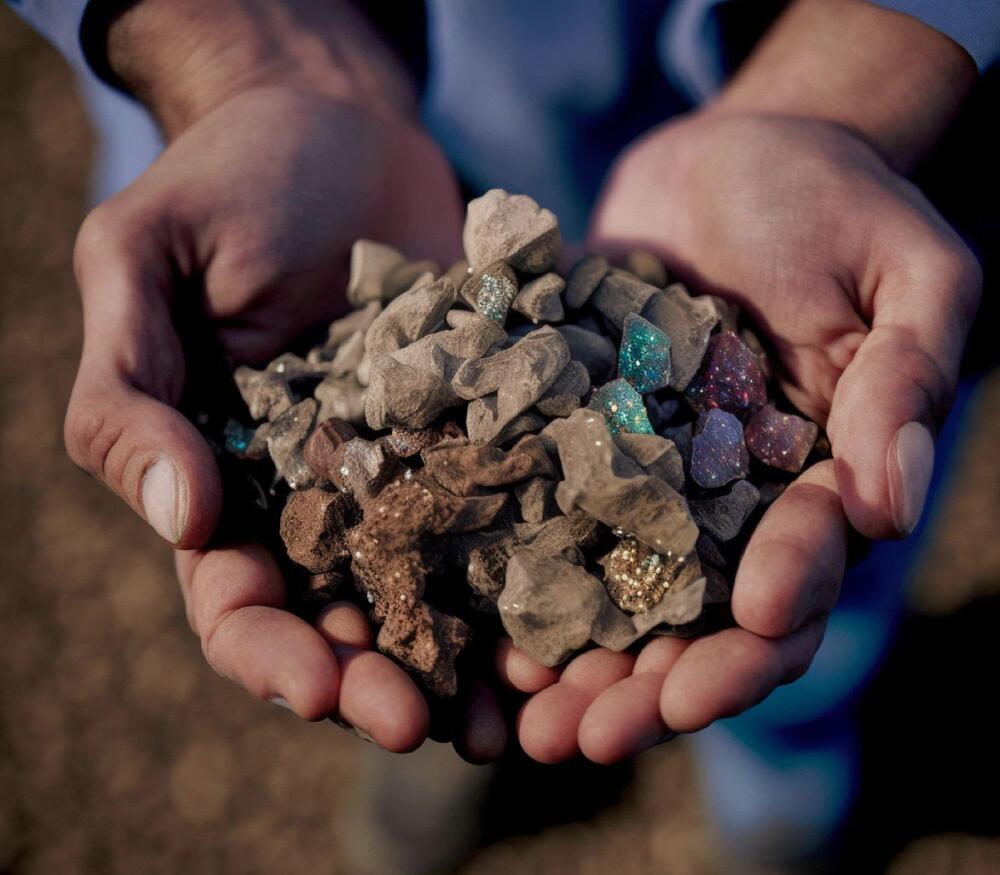
Revolutionizing Rare Earth Mining: Electrokinetic Technology Achieves 95% Recovery

A research team developed electrokinetic mining (EKM), an eco-friendly method for extracting rare earth elements. EKM reduces environmental harm, lowers resource use, and achieved over 95% recovery in industrial tests, marking a breakthrough in sustainable mining.

On-adsorption rare earth deposits (IADs) are the primary source of heavy rare earth elements (HREE), meeting over 90% of global demand. However, the widely used ammonium-salt-based in-situ mining method has caused significant environmental damage.

To promote sustainable rare earth element (REE) extraction, Professors Jianxi Zhu and Hongping He from the Guangzhou Institute of Geochemistry at the Chinese Academy of Sciences (CAS) have developed an environmentally friendly and efficient electrokinetic mining (EKM) technology.

Proximity Ferroelectricity: Scientists Discover Hidden Powers in Simple Material Layers

Scientists at Penn State have discovered a method to induce ferroelectric properties in non-ferroelectric materials by layering them with ferroelectric materials, a phenomenon termed proximity ferroelectricity.

This breakthrough offers a novel approach to creating ferroelectric materials without altering their chemical composition, preserving their intrinsic properties, and potentially revolutionizing data storage, wireless communication, and the development of next-generation electronic devices.

New ferroelectric materials without chemical alterations.

Gluconeogenesis: Welcome to EasyPeasy Learning!

In this video, we simplify gluconeogenesis, an essential metabolic pathway that helps your body maintain glucose levels during fasting or intense activity.

We’ll walk you through:
✔️ What gluconeogenesis is and why it’s important.
✔️ Key steps in the pathway.
✔️ Enzymes involved and their regulation.
✔️ How it ties into other metabolic processes.

Ready to make biochemistry easy? Watch now!

📄 Bonus for EasyPeasy Experts:
Get access to concise notes and practice quizzes on gluconeogenesis to solidify your understanding. Join our EasyPeasy Expert membership to unlock these exclusive resources!
Links for Glycolysis Videos:
• Cellular Respiration.
• Aerobic Respiration Part 1 (Glycolysis)
• Aerobic Respiration Part 2 (Pyruvate…
• Aerobic Respiration Part 4 (Electron…

🔔 Don’t forget to like, subscribe, and hit the bell icon to stay updated on more simple and engaging science lessons. Let’s make learning biology and chemistry easy-peasy!

Stanford Unleashes Breakthrough Software Transforming Catalyst Science

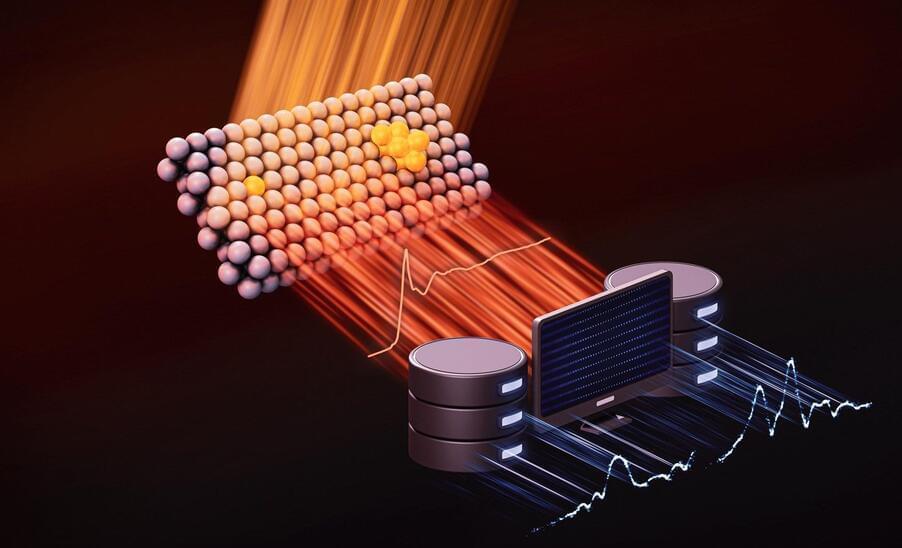
Stanford researchers have introduced a software tool that accelerates and enhances the analysis of single atom catalysts, offering profound implications for the development of more efficient catalysts.

Catalysts play an essential role in everyday life, from helping bread rise to converting raw materials into fuels more efficiently. Now, researchers at SLAC have developed a faster method to advance the discovery of an exciting new type of catalyst known as single atom catalysts.

The role of catalysts in modern chemistry.

Scientists Crack the Code of Titanium’s Strength and Flexibility

A research team from Yokohama National University has developed a novel approach to investigate how the orientation and behavior of electrons in titanium affect its physical properties. Their findings, published in Communications Physics on December 18, 2024, offer valuable insights that could lead to the creation of more advanced and efficient titanium alloys.

Titanium is highly prized for its exceptional resistance to chemical corrosion, lightweight nature, and impressive strength-to-weight ratio. Its biocompatibility makes it an ideal material for medical applications such as implants, prosthetics, and artificial bones, while its strength and durability make it indispensable in aerospace engineering and precision manufacturing.

Researchers Find A Cancer Kill Switch That Could Replace Chemotherapy

Link :


Imagine a world where cancer treatment doesn’t rely on harsh chemicals or debilitating side effects, but instead harnesses a natural defense mechanism embedded in every cell of our bodies. Recent breakthroughs by scientists at Northwestern University suggest this may soon be a reality. They’ve uncovered a “kill switch” that could change everything we know about cancer treatment, offering a new path that sidesteps the harmful impacts of chemotherapy. But how does this hidden code work, and could it truly offer a more effective way to fight cancer?

Northwestern University scientists have uncovered a powerful “kill switch” embedded in every cell of the body, which may provide a natural defense mechanism against cancer. This kill switch operates using small RNA molecules, known as microRNAs, and large protein-coding RNAs that trigger cell self-destruction when they detect signs of cancer. The key discovery is that these molecules can effectively induce cancer cell death without allowing the cancer to develop resistance, a significant advantage over traditional chemotherapy.

The microRNAs use a mechanism called DISE (Death Induced by Survival gene Elimination) to initiate cancer cell death. DISE works by eliminating multiple genes essential for cancer cell survival, making it impossible for the cells to adapt or become resistant. Researchers found that the most effective microRNAs contain a specific sequence of six nucleotides, referred to as “6mers,” which are particularly toxic to cancer cells. This finding emerged from an exhaustive study where scientists tested all 4,096 possible combinations of these nucleotide sequences, eventually identifying the most lethal ones, which are rich in guanine (G) nucleotides.

Combining graphene and nanodiamonds for better microplasma devices

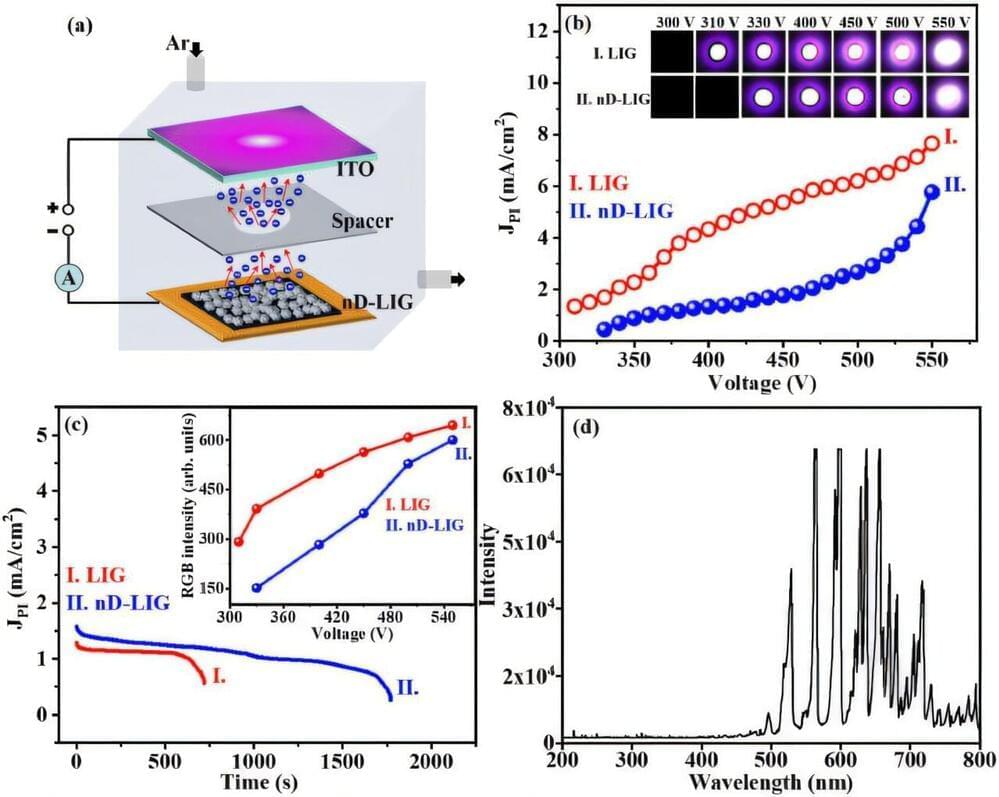
Microplasma devices are incredibly versatile tools for generating and sustaining plasmas on micro-and millimeter scales. The latest advances in nanotechnology now promise to expand their range of applications even further but, so far, this progress has been held back by the limited stability of some nanostructures at the extreme temperatures required to sustain many plasmas.

In a recent study published in Fundamental Plasma Physics, K J Sankaran and colleagues at the CSIR Institute of Minerals and Materials Technology, Bhubaneswar, India, overcome this challenge by decorating sheets of graphene with more stable nanodiamonds—that is, diamonds with diameters smaller than about 100 nm—allowing them to endure far more .

This combined material could expand the use of microplasma devices across a diverse array of useful applications, such as sterilizing and healing wounds, analyzing chemicals, and displaying images.

/* */