Toggle light / dark theme

Alien Worlds

Applying the laws of life on Earth to the rest of the galaxy, a new series blends science fact and fiction to imagine alien life on other planets.

“Astronomers think it’s only a matter of time before some alien life forms are discovered,” says the narrator of Alien Worlds, which debuts exclusively on Netflix from 2nd December 2020.

But what might it look like, and how similar would it be to the animals and plants we are familiar with? The new show will attempt to answer that question as it features a dizzying variety of crawling, slithering, flying and swimming creatures depicted in gorgeous, high-quality CGI.
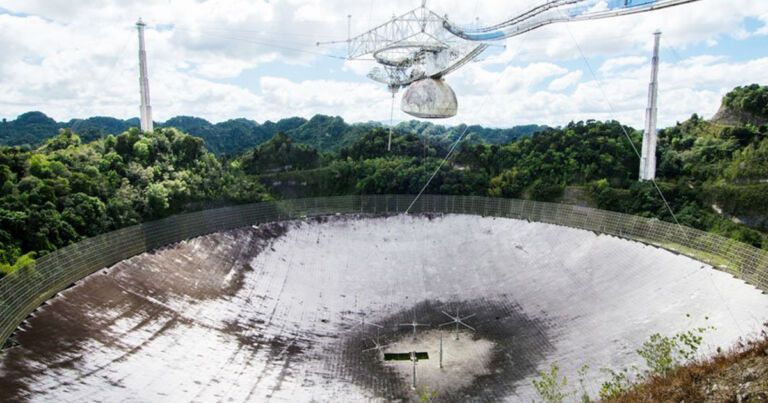
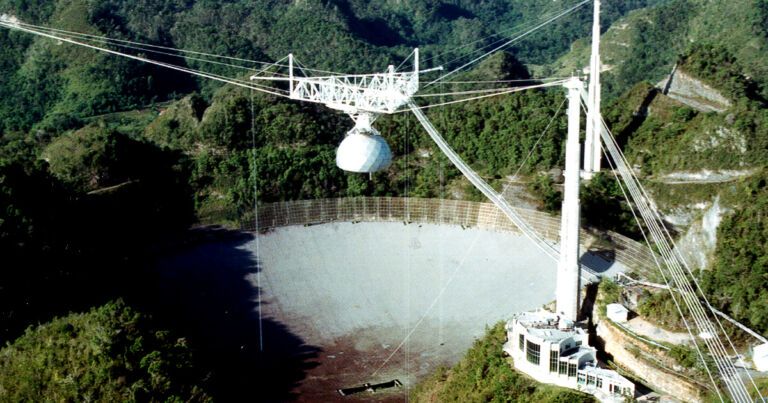
Iconic Arecibo Alien-Hunting Observatory Will Be Demolished

It’s a sad day. The observatory has not only been used to observe radio wave signals in deep space. It’s also become an iconic landmark over the decades after being featured in countless films and TV shows including the 1995 James Bond blockbuster “GoldenEye.”

The observatory has also made significant contributions to the Search for Extraterrestrial Intelligence (SETI), spotting mysterious radio signals emanating from distant corners of the universe.

“This decision is not an easy one for NSF to make, but safety of people is our number one priority,” Sean Jones, the assistant director for the mathematical and physical sciences directorate at NSF, told reporters today over a conference call, as quoted by The Verge.

The building blocks of life can form even without stars or planets, scientists say

Interesting.


The building blocks of life can form even before there are stars or planets, a team of researchers have found in a study.

The new research looked at “dark chemistry”, or the ways that new kinds of materials can form without energetic radiation.

They were able to simulate the conditions that govern chemistry in space, before the stars and planets that today surround us are formed, and there are instead dense interstellar clouds that will eventually go on to form those more solid objects.

Giant Arecibo SETI Telescope Could Collapse After Mysterious Damage

The cause of the crashes remain unclear. The Arecibo Observatory was built in the 1960s and has been in used for decades to search for extraterrestrial civilizations. Experts are worried cables could corrode further as they age.

The radio telescope, among the world’s largest single-dish radio telescopes, is now in a sorry state — and at risk of total collapse.

“For me, it’s probably fifty-fifty,” former observatory director Michael Nolan from the University of Arizona told National Geographic. “They are doing what can be done. I’m still really worried that they can’t do enough.”

Researchers model source of eruption on Jupiter’s moon Europa

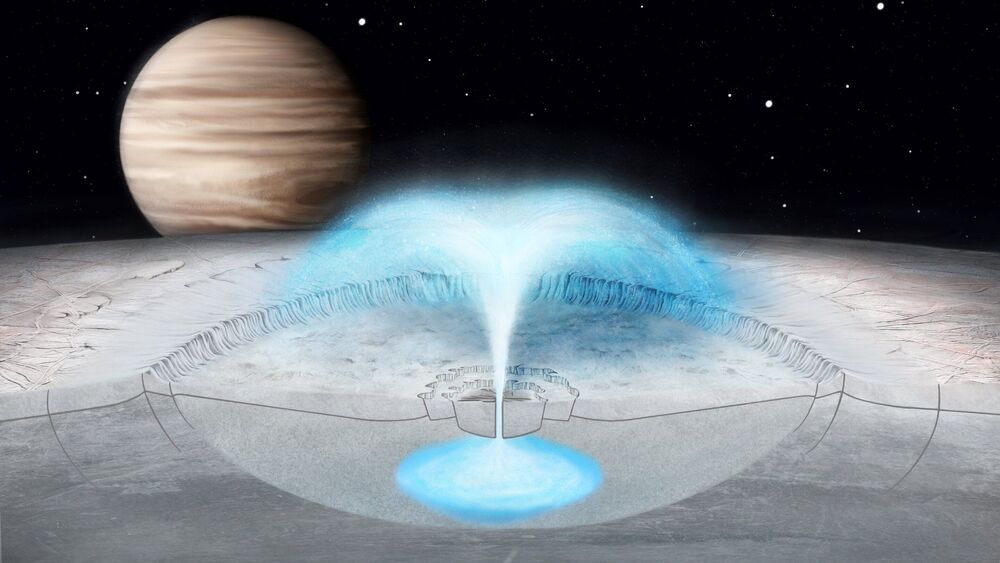
On Jupiter’s icy moon Europa, powerful eruptions may spew into space, raising questions among hopeful astrobiologists on Earth: What would blast out from miles-high plumes? Could they contain signs of extraterrestrial life? And where in Europa would they originate? A new explanation now points to a source closer to the frozen surface than might be expected.

Rather than originating from deep within Europa’s oceans, some eruptions may originate from water pockets embedded in the icy shell itself, according to new evidence from researchers at Stanford University, the University of Arizona, the University of Texas and NASA’s Jet Propulsion Laboratory.

Using images collected by the NASA spacecraft Galileo, the researchers developed a model to explain how a combination of freezing and pressurization could lead to a cryovolcanic eruption, or a burst of water. The results, published Nov. 10 in Geophysical Research Letters, have implications for the habitability of Europa’s underlying ocean—and may explain eruptions on other icy bodies in the solar system.

Milky Way holds at least 300 MILLION habitable planets, NASA claims

There are around 300 million planets that exist outside our Solar System but within the Milky Way which could potentially harbour life. According to research from NASA, four of them are within just 30 light-years from Earth, with the closest just 20 light-years away, NASA claims.

They went in search of the Holy grail of astronomical research, scouring for the ‘Goldilock’s Zone’ where life may thrive.

One prerequisite of this is for the star to resemble the Sun, so the researchers looked for distant stars that resemble it in age and temperature.

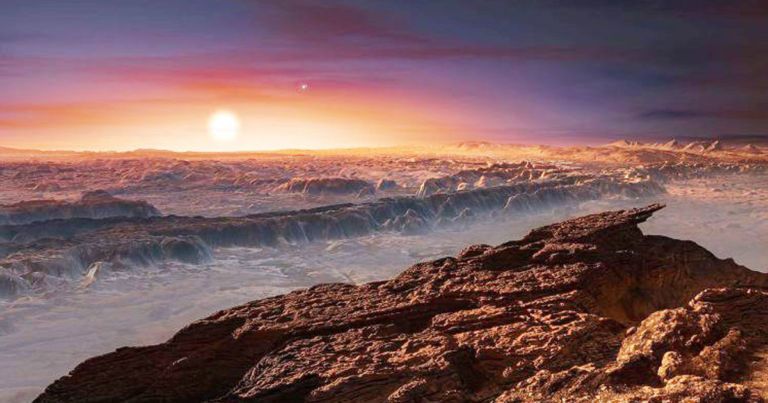
New Research: Closest Exoplanet to Earth Could Host Life

But there’s some bad news: Proxima Centauri tends to bombard any planets in its vicinity with a ferocious amount of X rays — Proxima b receives about 400 times the amount as Earth receives from its Sun.

That leads to the question: “Is there an atmosphere that protects the planet from these deadly rays?” asked co-author Christophe Lovis, a researcher who worked on ESPRESSO, in the statement. Lovis hopes that the next generation of spectrographs — ESPRESSO’s successor, “RISTRETTO,” is already in the works — could help us find the answer.

For us to get a closer look at Proxima b however, Proxima Centauri is “only” 4.2 light-years from the Sun — meaning it would still take several thousand years to get there using today’s propulsion technology.

Gold inflatable house for Mars designed by Hugh Broughton Architects and Pearce+

“On Mars, it would occupy one of the maze of lava tubes which run beneath the Martian surface,” the architects explained.


Hugh Broughton Architects and Pearce+ are creating Martian House, an inflatable building in Bristol, England, that will explore what an extraterrestrial house for life on Mars could look like.

The house, a collaboration with local artists as part of the ongoing art project Building a Martian House, is set over two levels, with the lower level designed to be built below the ground of the red planet.

The upper level will be made from a gold inflatable formwork, which is being developed by specialists Inflate.

Making the First Martians: Living on the Red Planet

There are many options for living on Mars. 3D-printed ice habitats around the poles, building underground, etc. The technology is finally here.


This is part of the reason why the surface is so cold, ranging from −143 in the polar regions during winter and 35 °C (−226 to 95 °F) near the equator during midday in the summer. But because the air is so thin, a person standing on Mars (in the summer and at noon) would experience extreme cold anywhere above their ankles.

And then there’s the radiation, which is roughly 40 times higher than what humans are regularly exposed to here on Earth (worse, when a solar event occurs). There are also massive dust storms that can envelop the entire planet and block out all sunlight. Last, there’s Martian gravity, which is about 37% of what we experience here on Earth.

In short, Mars is cold, dry, irradiated, and the air is thin and unbreathable. But with the right kind of living strategies and technology, living on Mars could be possible. In particular, life on Mars will rely heavily on 3D printing, in-situ resource utilization (ISRU), renewable energy, radiation shielding, and lots of recycling and compost systems.

/* */